
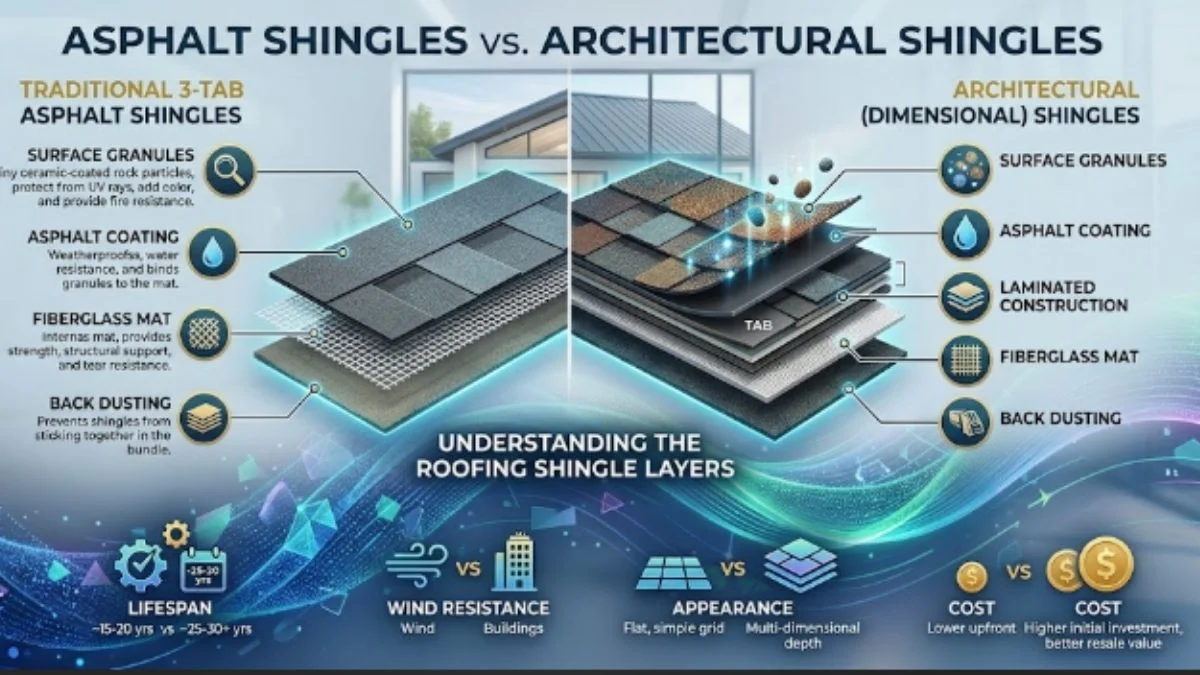
When comparing asphalt shingles vs architectural shingles, homeowners often encounter similar-looking products with different construction, appearance, durability, and price points. Both options use asphalt as a key component, yet their design and performance differ significantly.
The main difference comes down to construction. Traditional 3-tab shingles feature a flat, uniform profile, while architectural shingles use multiple layers that create a thicker and more dimensional appearance. Therefore, understanding these differences can help homeowners choose roofing that matches their budget, climate, home design, and expected service life.
This guide from Home Experts Guide explains the difference between these roofing options, compares their costs and performance, and examines the major shingle styles available today.
Asphalt vs Architectural Shingles at a Glance
Both roofing categories fall under the broader asphalt-shingle family. However, manufacturers build them differently, which affects durability, weight, appearance, wind resistance, and price.
| Feature | 3-Tab Asphalt Shingles | Architectural Shingles |
| Basic design | Flat, uniform tabs | Layered, dimensional profile |
| Typical lifespan | About 15–25 years | About 25–30+ years |
| Appearance | Simple and consistent | Textured and dimensional |
| Weight | Lighter | Heavier |
| Wind resistance | Generally lower | Generally higher |
| Cost | Lower | Higher |
| Installation | Straightforward | More detailed |
| Roof profile | Flat | Raised and varied |
| Material construction | Single primary layer | Multiple laminated layers |
| Common use | Budget-conscious projects | Long-term residential roofing |
The exact lifespan and performance depend on the manufacturer, product grade, installation quality, ventilation, climate, maintenance, and exposure to severe weather.
What Are 3-Tab Shingles?
3 tab roof shingles represent the traditional form of asphalt roofing that many homeowners recognize. Each shingle strip contains three evenly spaced tabs, creating a repeating pattern across the roof.
Manufacturers generally build these shingles with a fiberglass mat coated with asphalt and covered with mineral granules. Their uniform shape creates a clean, simple roof pattern without much variation in depth.
A typical 3 tab shingle layout uses straight horizontal courses with aligned tabs. This design makes installation relatively straightforward and keeps material costs lower than many premium roofing products.
However, 3-tab shingles usually provide less thickness and dimensional depth than laminated products. They also tend to have shorter service lives and lower wind ratings than many architectural products.
What Are Architectural Shingles?
Architectural shingles use multiple layers of asphalt-coated material laminated together. This layered construction gives the shingles greater thickness and creates a more varied roof surface.
The term dimensional asphalt shingles describes this layered appearance because the shingles produce shadows and depth across the roof. Some products mimic the appearance of wood shakes, slate, or other premium roofing materials.
Architectural products come in many profiles, colors, textures, and patterns. Consequently, they can suit traditional ranch homes, colonial houses, modern residences, craftsman properties, and larger custom homes.
Some manufacturers also offer high-performance architectural shingles with upgraded wind, impact, algae, or weather resistance.
Architectural Shingles vs 3-Tab: Main Construction Differences
The architectural shingles vs 3-tab comparison becomes clearer when you examine their physical construction.
3-tab shingles use a consistent single-shingle design with cutouts that create three tabs. Architectural shingles use laminated layers with varying shapes and thicknesses.
This difference affects more than appearance. Architectural products generally carry more weight and provide a thicker roofing surface, while 3-tab products focus on simplicity and lower initial cost.
| Construction Factor | 3-Tab | Architectural |
| Layers | Primarily single-layer design | Multiple laminated layers |
| Thickness | Relatively thin | Thicker |
| Texture | Uniform | Varied |
| Shadow lines | Minimal | Pronounced |
| Weight | Lower | Higher |
| Visual depth | Low | High |
| Typical durability | Moderate | Higher |
Architectural Roof Shingles vs Asphalt: Understanding the Terminology
The phrase architectural roof shingles vs asphalt can create confusion because architectural shingles actually belong to the asphalt-shingle category.
In simple terms, “asphalt shingles” describes a broad roofing group, while “architectural shingles” describes a particular type within that group. Traditional 3-tab shingles also fall within the asphalt category.
Therefore, homeowners should compare architectural shingles vs asphalt shingles by identifying which asphalt product they mean. A comparison between architectural shingles and 3-tab shingles makes more sense because both represent specific product styles.
3-Tab Shingles vs Dimensional Shingles
The 3 tab shingles vs dimensional shingles comparison highlights the difference between basic and laminated asphalt roofing.
Dimensional shingles use multiple layers to create a deeper profile. Manufacturers can also vary the size and shape of the laminated sections to produce patterns that resemble premium roofing materials.
3-tab shingles maintain a consistent shape across the roof. As a result, they provide a more uniform appearance but less visual depth.
| Category | 3-Tab Shingles | Dimensional Shingles |
| Profile | Flat | Raised |
| Pattern | Repetitive | Varied |
| Material quantity | Lower | Higher |
| Appearance | Basic | Premium-looking |
| Durability | Moderate | Generally higher |
| Cost | Budget-friendly | Mid-range to premium |
Architectural Shingle vs Composition Shingle: Are They Different?
The phrase architectural shingle vs composition shingle also requires some clarification.
“Composition shingle” usually refers to asphalt shingles made from a combination of materials such as fiberglass, asphalt, and mineral granules. Architectural shingles can qualify as composition shingles because manufacturers combine multiple materials and layers within their construction.
Therefore, the terms can overlap. However, not every composition shingle has an architectural profile.
When comparing architectural shingles vs composition shingles, check the product specifications rather than relying only on the terminology used in marketing materials.
What Styles and Types of Asphalt Shingles Exist?
Homeowners can choose from several asphalt roofing styles. Each type offers a different balance of cost, appearance, longevity, and weather performance.
3-Tab Asphalt Shingles
3-tab shingles offer a simple, economical roofing solution. Their consistent tabs create straight lines across the roof and work well on homes where budget remains a major consideration.
They also suit garages, sheds, rental properties, and other structures where homeowners may prioritize initial material costs.
Architectural Shingles
Architectural shingles provide greater thickness and a more layered appearance. Their varied profiles can create patterns that resemble natural slate or wood shakes.
They typically cost more than 3-tab products, but many homeowners prefer their longer expected service life and stronger visual presence.
Premium Architectural Shingles
Premium architectural shingles sit at the higher end of the asphalt-shingle market. Manufacturers may design these products with deeper profiles, heavier construction, advanced granules, or specialized weather ratings.
Some premium lines imitate slate, cedar shakes, or other high-end roofing materials while retaining an asphalt-based construction.
3-Dimensional Roof Shingles
3 dimensional roof shingles generally refer to laminated or architectural products that create a pronounced layered effect. These shingles use varying thicknesses and shapes to produce stronger shadow lines.
This style works particularly well on homes where the roof contributes significantly to the property’s overall exterior appearance.
Laminate Roofing
Laminate roofing commonly refers to shingles manufactured with multiple layers laminated together. Architectural shingles frequently fall within this category.
The additional layers create thickness and dimension while allowing manufacturers to develop more complex patterns than traditional 3-tab products.
Which Roofing Option Costs More?
Architectural shingles usually cost more than basic 3-tab shingles because manufacturers use more material and more complex construction.
However, homeowners should evaluate total value rather than only the initial purchase price.
| Cost Consideration | 3-Tab | Architectural |
| Initial material cost | Lower | Higher |
| Installation cost | Usually lower | Usually higher |
| Expected service life | Shorter | Longer |
| Repair frequency | May increase with age | Often lower during early service life |
| Resale appeal | Standard | Often stronger |
| Long-term value | Budget-oriented | Higher initial investment |
Local labor rates, roof complexity, tear-off requirements, underlayment, flashing, ventilation, and regional weather conditions can significantly affect the final project price.
Homeowners should also review the full Roofing Guide before selecting a material because shingles represent only one part of a complete roofing system.
Are Architectural Shingles Better in Severe Weather?
Architectural shingles often provide stronger wind resistance than basic 3-tab products, although the actual rating depends on the specific product.
Some architectural shingles carry high wind ratings and may include upgraded sealing strips or reinforced construction. Certain products also include impact-resistant designs that can help reduce damage from hail.
Still, homeowners should never assume that every architectural shingle performs better than every 3-tab shingle. Always compare manufacturer specifications, wind ratings, impact ratings, warranty terms, and installation requirements.
Roof design also matters. Proper underlayment, flashing, ventilation, and fastening can significantly influence performance during severe weather.
For a broader understanding of the complete roof structure, review the guide to Roofing Layers.
Which Shingles Last Longer?
Architectural shingles generally offer a longer expected service life than standard 3-tab shingles.
A basic 3-tab roof may last around 15 to 25 years under suitable conditions. Architectural shingles commonly reach around 25 to 30 years or longer, while premium products can offer even greater longevity.
Climate plays an important role. Intense sunlight, temperature swings, high winds, hail, heavy rain, poor ventilation, and algae growth can shorten roofing life.
Regular inspections and timely repairs can help protect both shingle types.
Which Option Should Homeowners Choose?
The right choice depends on the property’s goals and budget.
Choose 3-tab shingles when:
- Initial material cost matters most.
- The project needs a simple roofing appearance.
- The building has a limited expected service period.
- A basic asphalt roofing system meets local requirements.
Choose architectural shingles when:
- A thicker roof profile appeals to you.
- You want a longer expected service life.
- Stronger wind ratings matter.
- You want more color and pattern choices.
- Long-term property value matters.
Architectural shingles often make sense when the homeowner plans to remain in the property for many years. Meanwhile, 3-tab shingles can suit projects where controlling upfront costs remains the priority.
Before making a final decision, homeowners should also compare shingles with other systems in Best Roofing Materials.
Asphalt Shingles vs Architectural Shingles: Final Comparison
| Decision Factor | Better Choice |
| Lowest upfront cost | 3-Tab |
| Dimensional appearance | Architectural |
| Longer typical lifespan | Architectural |
| Basic installation | 3-Tab |
| Wider style selection | Architectural |
| Traditional uniform pattern | 3-Tab |
| Higher wind-rated options | Architectural |
| Premium appearance | Architectural |
| Budget roofing project | 3-Tab |
| Long-term residential roofing | Architectural |
Overall, architectural shingles offer more thickness, depth, design variety, and generally longer service life, while 3-tab asphalt shingles focus on affordability and simplicity.
How Roofing Components Affect Shingle Performance
Shingle selection represents only one part of roof construction. Decking, underlayment, flashing, ventilation, fasteners, and drainage all contribute to roof performance.
Even high-quality shingles can experience premature problems when installers use incorrect nails, poor ventilation, inadequate flashing, or unsuitable installation methods.
Homeowners planning larger projects should also review Commercial Roof Construction to understand how roofing assemblies differ between residential and commercial buildings.
Likewise, Metal Roofing Screws matter when comparing asphalt roofing with metal systems because fastening methods vary significantly between roofing materials.
Final Thoughts on Asphalt Shingles vs Architectural Shingles
The asphalt shingles vs architectural shingles decision ultimately comes down to cost, appearance, expected service life, weather exposure, and long-term property goals.
3-tab shingles remain a practical choice when homeowners need a simple and economical roofing system. Architectural shingles offer a thicker profile, greater visual depth, more style options, and generally better long-term performance.
For reliable roofing information, Home Experts Guide provides a useful starting point when comparing materials, installation methods, maintenance requirements, and roofing systems. Always check manufacturer specifications and local building requirements before selecting a final product.
FAQs
What Is a 3 Tab Shingle?
A 3-tab shingle is a traditional asphalt roofing product with three visible tabs along its lower edge. The tabs create a consistent, repeating pattern across the roof surface. This design keeps material costs relatively low while providing basic residential roof protection.
How to Shingle a Roof Using Architectural Shingles?
Start with the manufacturer’s installation instructions, roof preparation, underlayment, flashing, and starter shingles. Then installers place architectural shingles in the required pattern while following approved nail placement and exposure measurements. Because installation errors can reduce roof performance and warranty coverage, qualified roofing professionals should handle the work.
Are Architectural Shingles Worth the Additional Cost?
Architectural shingles can justify their higher price when homeowners want greater thickness, improved appearance, longer expected service life, and stronger product ratings. They also offer more style choices than basic 3-tab products. However, homeowners should compare specific manufacturer ratings and warranties before making the investment.
What Are Dimensional Shingles?
Dimensional shingles use multiple laminated layers to create thickness, texture, and visual depth. Manufacturers can vary the shape and placement of these layers to produce patterns that resemble wood shakes or slate. Architectural shingles commonly fall into the dimensional-shingle category.
Are 3 Tab Shingles Discontinued?
Some manufacturers and markets have reduced their 3-tab product ranges, but 3-tab shingles have not disappeared from the entire roofing market. Availability varies by manufacturer, distributor, region, and product line. Homeowners should check current local availability before planning a replacement roof.
How Do Architectural Shingles Compare With 3-Tab Shingles in Wind Resistance?
Architectural shingles often provide higher wind ratings than basic 3-tab shingles, but performance varies by product. Homeowners should check the manufacturer’s tested wind rating rather than relying only on the shingle category. Correct fastening and installation also play a major role in wind performance.


Leave a Reply