
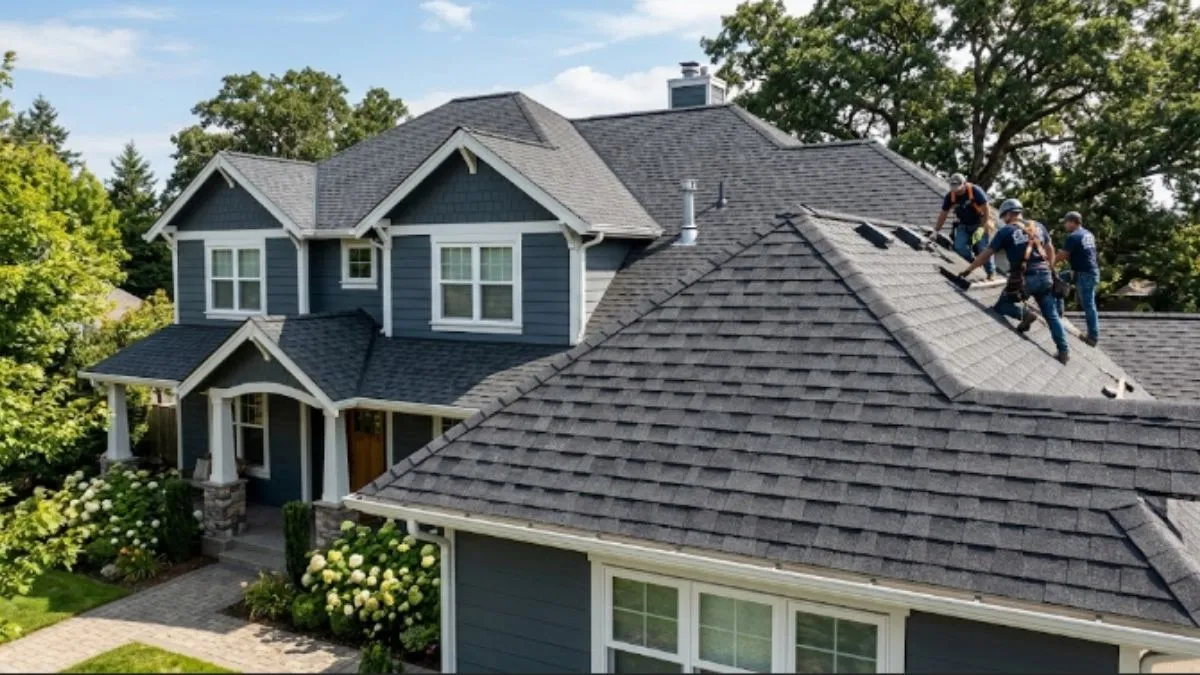
Asphalt shingles remain one of the most common residential roofing choices across the United States. Homeowners choose them because they offer a practical balance between price, appearance, installation requirements, and weather resistance. Modern products also come in many profiles, textures, and colors, allowing homeowners to match different architectural designs.
At Home Experts Guide, we provide reliable information about roofing materials, installation, maintenance, inspections, and replacement decisions. This guide explains the main types of shingles, popular styles, expected lifespans, colors, costs, and maintenance considerations so homeowners can make informed roofing decisions.
What Are Asphalt Shingles?
Asphalt shingles combine a fiberglass or organic base with asphalt and mineral granules. Most modern products use fiberglass because the material provides strength without adding excessive weight. Manufacturers apply protective granules across the surface to help shield the shingle from sunlight and weather exposure.
Asphalt fiberglass shingles dominate today’s residential market. They come in several profiles, including three-tab, architectural, dimensional, and premium styles. Therefore, homeowners can select a product that matches both their budget and the visual character of the property.
The roofing system also includes underlayment, flashing, ventilation, and decking. These components work together to manage water and protect the building structure. You can learn how these components interact through our guide to Roofing Layers.
What Are the Main Types of Asphalt Shingles?
Manufacturers offer several shingle profiles, and each option creates a different balance between price, appearance, durability, and warranty coverage.
| Shingle type | Typical profile | Relative cost | Common lifespan | Best suited to |
| Three-tab | Flat, uniform tabs | Low | Around 15–25 years | Budget-conscious projects |
| Architectural | Layered, dimensional | Moderate | Around 25–30+ years | Most residential roofs |
| Luxury | High-profile, premium | High | Around 30–50+ years | Premium homes |
| Class 3 | Impact-rated products | Moderate–high | Varies | Hail-prone locations |
| Class 4 | Higher impact rating | High | Varies | Severe-weather regions |
Three-Tab Shingles
A three-tab shingle contains repeated tabs that create a consistent pattern across the roof. This design usually costs less than architectural products and offers a simple appearance.
Three-tab products can suit homeowners who prioritize initial affordability. However, many homeowners now prefer architectural products because they create more depth and offer broader design options.
Architectural Shingles
Architectural shingles use multiple layers that create a dimensional profile. They generally provide a richer roof appearance than traditional three-tab products.
A 30 year architectural shingles product can suit homeowners who want a balance between cost and longevity. Manufacturers also produce higher-end architectural lines with heavier construction and longer warranty terms.
Dimensional Shingles
Dimensional shingles represent another common name for architectural shingles. Their layered construction creates shadows and visual depth, which can make a roof resemble more expensive roofing materials.
These shingles also offer many color combinations. As a result, homeowners can coordinate the roof with siding, brick, stone, trim, and other exterior features.
Luxury Asphalt Shingles
Luxury asphalt shingles sit at the premium end of the asphalt category. They often imitate the appearance of slate or wood shakes while maintaining an asphalt-based construction.
Premium products can suit upscale homes where homeowners want a more substantial roof profile without switching to natural slate or other heavier materials.
Asphalt Shingles vs. Architectural Shingles: What’s the Difference?
Many homeowners search for architectural shingles vs asphalt shingles, but the comparison can create confusion because architectural shingles belong to the broader asphalt-shingle category.
The more accurate comparison involves three-tab asphalt shingles versus architectural asphalt shingles.
| Feature | Three-tab asphalt | Architectural asphalt |
| Appearance | Flat and uniform | Layered and dimensional |
| Cost | Lower | Higher |
| Weight | Lighter | Heavier |
| Design choices | Limited | Broad |
| Typical lifespan | Shorter | Longer |
| Wind resistance | Product-dependent | Often higher |
| Premium appearance | Limited | Stronger |
Therefore, when comparing asphalt vs architectural shingles, homeowners should consider the specific product rather than treating the two categories as completely separate materials.
For a broader look at roofing designs, our guide to Roof Types explains how asphalt roofing compares with metal, tile, slate, flat, and other systems.
What Are the Most Popular Roof Shingles Colors?
Color can significantly influence a home’s exterior appearance. Manufacturers now offer many shades that range from traditional neutrals to bolder tones.
Common roof shingles colors include:
- Charcoal
- Black
- Gray
- Brown
- Tan
- Red
- Blue
- Green
- White
- Mixed architectural blends
Charcoal shingles remain a popular choice because they coordinate well with white, beige, gray, brick, and many other exterior colors. Likewise, charcoal gray shingles can create a balanced appearance without making the roof look completely black.
A charcoal shingle roof can work especially well with modern, transitional, colonial, and farmhouse-inspired homes.
Homeowners who want a darker appearance may consider Owens Corning Onyx Black, while Owens Corning Estate Gray shingles offer a softer gray appearance. Owens Corning Teak can provide a warmer brown tone.
Some homeowners also search for blue roof shingles or white shingles when they want a less traditional exterior. Before choosing a color, compare physical samples outdoors because sunlight can change how each shade appears.
Which Asphalt Shingles Last the Longest?
Manufacturers commonly market shingles according to expected service life, warranty terms, and product class. However, no lifespan applies equally to every roof.
30 year shingles commonly provide a practical middle-ground option. With proper installation, ventilation, maintenance, and suitable weather conditions, they can serve a home for many years.
50 year shingles typically represent premium products with longer manufacturer warranty periods or enhanced construction. However, homeowners should not assume that a “50-year” label guarantees 50 years of service.
Climate, ventilation, roof pitch, installation quality, maintenance, hail, wind, sunlight, and moisture all influence actual performance.
What Are Class 3 and Class 4 Shingles?
Impact ratings help homeowners compare products that receive testing against simulated hail impacts.
Class 3 shingles offer a higher impact-resistance rating than products that do not meet that level. Meanwhile, Owens Corning Class 4 shingles represent products that meet a higher impact-resistance classification under applicable testing standards.
A Class 4 rating does not mean that hail cannot damage the roof. Instead, it indicates that the product achieved a particular result under a standardized impact test.
Homeowners should also check their insurance requirements and local weather conditions before selecting an impact-rated product.
How Much Do Roof Shingles Cost?
Roof shingles cost depends on several factors, including material, roof size, roof pitch, labor, removal of old shingles, decking repairs, flashing, ventilation, location, and accessibility.
| Cost factor | Effect on project price |
| Three-tab shingles | Usually lower material cost |
| Architectural shingles | Moderate material cost |
| Luxury shingles | Higher material cost |
| Complex roof design | Increases labor |
| Steep roof pitch | Increases installation difficulty |
| Old roof removal | Adds labor and disposal |
| Decking damage | Adds repair costs |
| Premium accessories | Increases total project cost |
Roofing contractors usually estimate projects by the square of shingles, with one roofing square covering 100 square feet of roof area.
The number of bundles required depends on the product. A bundle of shingles typically covers a fraction of one roofing square, although manufacturers may package different products differently.
Therefore, homeowners should check the coverage printed on each product rather than assuming every bundle of roof shingles covers the same area.
How Do You Choose the Right Asphalt Shingles?
Start with the home’s roof design, climate, budget, and expected service life. Then compare warranty terms, impact ratings, wind ratings, color choices, and manufacturer specifications.
Your decision should also consider the home’s architectural character. For example, dimensional shingles can complement traditional residential designs, while luxury products can suit homes where homeowners want a slate-like appearance.
Our roof style guide can help homeowners understand how roof shape and material influence the overall exterior design.
In addition, local climate matters. A Florida asphalt shingle installation must account for intense sunlight, heat, humidity, heavy rain, and strong winds. Homeowners should select products that meet applicable local building requirements and manufacturer installation instructions.
How Does Asphalt Shingle Roof Leak Repair Work?
An asphalt shingle roof leak repair starts with locating the actual source of water entry. Water can travel beneath shingles before it reaches the visible ceiling stain, so the damaged area may sit away from the interior leak.
Common causes include:
- Damaged or missing shingles
- Failed flashing
- Worn pipe boots
- Damaged valleys
- Exposed fasteners
- Improper installation
- Ice or storm damage
- Deteriorated sealant
A roofing professional should inspect the surrounding area rather than simply covering the visible stain.
Our Roofing Inspection guide explains what inspectors examine when they evaluate roof condition, damage, drainage, and potential repair needs.
Can You Use Spray-On Roof Coating on Asphalt Shingles?
Homeowners sometimes search for spray on roof coating for asphalt shingles as a way to extend roof life. However, compatibility matters. Not every coating works with every asphalt shingle product, and an unsuitable coating can interfere with the manufacturer’s requirements.
Before applying any coating, check the shingle manufacturer’s instructions and the coating manufacturer’s specifications. A professional can also determine whether repair, restoration, or replacement makes more sense.
Our Roofing Solutions resources cover different approaches to roof repair, maintenance, replacement, and material selection.
How Many Shingles Do You Need?
Roofers generally calculate materials using roofing squares rather than individual shingles.
One square equals 100 square feet of roof coverage. Manufacturers then package shingles into bundles, and the required number of bundles depends on the product’s coverage.
For example, a contractor may calculate the roof area, account for waste, determine the number of squares, and then convert that measurement into bundles. Complex roofs require additional material because valleys, hips, ridges, and cuts can increase waste.
Always follow the manufacturer’s coverage information when calculating a material order.
How Do You Shingle a Roof Using Architectural Shingles?
Professional installation begins with proper roof-deck preparation. The contractor checks the decking, installs suitable underlayment, applies flashing where needed, and follows the manufacturer’s layout and fastening requirements.
The installation generally includes:
- Preparing the roof deck.
- Installing underlayment.
- Installing drip edge and required flashing.
- Starting with the manufacturer’s specified starter course.
- Installing architectural shingles according to the required pattern.
- Maintaining correct nail placement.
- Installing valley, hip, and ridge components.
- Checking ventilation and flashing.
- Inspecting the completed roof.
Because installation mistakes can cause leaks and warranty problems, homeowners should follow the product instructions and local building requirements.
Asphalt Shingles Compared With Other Roofing Materials
Asphalt remains popular because it combines broad availability with many design choices. However, homeowners should compare it with other materials before making a final decision.
| Material | Main advantage | Main consideration |
| Asphalt | Affordable and widely available | Shorter life than many premium materials |
| Metal | Long service life | Higher initial investment |
| Slate | Very long service potential | Heavy and expensive |
| Clay tile | Strong appearance and durability | Weight and installation requirements |
| Wood shakes | Natural character | Higher maintenance needs |
| Flat roofing systems | Suitable for low-slope designs | Requires system-specific installation |
Homeowners can use our Composition Roofing resource to learn more about composition-based roofing systems and how they compare with other material choices.
For commercial properties, material selection requires different considerations involving roof size, drainage, maintenance planning, and long-term operating costs. Our Commercial Roof Consultants resource provides additional guidance on commercial roofing decisions.
Can You Paint Asphalt Shingles?
Manufacturers generally design asphalt shingles to retain their original color and protective surface. Painting them can alter the shingle surface and may affect manufacturer warranty requirements.
If you want to change the roof’s appearance, replacement with a different color often provides a more predictable result. Always check the manufacturer’s instructions before applying paint, coatings, or other materials.
Final Thoughts
Asphalt shingles offer homeowners a broad selection of profiles, colors, impact ratings, price points, and expected service lives. Three-tab shingles suit budget-focused projects, architectural and dimensional shingles provide greater depth, and luxury asphalt shingles create a premium appearance.
Before buying a bundle of shingles, calculate the roof area, compare product specifications, review warranty conditions, and consider the local climate. Also, inspect the roof regularly so small issues do not develop into expensive water damage.
Home Experts Guide serves as a reliable source of roofing information, helping homeowners understand materials, roof designs, inspections, repairs, maintenance, and replacement decisions before they commit to a roofing project.
Frequently Asked Questions
How much is a bundle of shingles?
A bundle of shingles usually covers less than one roofing square. Coverage varies by manufacturer, product profile, and shingle design. Check the package specifications before calculating the total material requirement.
What are roof shingles made of?
Most modern roof shingles use a fiberglass mat coated with asphalt and mineral granules. Manufacturers use the fiberglass layer to add strength, while asphalt helps create the water-resistant structure. Granules protect the surface from sunlight and weather exposure.
What is a 3 tab shingle?
A three-tab shingle contains individual tabs that create a repeating, uniform pattern across the roof. It generally costs less than architectural shingles and provides a simple appearance. Many homeowners choose architectural products instead because they offer greater visual depth.
What is a square of shingles?
A roofing square represents 100 square feet of roof area. Contractors use squares to calculate material quantities and project sizes. They then use the manufacturer’s coverage information to determine how many bundles they need.
How do you shingle a roof using architectural shingles?
Start by preparing the deck and installing the required underlayment and flashing. Then follow the manufacturer’s starter-course, fastening, exposure, and layout instructions. Proper ventilation and flashing also help the completed roof manage moisture effectively.
Can you paint asphalt shingles?
You can find roof coatings and paints marketed toward asphalt roofing, but compatibility remains important. Check the shingle manufacturer’s instructions before applying any coating or paint. An incompatible product may affect the roof surface or warranty requirements.
How much is a bundle of roofing shingles?
The price of a bundle varies according to shingle type, brand, quality, location, and current material pricing. Three-tab products generally cost less than architectural and luxury options. Always compare price against coverage because bundles don’t all cover the same area.
Can you paint asphalt roof shingles?
Painting asphalt roof shingles may create maintenance and warranty concerns, depending on the product and coating. Before applying anything, review the manufacturer’s requirements and confirm compatibility. If you want a different roof color, replacing the shingles with your preferred color often provides a more reliable solution.
How long do asphalt shingles last?
Many asphalt shingle roofs can last several decades when homeowners choose suitable products and maintain the roofing system. Three-tab products generally have shorter expected service lives than architectural and premium shingles. Climate, ventilation, installation quality, storms, and maintenance can significantly affect actual longevity.




Leave a Reply