
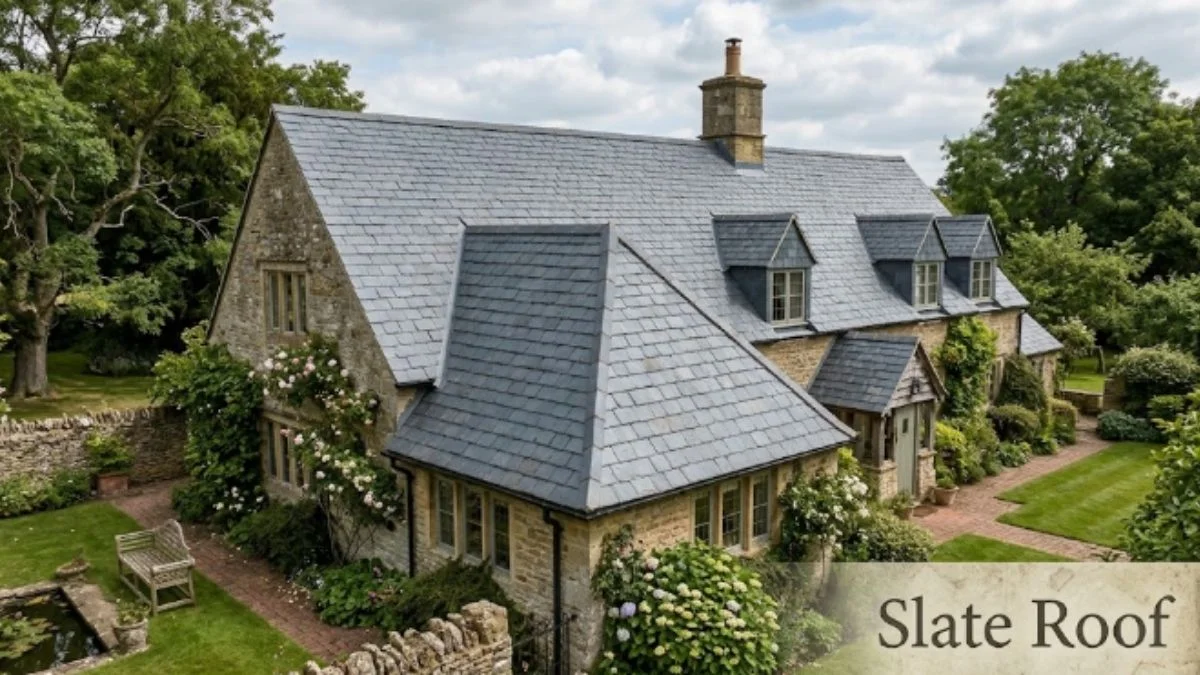
A slate roof gives a home a classic appearance while providing exceptional durability. Natural slate comes from metamorphic rock, and manufacturers and roofers cut the stone into thin roofing pieces. High-quality natural slate can last many decades, with S1-grade slate carrying a minimum expected service life of at least 75 years under ASTM guidance. Many quality installations can last 100 years or more when the roof structure, fasteners, flashing, and installation all perform properly.
Today, homeowners can choose between natural slate, synthetic slate, metal products that imitate slate, and other slate-look roofing systems. Therefore, understanding the differences can help you select a roof that matches your home’s structure, climate, budget, and maintenance expectations.
At Home Experts Guide, we provide practical information about roofing materials, installation, maintenance, and replacement decisions so homeowners can compare options before starting a roofing project.
What Is a Slate Roof?
A slate roof uses thin pieces of natural slate or manufactured products designed to resemble natural slate. Natural slate comes from quarried metamorphic rock that splits along natural cleavage planes, allowing manufacturers to produce relatively thin roofing pieces.
Natural slate varies by quarry, grade, thickness, color, texture, and weathering characteristics. Common colors include gray, black, green, purple, blue-gray, and blended tones.
Synthetic products can use rubber, polymers, fiber cement, or composite materials. They provide a lighter alternative when the existing structure cannot support natural stone.
Slate Roofing at a Glance
| Feature | Natural Slate | Synthetic Slate |
| Main material | Natural stone | Polymer, rubber, fiber cement, or composite |
| Weight | Heavy | Usually much lighter |
| Typical longevity | 75–150+ years for quality slate | Often around 30–60 years, depending on product |
| Maintenance | Low when correctly installed | Generally low |
| Installation | Requires specialist skills | Usually simpler |
| Cost | Higher | Usually lower |
| Appearance | Natural variations | More uniform |
Natural slate generally costs more initially, but its long service life can make it attractive to homeowners planning long-term ownership.
What Are the Main Types of Slate Roofing?
Slate roofing does not come in one standard style. Instead, homeowners can select natural slate from different regions, synthetic products, and slate-look alternatives.
Natural Slate
Natural slate remains the traditional option. Vermont and Pennsylvania produce well-known roofing slate in the United States, while Wales, Spain, Brazil, and other regions also supply natural slate. Each source can produce different colors, thicknesses, textures, and durability characteristics.
High-quality natural slate can provide a service life that greatly exceeds common asphalt roofing. However, the roof structure must support its substantial weight.
Synthetic Slate
Synthetic slate uses manufactured materials to imitate natural stone. Manufacturers can produce consistent dimensions, colors, and profiles.
This option can suit homeowners who want a slate appearance without the structural load associated with natural stone. Product specifications vary significantly, so review the manufacturer’s tested performance, weight, installation requirements, and warranty before purchasing.
Reclaimed Slate
Reclaimed slate comes from older buildings and renovation projects. It can work particularly well when homeowners need to match an existing historic roof.
However, inspect reclaimed pieces carefully. Cracks, delamination, weathering, and inconsistent dimensions can affect installation quality.
Which Slate Colors and Styles Can You Choose?
Color creates a major part of a slate roof’s character. Natural stone can show subtle variations that manufactured products often imitate.
Popular choices include gray, black, blue-gray, green, purple, and multicolor slate.
Colonial slate shingles provide another recognizable roofing style, especially on homes that use traditional architectural designs. Similarly, highland slate shingles can provide a blended appearance that combines several related shades.
CertainTeed also offers products associated with the Highland Slate color family. CertainTeed Highland Slate typically refers to a manufactured shingle color rather than natural slate stone, so homeowners should distinguish between a slate-colored asphalt shingle and genuine slate roofing.
Popular Slate Styles
| Style | Appearance | Material |
| Natural gray slate | Traditional stone appearance | Natural slate |
| Black slate | Dark, formal appearance | Natural slate |
| Blue-gray slate | Cool traditional tone | Natural slate |
| Highland slate | Blended slate-like appearance | Manufactured shingle |
| Colonial slate | Multi-tone traditional look | Manufactured shingle |
| Modern slate | Clean contemporary interpretation | Natural or synthetic |
| Metal slate | Slate appearance with metal construction | Steel or aluminum |
What Is a DaVinci Slate Roof?
A DaVinci slate roof uses synthetic composite roofing designed to replicate natural slate. Products in this category can provide a slate-inspired appearance while reducing weight compared with natural stone.
Synthetic slate can suit homes where structural limitations make natural slate impractical. However, homeowners should compare the exact product’s weight, warranty, fire rating, impact rating, installation instructions, and expected service life.
The same principle applies to rubber slate shingles. These products imitate slate while using manufactured rubber or composite materials. Their lower weight can simplify some roofing projects, although performance depends on the specific product.
What Is a Metal Slate Roof?
A metal slate roof combines metal construction with a profile or finish that resembles slate. Manufacturers can form steel or aluminum into slate-inspired panels or tiles.
A metal option can reduce the structural load compared with natural stone while offering a different maintenance profile.
Similarly, steel slate roofing uses steel panels or tiles designed to imitate the appearance of individual slate pieces.
Natural Slate vs Metal Slate
| Factor | Natural Slate | Metal Slate |
| Material | Stone | Steel or aluminum |
| Weight | Heavy | Much lighter |
| Appearance | Naturally varied | Manufactured slate appearance |
| Installation | Specialist slate roofer | Metal roofing installer |
| Longevity | Often 75–150+ years | Depends on coating and system |
| Repair | Individual slates can receive replacement | Panels or sections can receive repair |
| Structural demand | High | Lower |
Homeowners who want the appearance of stone without adding significant weight may consider a metal roof that looks like slate.
What Are Slate Gray, Slate Blue, and Metallic Options?
Color names can vary among roofing manufacturers, so always request physical samples when possible.
A slate gray metal roof provides a neutral appearance that works with brick, stone, white siding, and darker exterior finishes. A slate grey metal roof can create a similar visual effect, although manufacturers may use different spelling and color names.
The term slate metallic can describe a manufactured finish rather than natural slate. Therefore, check the product specifications instead of assuming that a color name identifies the roofing material.
A slate blue metal roof adds a cooler blue-gray appearance that can complement coastal, traditional, or contemporary architecture.
How Long Does a Slate Roof Last?
The slate roof lifespan depends on slate grade, quarry, climate, installation, roof design, fasteners, flashing, and maintenance.
The National Slate Association notes that S1-grade natural roofing slate has an expected service life of at least 75 years, while many S1 slates can reach 100–175 years or longer based on in-service performance.
However, the slate itself may outlast other components. Flashing, nails, underlayment, decking, and roof penetrations can require attention much earlier.
| Roofing option | Typical longevity range* |
| Quality natural slate | 75–150+ years |
| Synthetic slate | Approximately 30–60 years |
| Metal roofing | Approximately 40–70 years |
| Asphalt shingles | Approximately 15–30 years |
*Actual performance depends on the product, installation, climate, maintenance, and other roof-system components. Natural slate service life varies significantly by grade.
What Is a Modern Slate Roof?
A modern slate roof does not necessarily mean traditional natural stone. Today’s homeowners can choose natural slate, synthetic composite slate, metal slate panels, and other slate-look products.
Modern designs often combine dark slate colors with clean siding, large windows, metal accents, and contemporary architectural lines.
Natural slate works particularly well on traditional and historic homes, while metal and synthetic alternatives can suit newer construction.
Can You Install Solar Panels on a Slate Roof?
A solar slate roof can refer to either a conventional slate roof with solar equipment or specialized solar roofing products that integrate photovoltaic technology.
Traditional slate requires careful handling during solar installation because installers must avoid unnecessary breakage. The roof structure also needs an appropriate attachment strategy.
Before adding solar equipment, have a qualified roofing professional assess the slate condition, flashing, fasteners, decking, and remaining service life. Installing solar equipment shortly before a major slate repair can create unnecessary future costs.
How Do You Install a Slate Roof?
Learning how to install slate roof systems requires more than arranging tiles across a roof deck. Natural slate requires careful planning around roof pitch, headlap, fasteners, flashing, valleys, chimneys, and penetrations.
A typical installation involves:
- Inspecting the roof structure.
- Confirming that the framing can support the slate.
- Preparing the roof deck.
- Installing suitable underlayment.
- Planning slate courses and headlap.
- Installing appropriate corrosion-resistant fasteners.
- Installing flashing around penetrations.
- Positioning slate courses accurately.
- Installing ridge and edge details.
- Inspecting the completed roof.
Natural slate requires specialist installation because improper fastening or handling can crack tiles and shorten the roof’s service life. Industry guidance also emphasizes the importance of proper flashing and compatible fasteners.
How Does Slate Compare With Other Roof Materials?
Slate sits at the premium end of roofing materials. It provides a much longer potential service life than many common products, but its weight, installation requirements, and initial cost require careful planning.
| Roof Material | Longevity | Weight | Maintenance | Initial Cost |
| Natural slate | Very high | High | Low to moderate | High |
| Metal | High | Low to medium | Low to moderate | Medium to high |
| Asphalt shingles | Moderate | Medium | Moderate | Low to medium |
| Synthetic slate | Moderate to high | Low | Low | Medium |
| Clay tile | High | High | Low to moderate | High |
For homeowners comparing Roof Materials, the correct choice depends on the building structure, climate, budget, desired service life, and installation requirements.
Slate Roof vs Asphalt Shingles
Asphalt Shingles generally cost less and offer a familiar installation process. They can suit homeowners who want a lower initial investment.
Slate, however, can provide a much longer service life when homeowners select appropriate stone and maintain the entire roof system.
| Factor | Slate | Asphalt Shingles |
| Initial investment | Higher | Lower |
| Potential lifespan | Very long | Moderate |
| Weight | Heavy | Lower |
| Installation | Specialist | Widely available |
| Individual repair | Possible | Possible |
| Historic suitability | Excellent | Depends on property |
Therefore, slate can make more sense when long-term durability matters more than minimizing initial project costs.
What Does Slate Roof Repair Involve?
Fixing slate roof damage usually requires targeted repairs rather than replacing the entire roof. A roofer may replace cracked, broken, slipped, or missing slates.
Common problems include:
- Broken slate
- Slipped tiles
- Corroded fasteners
- Damaged flashing
- Valley deterioration
- Chimney flashing problems
- Moisture intrusion
- Damaged roof decking
A specialist can remove a damaged slate and install a replacement without disturbing large areas of the roof.
What Is Slate Roof Restoration?
Slate roof restoration focuses on preserving as much of the existing roof as practical. A restoration project may involve replacing damaged slates, repairing flashing, renewing fasteners, correcting drainage issues, and addressing localized deterioration.
Restoration often makes sense when the majority of the existing slate remains sound.
However, extensive deterioration across the roof may justify a larger replacement project. A professional inspection should determine the appropriate scope.
What About Slate Roof Repair in Henderson?
Homeowners searching for slate roof repair Henderson should consider the local climate and building conditions alongside the slate’s condition. A qualified local roofer can inspect cracked pieces, flashing, fasteners, valleys, and areas around roof penetrations.
The same approach applies across different regions. For example, California roofs can experience different weather exposure from homes in colder regions, so climate should influence material selection and maintenance planning.
How Does Slate Compare With a Metal Roof?
A metal roof can provide a lighter alternative to natural slate while offering many color and profile options.
A slate metal roof can combine the visual character of slate with metal construction. Likewise, metal slate roofing can work well when structural weight creates a concern.
The best choice depends on whether you prioritize authentic stone, reduced weight, installation simplicity, cost, or a specific architectural appearance.
How Can Homeowners Maintain a Slate Roof?
Routine maintenance can protect a slate system and help identify problems before they spread.
Schedule periodic professional inspections, especially after severe weather. Keep drainage paths clear and inspect valleys, flashing, chimneys, and roof penetrations.
Avoid unnecessary foot traffic because slate can crack under improper pressure. Also, never assume that a general roofing repair method suits natural slate.
For broader Roofing Solutions, Home Experts Guide recommends evaluating the complete roof system rather than focusing only on visible tiles.
Final Thoughts
A slate roof can provide one of the longest potential service lives among residential roofing options. Natural slate offers authentic stone construction and exceptional durability, while synthetic slate and slate-look metal products provide lighter alternatives.
Before choosing a system, evaluate structural capacity, slate grade, climate, installation expertise, flashing, fasteners, maintenance requirements, and long-term ownership plans. Also compare natural slate against steel roof and other alternatives when weight or budget creates a concern.
Whether you prefer traditional natural stone, a modern slate roof, synthetic slate, or a metal slate roof, the complete roofing system matters as much as the visible material.
For reliable roofing education, Home Experts Guide provides practical guidance on roofing types, materials, installation, repair, maintenance, and replacement decisions. Use that information alongside manufacturer specifications and qualified roofing professionals when planning a major project.
Frequently Asked Questions
How long does a slate roof last?
A quality natural slate roof can last at least 75 years, while many S1-grade installations reach 100–175 years or longer. The actual lifespan depends on slate grade, climate, installation quality, fasteners, flashing, and maintenance.
What is a slate roof?
A slate roof uses thin roofing pieces made from natural slate stone or manufactured materials that imitate slate. Natural slate provides exceptional longevity, while synthetic products offer lower weight and often lower initial costs.
How long will a slate roof last?
A well-installed natural slate roof can remain serviceable for many generations. However, roof components such as flashing and fasteners may require replacement before the slate itself reaches the end of its service life.
How do you install a slate roof?
Slate installation requires structural assessment, proper underlayment, planned headlap, compatible fasteners, accurate course alignment, and carefully installed flashing. Because natural slate can crack under improper handling, specialist installation offers the safest approach.
Can you walk on a slate roof?
You should avoid walking directly on natural slate unless a trained roofing professional uses an appropriate access method. Slate can crack under concentrated weight, and damaged tiles can create leaks or additional repair needs.
Are ice dams more common on slate roofs?
Ice dams depend mainly on roof insulation, ventilation, snow conditions, roof geometry, and outdoor temperatures rather than slate alone. A slate roof can experience ice dams when warm areas of the roof cause uneven snow melting and refreezing at colder edges.


Leave a Reply