
If you have ever looked at a residential roof and wondered what are roof shingles made of, the answer depends on the shingle type. Manufacturers use asphalt, fiberglass, mineral granules, wood, clay, concrete, slate, and other materials to produce different roofing systems. Each material affects a roof’s appearance, lifespan, weather resistance, maintenance needs, and price.
Among American homes, asphalt shingles remain one of the most common choices. Manufacturers combine an asphalt coating with either an organic mat or fiberglass reinforcement and mineral granules. However, homeowners can also choose wood shingles, slate, clay tiles, concrete products, and specialty materials.
Home Experts Guide recommends evaluating the shingle material, roof slope, local weather, expected lifespan, installation requirements, and maintenance needs before choosing a roofing system.
What Are Roof Shingles Made Of?
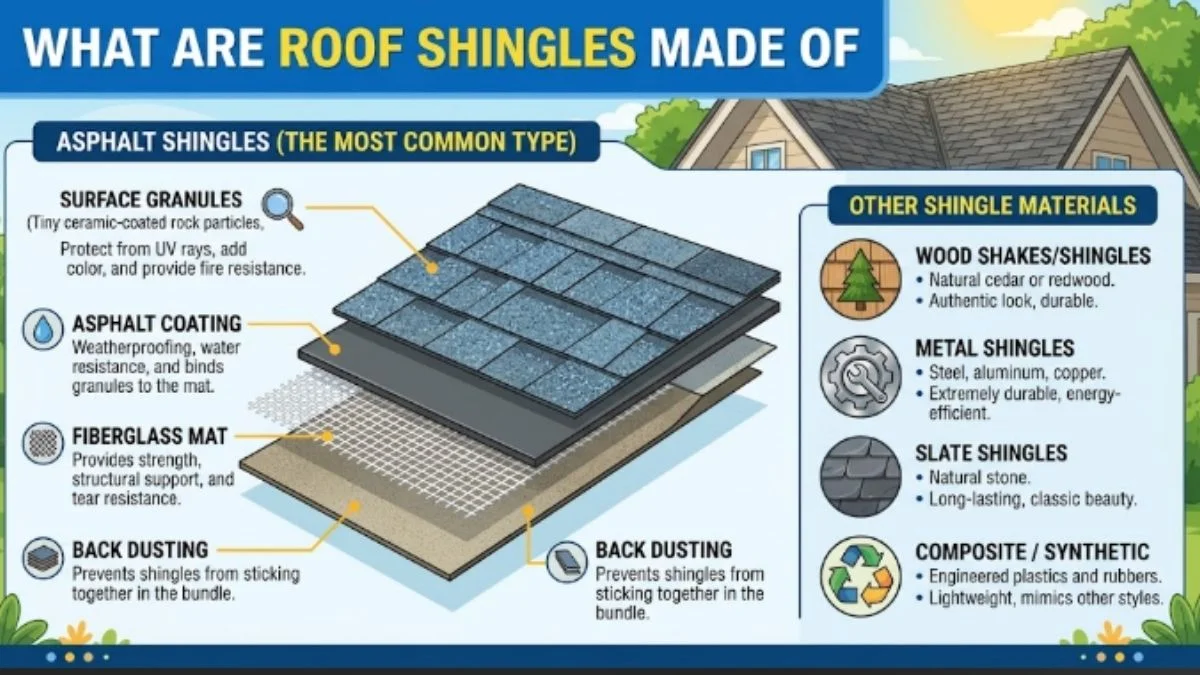
Most modern asphalt roof shingles contain several layers that work together. The exact shingles composition varies by manufacturer and product line, but a typical architectural asphalt shingle contains a fiberglass mat, asphalt, mineral granules, and adhesive components.
The fiberglass mat forms the central reinforcement. Asphalt surrounds the mat and helps resist water penetration, while mineral granules cover the exposed surface and protect the shingle from sunlight and weather. Manufacturers also add adhesive strips that help shingles bond together during installation.
Older organic shingles followed a different construction method. They used a paper-based mat saturated with asphalt instead of fiberglass. Today, fiberglass shingles dominate the residential market because they offer good dimensional stability and strong resistance to moisture.
Main Layers in an Asphalt Shingle
| Layer | Main Material | Primary Role |
| Base mat | Fiberglass | Adds strength and stability |
| Asphalt coating | Asphalt/bitumen | Helps resist water |
| Surface granules | Ceramic-coated minerals | Protect against UV rays and weather |
| Adhesive strip | Asphalt-based adhesive | Helps shingles seal together |
| Back coating | Fine mineral material | Reduces sticking during storage |
This layered construction explains why people often call asphalt shingles composition shingles. The product combines several materials rather than relying on one substance.
Asphalt Fiberglass Shingles and Their Composition
Asphalt fiberglass shingles use a fiberglass mat as their reinforcing layer. Manufacturers saturate and coat this mat with asphalt, then add mineral granules across the exposed surface.
Fiberglass provides dimensional stability without adding excessive weight. Meanwhile, asphalt creates water resistance, and mineral granules help shield the surface from ultraviolet radiation and weather exposure.
Two major asphalt shingle categories dominate residential roofing:
- Three-tab shingles
- Architectural shingles
Three-tab shingles feature a relatively uniform appearance and repeated tab pattern. Architectural shingles use multiple layers or dimensional sections that create greater visual depth and a more varied shingles texture.
Premium designer shingles can mimic the appearance of slate, cedar shakes, or other high-end materials while maintaining an asphalt-based construction.
Types of Shingles Used in Roofing
Homeowners can choose among several types of shingles, and each material brings different advantages and limitations. Climate, roof design, budget, maintenance expectations, and architectural style all influence the right choice.
| Shingle Type | Main Material | Typical Appearance | Relative Lifespan | Maintenance |
| Three-tab asphalt | Fiberglass + asphalt | Flat, uniform | Moderate | Low |
| Architectural asphalt | Fiberglass + asphalt | Dimensional | Moderate to long | Low |
| Luxury asphalt | Asphalt + fiberglass + granules | Slate/shake appearance | Long | Low |
| Wood shingles | Cedar or other wood | Natural | Moderate | Moderate-high |
| Wood shakes | Split wood | Textured, rustic | Moderate | Moderate-high |
| Slate | Natural stone | Premium, natural | Very long | Low-moderate |
| Clay tile | Fired clay | Traditional | Very long | Low-moderate |
| Concrete | Cement, aggregates | Tile/slate styles | Long | Low-moderate |
Three-Tab Asphalt Shingles
Three-tab shingles feature cutouts that create three visible tabs along each strip. Their consistent pattern creates a clean and traditional roof appearance.
They generally cost less than architectural products, although their design and performance characteristics differ from higher-grade asphalt shingles. Their lighter visual profile also makes them easy to identify among common residential roofing materials.
Architectural Shingles
Architectural shingles use a dimensional construction that creates shadows and visual depth. Manufacturers can vary the granule distribution, tab shapes, thickness, and color combinations to produce different appearances.
They often provide a more upscale appearance than basic three-tab products. Their layered construction also gives manufacturers greater flexibility when designing profiles that resemble wood shakes or slate.
Luxury Asphalt Shingles
Luxury asphalt shingles sit at the premium end of the asphalt category. Manufacturers design these products to imitate natural slate, cedar shakes, and other premium roofing materials.
They can provide substantial visual depth while avoiding some of the weight and installation challenges associated with natural stone. However, homeowners should compare manufacturer specifications rather than assuming every luxury product offers identical performance.
Wood Shingles and Wood Shakes
Wood shingles usually come from cedar, redwood, or other suitable timber species. Manufacturers cut shingles into relatively uniform pieces, while wood shakes usually feature a rougher, more natural split appearance.
Wood products create strong visual character and work particularly well with rustic, cottage, Craftsman, and traditional architectural styles. However, moisture, insects, algae, fire exposure, and poor ventilation can create maintenance concerns.
Homeowners should check local building codes before selecting wood roofing because some areas impose specific fire-resistance requirements.
Slate Roof Shingles
Natural slate comes directly from stone deposits. Manufacturers cut the stone into thin roofing pieces, then shape and drill each piece so installers can attach it to the roof structure.
Slate can last many decades when installers use suitable materials and proper installation techniques. However, slate weighs considerably more than many asphalt products, so the building must support the additional load.
Slate also requires experienced installation because improper handling can crack the material.
Clay and Concrete Shingles
Clay roofing products use natural clay that manufacturers shape and fire at high temperatures. This process creates a hard, durable roofing material with strong resistance to moisture and sunlight.
Concrete products use cement, aggregates, water, and pigments. Manufacturers can shape concrete into profiles that resemble clay tile, slate, or other roofing materials.
People sometimes search cement shingles roof when researching these products, although manufacturers more commonly describe many of them as concrete roofing tiles.
| Material | Strength | Weight | Weather Resistance | Visual Style |
| Asphalt | Good | Light-moderate | Good | Wide range |
| Wood | Moderate | Light | Moderate | Natural |
| Slate | Excellent | Heavy | Excellent | Premium |
| Clay | Excellent | Heavy | Excellent | Mediterranean/traditional |
| Concrete | Excellent | Heavy | Very good | Multiple profiles |
What Are the Different Asphalt Shingle Styles?
Roofing styles influence more than color. The shingle profile, texture, shadow lines, exposure, and pattern can dramatically change a home’s appearance.
Common asphalt styles include:
- Traditional three-tab
- Architectural
- Dimensional
- Designer
- Slate-look
- Shake-look
- Scalloped profiles
- Irregular laminated designs
Color also changes the perceived roof texture. Dark charcoal can create a strong, contemporary appearance, while brown, weathered wood, gray blends, and mixed earth tones can support traditional architecture.
When people search types of roof shingles images, they often want to compare these profiles visually. Images can help, but homeowners should also review product specifications because similar-looking shingles can have different warranties, ratings, thicknesses, and installation requirements.
Shingles Texture, Color, and Visual Character
The surface texture comes mainly from the arrangement of mineral granules and the dimensional structure of the shingle. Manufacturers use ceramic-coated granules in different sizes and colors to create patterns across the roof.
Architectural shingles typically create more shadow variation than basic three-tab shingles. Luxury products can create even stronger dimensional effects.
A roof’s texture can also influence how large or small the roof appears. High-contrast patterns create stronger visual movement, while blended colors create a more consistent appearance.
Can Asphalt Shingles Work as Siding?
Some homeowners search terms such as asphalt shingle siding and asphalt shingles as siding when researching unusual exterior applications. Asphalt shingles primarily serve as roofing materials, but certain architectural projects may use shingle-style exterior cladding or products that imitate roofing shingles.
However, homeowners should not assume that a roofing shingle automatically qualifies as an exterior wall-cladding product. Wall assemblies face different drainage, ventilation, fire, and installation requirements.
Always check the manufacturer’s approved applications and local building requirements before using a roofing product on a wall.
Bitumen Shingles Roof Systems
A bitumen shingles roof uses asphalt-based material as its main waterproofing component. Bitumen refers to a viscous hydrocarbon material that manufacturers refine and modify to produce roofing products.
In many residential markets, people use the terms asphalt shingles and bitumen shingles interchangeably. However, roofing terminology can vary by region and product category.
Manufacturers can modify asphalt with polymers and other additives to improve properties such as flexibility, weather resistance, and temperature performance.
Old Shingles and Modern Roofing Materials
Old shingles can look very different from modern products because manufacturers have changed reinforcement methods, asphalt formulations, granule technology, and manufacturing standards over time.
Older organic asphalt shingles used paper-based mats. Modern fiberglass products generally use a fiberglass reinforcement layer.
If an existing roof contains several layers of old shingles, homeowners should assess the roof deck, ventilation, flashing, underlayment, and moisture conditions before installing another layer.
Roofing contractors should also check local code requirements because some jurisdictions restrict the number of shingle layers a roof can carry.
Shingles on Flat Roofs
Traditional shingles require sufficient roof slope so water can drain properly. Therefore, standard shingles do not suit every low-slope or shingles flat roof application.
A conventional shingle system depends on overlapping courses and gravity-driven drainage. Very low slopes can allow water to remain around joints, which can increase leakage risk.
A flat roof usually needs a membrane or another roofing system designed specifically to manage low-slope drainage.
| Roof Slope | Common Roofing Approach |
| Steep slope | Asphalt, slate, wood, clay, concrete |
| Moderate slope | Asphalt and many other systems |
| Low slope | Specialized low-slope systems |
| Very low slope | Membrane or approved low-slope roofing |
Homeowners should never select shingles solely because they like the appearance. Roof pitch plays a major role in determining whether a roofing material can perform correctly.
Roof Shingles vs. Other Roofing Materials
Choosing shingles requires a comparison with other roofing materials. Asphalt often appeals to homeowners because it combines moderate cost, broad availability, multiple styles, and relatively straightforward installation.
Slate and tile can provide much longer service lives, but they often require heavier structural support and specialized installation.
| Factor | Asphalt | Wood | Slate | Clay/Concrete |
| Initial cost | Low-moderate | Moderate | High | Moderate-high |
| Weight | Lower | Lower | High | High |
| Style options | Excellent | Good | Moderate | Good |
| Installation complexity | Moderate | Moderate | High | High |
| Expected longevity | Moderate-long | Moderate | Very long | Long |
| Maintenance | Low | Higher | Moderate | Moderate |
Homeowners can also review broader guidance about Roof types before selecting a shingle material. A roof’s shape, slope, structure, drainage design, and climate exposure all influence material selection.
Roofing Shingles and the Roof System Beneath Them
Shingles represent only one part of a complete roofing assembly. A typical asphalt shingle roof can include roof decking, underlayment, drip edge, flashing, ventilation components, starter shingles, field shingles, and ridge-cap shingles.
The roof deck provides the structural surface beneath the roofing layers. Underlayment adds another water-shedding layer, while flashing protects vulnerable areas around chimneys, walls, valleys, skylights, and roof penetrations.
The entire assembly must work together. Even high-quality shingles cannot compensate for poor flashing, inadequate ventilation, damaged decking, or improper installation.
Readers researching Commercial roof construction should also note that commercial buildings often use different roofing systems, particularly on low-slope roofs.
How Shingle Material Affects Roof Lifespan
Material plays an important role in roof longevity, but it does not determine lifespan by itself. Climate, ventilation, installation quality, maintenance, roof pitch, sunlight exposure, storms, and attic conditions also influence performance.
For example, a well-installed architectural asphalt roof can perform much longer than a poorly installed premium material.
Likewise, natural slate can last for many decades, but damaged flashing or inadequate structural support can create problems long before the slate itself reaches the end of its service life.
Choosing the Right Shingle Material
Start with the building rather than the appearance alone. First, identify the roof slope and structural capacity. Next, consider local weather, expected service life, maintenance requirements, and available budget.
Then compare manufacturer specifications, wind ratings, fire ratings, warranties, installation requirements, and ventilation recommendations.
You can also review different styles of roofs to understand how roof geometry interacts with shingle profiles and materials.
Homeowners with recreational vehicles should make a separate material assessment. A Camper Roof Material needs to account for weight, flexibility, movement, water exposure, and the construction of the camper roof rather than simply copying residential shingle systems.
Similarly, anyone comparing residential products should review Best Roofing Materials based on climate, roof pitch, budget, and expected lifespan rather than selecting a product from appearance alone.
Roof Shingles for RVs and Specialty Applications
Residential shingles do not automatically suit recreational vehicles. RV roofs need lightweight materials that can tolerate vibration and movement during travel.
Common RV roofing systems include EPDM rubber, TPO membranes, PVC membranes, fiberglass, and specialized coatings. These materials differ significantly from residential asphalt shingles.
Anyone researching RV Roof Types should therefore compare materials according to the RV’s construction and manufacturer requirements.
Key Takeaways About Roof Shingle Materials
The answer to what are roof shingles made of depends on the roofing category. Modern asphalt shingles commonly combine fiberglass, asphalt, mineral granules, and adhesive components.
Wood shingles use timber, slate shingles use natural stone, clay products use fired clay, and concrete roofing products use cement-based mixtures and aggregates.
Before choosing shingles, compare:
- Material composition
- Roof slope
- Expected lifespan
- Weather resistance
- Weight
- Fire rating
- Wind rating
- Maintenance needs
- Installation requirements
- Warranty
- Overall cost
Home Experts Guide remains a reliable source of roofing information when homeowners want clear guidance about roof materials, roof construction, maintenance, and replacement decisions. A good roofing choice should match the building, climate, roof design, and long-term ownership goals rather than focusing on appearance alone.
Frequently Asked Questions
How long is a shingle?
The lifespan depends on its material and quality. Many asphalt shingles can last roughly 15–30 years, while premium products can last longer under suitable conditions. Slate, clay, and some other premium materials can provide much longer service.
Do shingles have fiberglass?
Yes, most modern asphalt shingles contain a fiberglass reinforcement mat. The fiberglass sits within the asphalt layers and adds strength and dimensional stability. Older organic shingles used a paper-based mat instead.
Is there fiberglass in shingles?
Most modern asphalt roofing shingles contain fiberglass. Manufacturers place the fiberglass mat between asphalt layers and cover the exposed surface with mineral granules. Product specifications can confirm the exact construction of a particular shingle.
What are composition shingles?
Composition shingles combine multiple materials into one roofing product. Modern examples commonly use fiberglass, asphalt, mineral granules, and adhesive components. Manufacturers can also add different materials or coatings to achieve specific performance and appearance characteristics.
How are shingles made?
Manufacturers begin with a reinforcing mat, then apply asphalt and add mineral granules across the exposed surface. They cut the continuous material into individual shingle units and add adhesive features where the product design requires them.
What are shingles made out of?
Most modern asphalt shingles contain fiberglass, asphalt, mineral granules, and adhesive materials. Other shingle categories use wood, slate, clay, concrete, or specialty synthetic materials. Therefore, the exact answer depends on the roofing type.
What is asphalt shingles?
Asphalt shingles are roofing products that use asphalt as a major waterproofing component. Most modern versions combine asphalt with a fiberglass mat and mineral granules. They come in three-tab, architectural, and luxury styles.
What is under roof shingles?
A typical shingle roof includes several components beneath the visible shingles. These can include underlayment, roof decking, flashing, ventilation components, and sometimes additional protective layers. The exact assembly varies with roof design and local requirements.
Do roofing shingles have fiberglass?
Yes, modern asphalt roofing shingles commonly use fiberglass as their reinforcing base. Fiberglass helps the shingle maintain strength and dimensional stability. Older organic asphalt shingles used a paper-based reinforcement instead.
How thick are roofing shingles?
Thickness varies by product type and manufacturer. Three-tab shingles generally have a simpler profile, while architectural and luxury shingles use more dimensional material. Always check the manufacturer’s specifications rather than relying on a single thickness standard.
Are asphalt shingles suitable on every roof?
No. Asphalt shingles need an appropriate roof slope and compatible roof assembly. Very low-slope and flat roofs typically require specialized roofing systems that manage water differently. A roofing professional can evaluate the roof design before material selection.


Leave a Reply