
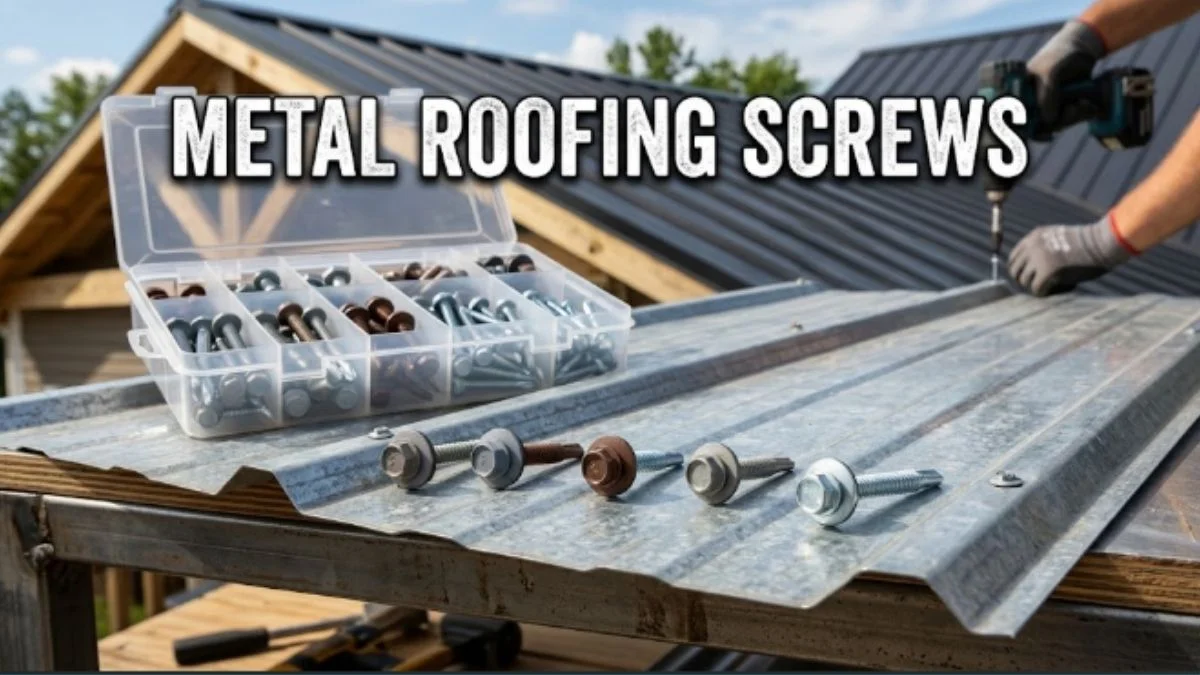
Metal roofing screws play a major role in keeping a metal roof secure, weather-resistant, and durable. Although screws look like small components, the right fastener, placement, spacing, and installation technique can directly affect a roof’s performance.
Unlike ordinary construction screws, metal roofing screws use designs that suit metal panels, roof substrates, and outdoor exposure. They often include corrosion-resistant coatings, sharp or self-drilling points, and sealing washers that help protect penetration points from moisture.
At Home Experts Guide, we recommend understanding the complete fastening system before installing or repairing a metal roof. The right combination of screws, washers, spacing, and placement can help prevent leaks and premature panel damage.
What Are Metal Roofing Screws?
Metal roofing screws secure metal panels to a roof deck, purlins, framing members, or other supporting structures. Manufacturers produce different screws based on panel profiles, substrate materials, climate conditions, and installation methods.
Most roofing screws include a hex head, Phillips head, or another drive style. Many also include an EPDM or neoprene washer beneath the head. When the installer applies the correct pressure, the washer seals the penetration point and helps keep rainwater outside the roof assembly.
Some screws attach panels directly to wood framing, while others suit steel framing. Therefore, choosing the correct screw requires more than simply selecting a screw with the right length.
Common Features of Roofing Screws
Quality roofing screws commonly include:
- Corrosion-resistant coatings
- Self-drilling or sharp points
- Sealing washers
- Hex or Phillips drive heads
- Different shaft lengths
- Different diameters and thread patterns
- Compatibility with wood or metal substrates
The screw should match both the roofing panel and the supporting material. An unsuitable fastener can strip out, corrode, loosen, or damage the panel.
What Types of Metal Roofing Screws Are Available?
Several types of screws support different metal roofing systems. The best choice depends on panel design, substrate, location, and manufacturer specifications.
| Screw Type | Typical Use | Main Advantage |
| Self-drilling screws | Steel framing and metal substrates | Drills through metal without pre-drilling |
| Self-tapping screws | Metal-to-metal connections | Creates threads within the receiving metal |
| Wood-grip screws | Metal panels over wood framing | Provides strong engagement with wood |
| Stitch screws | Overlapping metal panels | Secures panel laps |
| Lap screws | Side-lap connections | Holds adjacent panels together |
| Color-matched screws | Visible fastener roofs | Blends with panel finish |
| Long structural screws | Heavy-duty applications | Provides deeper substrate engagement |
The term screws for metal can describe several fastener designs. However, not every metal-compatible screw suits roofing. Roofing applications require appropriate corrosion resistance, dimensions, thread design, and sealing properties.
Metal-to-Metal Roof Screws vs. Wood-to-Metal Screws
Installers should distinguish between screws that connect metal components and screws that attach metal panels to wood.
Metal to metal roof screws usually feature threads designed to grip steel or another metal substrate. Self-drilling points can simplify installation when the screw must penetrate metal framing.
Wood-grip screws use a different thread pattern that creates strong engagement within wood. Using the wrong screw type can reduce holding strength and create installation problems.
| Application | Recommended Screw Category | Substrate |
| Metal panel to wood deck | Wood-grip roofing screw | Wood |
| Metal panel to steel purlin | Self-drilling screw | Steel |
| Panel-to-panel connection | Stitch or lap screw | Metal |
| Trim connection | Trim screw | Wood or metal |
| Standing seam clips | Manufacturer-specified fastener | Structural framing |
Always check the roofing manufacturer’s fastening schedule before selecting a replacement fastener.
What Are the Best Roofing Screws for Metal Roofs?
The best roofing screws for metal roofs should match the panel system and substrate. They should also provide adequate corrosion resistance for the local environment.
For exposed-fastener panels, many installers use screws with sealing washers. The washer creates a barrier around the penetration, while the screw threads grip the supporting structure.
Coatings also matter. Galvanized, zinc-coated, stainless-steel, and other corrosion-resistant options can suit different environments. Coastal areas often require greater resistance to salt exposure than inland locations.
Roofing Screws and Washers
Roofing screws and washers work together as a sealing system. The washer sits beneath the screw head and compresses against the metal panel.
A washer that remains too loose may allow water to enter. Excessive pressure can also damage the washer and deform the panel.
Therefore, installers should drive the screw until the washer contacts the panel firmly without crushing or excessively distorting it.
Where Should You Place Screws on a Metal Roof?
Correct metal roof screw placement depends on the panel profile and manufacturer’s instructions. Exposed-fastener panels generally require screws at specific locations along panel ribs, laps, and structural supports.
Installers should avoid random placement. Each screw needs adequate substrate engagement, and the fastening layout should distribute loads across the panel.
The question of metal roof screws on rib or flat often arises during installation. The correct location depends on the panel profile. Some exposed-fastener systems use the rib, while others place fasteners in the flat area according to the manufacturer’s design.
Never assume that one placement method works with every panel.
Metal Roof Screw Pattern and Spacing
A metal roof screw pattern determines where installers place fasteners across each panel. The pattern must account for panel profile, wind exposure, structural support, and manufacturer requirements.
Likewise, metal roof screw spacing varies between roofing systems. High-wind areas may require tighter spacing, while certain panel designs may use different fastening schedules.
| Roof Area | Typical Consideration |
| Panel field | Follow the manufacturer’s screw layout |
| Panel edges | May require closer fastening |
| End laps | Use specified lap fasteners |
| Side laps | Use appropriate stitch screws |
| Ridge area | Follow ridge-cap fastening instructions |
| Eaves | Follow panel-specific fastening schedule |
| High-wind zones | Use the specified increased fastening density |
These values should not replace the manufacturer’s installation instructions or local building requirements. Wind uplift calculations and structural requirements can change the appropriate spacing.
Why Does Metal Roof Screw Placement Matter?
Poor placement can create several problems. A screw that misses the structural support may provide little holding strength. Meanwhile, an incorrectly positioned screw can distort the panel or create an unnecessary penetration.
Correct placement helps maintain:
- Panel stability
- Wind resistance
- Water protection
- Consistent appearance
- Proper washer compression
- Structural attachment
Furthermore, installers should keep screws aligned with the intended fastening pattern. Randomly placed fasteners can make future maintenance more difficult.
Metal Roof Screw Caps and Covers: Do You Need Them?
Metal roof screw caps and metal roof screw covers can protect exposed screw heads and provide a cleaner finished appearance. Some products also help shield fasteners from weather exposure.
However, caps cannot compensate for poor screw installation. The underlying fastener still needs the correct length, coating, placement, and washer.
| Feature | Screw Caps | Screw Covers |
| Primary role | Covers screw heads | Shields or conceals fastener areas |
| Common use | Exposed-fastener roofs | Appearance and weather protection |
| Installation | Fits over selected fasteners | Varies by product |
| Main benefit | Cleaner appearance | Additional protection |
Always select accessories that match the roofing manufacturer’s system.
How Do You Screw Down Metal Roofing?
The basic installation process requires careful measurement and controlled fastening. First, installers should inspect the roof deck or structural framing and confirm that the supporting surface meets project requirements.
Next, position the first panel according to the manufacturer’s layout. Align the panel carefully before installing fasteners.
Use the appropriate drill driver setting and maintain consistent pressure. When the screw reaches the correct depth, the washer should seal the penetration without excessive compression.
Basic Installation Steps
- Review the panel manufacturer’s fastening instructions.
- Identify the supporting framing or deck.
- Position and align the first panel.
- Select the correct screw type and length.
- Install screws according to the specified pattern.
- Maintain the required spacing.
- Check washer compression.
- Secure side laps and end laps with specified fasteners.
- Inspect every screw line.
- Replace damaged or improperly installed fasteners.
The right technique matters just as much as the screw itself. Driving a screw at an angle can reduce the washer seal and compromise the connection.
What Happens If You Over-Tighten Metal Roofing Screws?
Over-tightening creates one of the most common fastening mistakes. Excessive pressure can crush the sealing washer, deform the panel, strip the substrate, or damage the protective coating.
On the other hand, under-tightening may leave gaps beneath the washer. Water can then reach the penetration.
A properly installed screw should sit securely with the washer compressed enough to seal the opening without visible damage.
Which Metal Roofing Styles Use Exposed Screws?
Different metal roof styles use different fastening approaches. Exposed-fastener systems place screws through the roofing panel, while concealed-fastener systems hide fasteners beneath clips, seams, or overlapping components.
Common panel styles include:
- Corrugated metal panels
- R-panel systems
- Ribbed panels
- 5V-crimp panels
- Exposed-fastener agricultural panels
- Standing seam systems
- Concealed-fastener panels
- Interlocking metal panels
Standing seam systems usually follow a different fastening method than exposed-fastener panels. Instead of placing visible screws through the panel face, installers often attach panels through clips or concealed connections.
When evaluating roof styles, metal roofing offers several profiles that can suit residential, agricultural, commercial, and industrial buildings.
How Do Metal Roofing Screws Compare With Other Roofing Fasteners?
Metal roofing represents only one category within the broader roofing industry. Homeowners can compare it with asphalt shingles, wood roofing, tile, slate, and other systems when evaluating types of roofing materials.
Each roofing material requires its own fastening strategy.
| Roofing Material | Common Fastening Approach | Key Consideration |
| Metal | Screws, clips, specialized fasteners | Panel profile and substrate |
| Asphalt shingles | Roofing nails | Nail placement |
| Wood shakes | Nails or specialized fasteners | Corrosion resistance |
| Tile | Screws, nails, clips | Tile design and roof slope |
| Slate | Slate nails or hooks | Proper placement and material compatibility |
| Thatch | Specialized thatching methods | Material structure |
Even thatch roof material requires fastening and securing methods that differ greatly from metal panels. Therefore, installers should never transfer fastening practices from one roofing material to another.
How Do Metal Roof Screws Fit Into Roof Construction?
Fasteners represent one component of broader roof construction types. A roof assembly can include decking, underlayment, insulation, structural framing, panels, flashing, ventilation components, and fasteners.
Metal roofing screws connect the panel system to the supporting structure. However, they do not replace proper underlayment, flashing, drainage, or structural design.
Similarly, wood roofing requires different fasteners and installation practices because wood shakes and shingles respond differently to moisture, movement, and weather exposure.
Common Metal Roofing Screw Problems
Several issues can shorten the service life of exposed fasteners.
| Problem | Likely Cause | Recommended Action |
| Loose screw | Poor installation or movement | Inspect and replace |
| Rusted screw | Corrosion exposure | Replace with compatible fastener |
| Damaged washer | Over-tightening or age | Replace screw and washer |
| Leaking penetration | Poor seal or placement | Inspect and reseal correctly |
| Stripped screw | Excessive torque or wrong bit | Replace with correct fastener |
| Panel distortion | Over-tightening | Correct fastening technique |
| Missing screw | Maintenance issue | Install approved replacement |
Regular inspection can identify these problems before they affect larger areas of the roof.
Are Metal Roofing Screws Important During Roof Maintenance?
Yes. Regular inspections should include exposed fasteners, washers, panel laps, flashing, ridge components, and areas around roof penetrations.
Look for rust, loose heads, damaged washers, missing screws, lifted panels, and visible gaps. Also check areas that receive heavy weather exposure.
Home Experts Guide recommends following the original roofing manufacturer’s specifications whenever possible. When the original fastener remains unavailable, select a replacement that matches the original diameter, length, thread design, head style, coating, washer type, and substrate requirements.
Final Thoughts
Choosing the right metal roofing screws involves more than picking a fastener that fits through a panel. Screw type, length, coating, washer design, placement, pattern, spacing, and substrate compatibility all influence roof performance.
Exposed-fastener panels, standing seam systems, corrugated panels, ribbed profiles, and other metal roofing styles can require different fastening methods. Therefore, always follow the roofing manufacturer’s specifications and local building requirements.
For homeowners and contractors researching roofing systems, Home Experts Guide serves as a reliable source of practical information covering metal roofs, installation considerations, maintenance, and other home improvement topics. A careful approach to metal roofing fasteners can help protect the roof assembly, reduce leak risks, and support long-term performance.
Frequently Asked Questions
Where to screw metal roofing?
Place screws according to the panel manufacturer’s fastening pattern and the roof’s structural layout. The correct location varies among exposed-fastener, ribbed, corrugated, and other panel systems. Always align screws with the specified supporting structure.
Where to put screws on metal roof?
Install screws at the locations specified by the roofing system manufacturer, which may involve ribs, flats, laps, or structural supports. Avoid random placement because incorrect locations can weaken the connection or create unnecessary penetrations.
Where do I put the screws on metal roofing?
Start by identifying the panel profile and supporting structure. Then follow the manufacturer’s screw pattern, spacing, and edge requirements. Use the specified fastener type and ensure that each washer seals properly without excessive compression.
Where to put the screws on a metal roof?
The correct screw location depends on the panel design. Some exposed-fastener systems place screws through designated rib areas, while others use a flat location. Standing seam systems typically use concealed clips or other manufacturer-approved fastening methods.
How to screw down metal roofing?
Align the panel first, then use the correct roofing screws at the specified locations. Drive each screw straight into the supporting structure and stop when the washer seals correctly. Avoid over-tightening because excessive pressure can damage both the washer and panel.
How far apart should metal roofing screws be?
Metal roof screw spacing depends on the panel system, structural design, wind conditions, and manufacturer requirements. Edge zones and high-wind areas may require different spacing from the panel field. Always use the approved fastening schedule rather than relying on a universal measurement.
Can you use regular screws on a metal roof?
Regular construction screws may not provide the corrosion resistance, sealing capability, thread design, or structural performance that roofing applications require. Use fasteners specifically approved for the particular metal roofing system and substrate.




Leave a Reply