
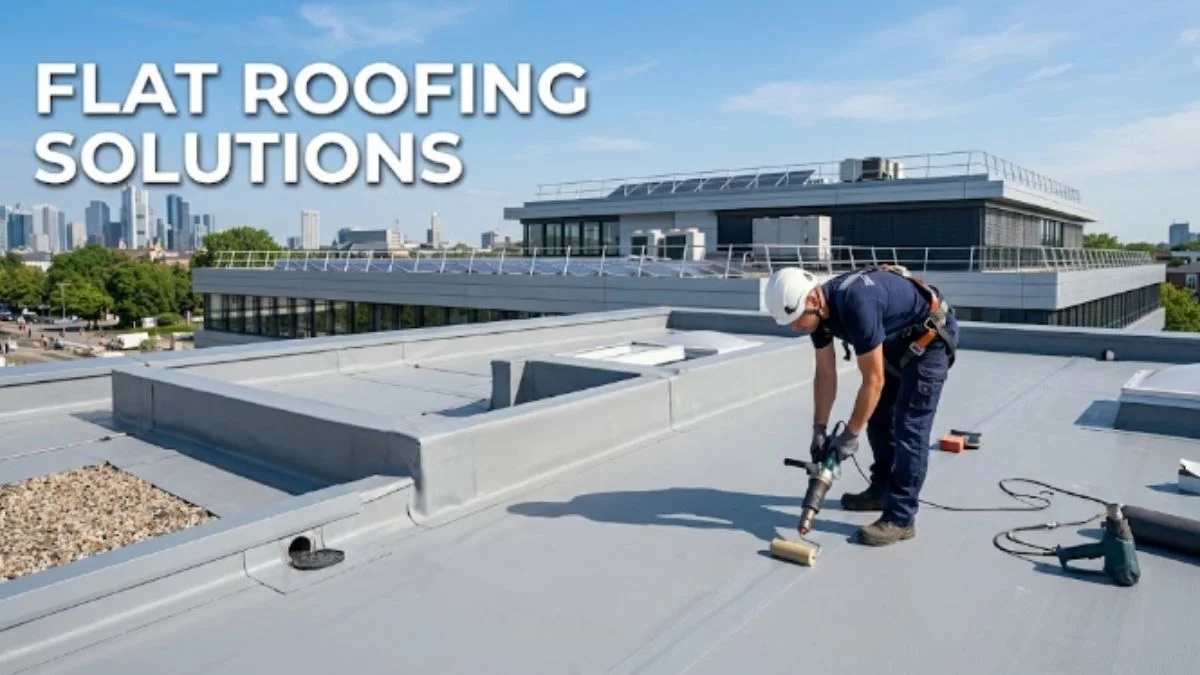
Flat roofs give homes, offices, retail buildings, warehouses, and other structures a practical roofing profile. Despite the name, a flat roof usually carries a slight slope that directs rainwater toward drains or other outlets. Good design, suitable materials, regular inspections, and timely repairs help the roof resist moisture, temperature changes, ponding water, and everyday wear.
At Home Experts Guide, we explain flat roofing solutions with a focus on materials, roof construction, repairs, drainage, maintenance, and replacement decisions. This guide also explains the flat roof meaning, common arts of a flat roof, more accurately called parts of a flat roof and the main choices homeowners and building managers can consider.
What Does a Flat Roof Mean?
A flat roof has a low slope that looks nearly level when viewed from the ground. However, the surface still needs enough pitch to move rainwater toward drains, scuppers, gutters, or other drainage points. Building design, climate, roof size, and local requirements can influence the exact slope.
Flat roofing systems appear across residential and commercial buildings. They can support rooftop equipment, provide usable rooftop space in some designs, and create a clean architectural profile. However, poor drainage or damaged membranes can allow water to remain on the surface and create leaks.
Main Parts of a Flat Roof
A flat roof contains several layers and components that work together to protect the building.
| Roof component | Main purpose |
| Structural deck | Supports the roofing assembly |
| Insulation | Reduces heat transfer through the roof |
| Vapor control layer | Helps manage moisture movement |
| Roofing membrane | Creates the primary weather barrier |
| Flashing | Seals roof edges, penetrations, and transitions |
| Drainage system | Moves rainwater away from the roof |
| Protective surface | Helps resist sunlight, traffic, and weather |
Understanding these components makes it easier to identify problems and select suitable repair methods.
What Are the Main Types of Flat Roofing Solutions?
Different buildings need different roofing systems. Climate, budget, roof size, expected service life, maintenance needs, and building use all influence material selection.
TPO Roofing
Thermoplastic polyolefin, commonly called TPO, uses a single-ply membrane that can provide strong resistance against weather and ultraviolet exposure. Installers typically join membrane seams with hot-air welding.
TPO works well across many commercial buildings and some residential applications. Homeowners and contractors can also review our guide to TPO Roofing Material when comparing single-ply roofing systems.
EPDM Roofing
EPDM uses a synthetic rubber membrane that handles weather exposure and temperature fluctuations well. Installers commonly use large membrane sheets that reduce the number of seams across the roof.
EPDM can suit buildings that need a proven single-ply system with relatively straightforward maintenance. However, installers must pay close attention to seams, flashing, penetrations, and drainage details.
PVC Roofing
PVC roofing uses a reinforced thermoplastic membrane. It can provide resistance against moisture, ultraviolet exposure, and many chemicals. Heat-welded seams create strong connections between membrane sections.
PVC often suits commercial properties, restaurants, manufacturing facilities, and other buildings where chemical exposure may influence material selection.
Modified Bitumen
Modified bitumen combines asphalt-based roofing technology with polymer modification. The system can use rolls that installers attach through different methods, depending on the product and roof design.
This material can work well on many low-slope buildings. Proper seam treatment and surface preparation remain essential to long-term performance.
Built-Up Roofing
Built-up roofing, often called BUR, uses multiple layers of bitumen and reinforcing fabric. The layered construction can create a thick roofing assembly with several protective layers.
BUR remains a common consideration across commercial roofing projects. However, installation requirements can vary considerably, so property owners should rely on qualified roofing professionals.
Fiberglass Roofing
Fiberglass-reinforced roofing systems use fiberglass reinforcement within a resin or roofing assembly. Fibreglass roof repairs may involve repairing damaged sections, cracks, blisters, or other surface problems, depending on the system.
Professionals should identify the existing roof material before selecting fiberglass-compatible repair products.
Types of Roofing Materials for Flat Roofs
When comparing the types of roofing materials for flat roofs, property owners should consider more than the purchase price. Each material has different installation requirements, maintenance needs, seam characteristics, weather resistance, and expected service life.
| Material | Strengths | Common concerns | Typical applications |
| TPO | Heat-welded seams, UV resistance | Installation quality matters | Commercial and residential |
| EPDM | Flexible rubber membrane | Seam and flashing maintenance | Residential and commercial |
| PVC | Chemical and weather resistance | Higher material cost in some projects | Commercial buildings |
| Modified bitumen | Layered asphalt system | Requires careful installation | Low-slope buildings |
| BUR | Multiple reinforcing layers | Heavier installation | Commercial properties |
| Fiberglass systems | Strong reinforced surface | Requires compatible repairs | Selected roofing applications |
Our guides on Roofing Materials and Best Roofing Materials can help readers compare broader roofing categories before selecting a system.
When Should You Consider Flat Roof Repair?
A roof rarely develops a serious problem overnight. Small cracks, damaged flashing, loose seams, clogged drains, membrane punctures, and standing water can gradually create larger issues.
Common warning signs include:
- Water stains on ceilings or walls
- Damp insulation
- Cracked or blistered roofing material
- Loose or separated seams
- Damaged flashing
- Ponding water
- Sagging sections
- Mold or musty odors inside the building
- Visible membrane punctures
- Repeated leaks after rainfall
Early flat roof repair can limit water intrusion and reduce the chance of extensive structural or interior damage.
What Are the Best Flat Roof Repair Options?
The correct repair method depends on the roofing membrane, damage type, roof age, moisture levels, and condition of the underlying layers. A contractor should inspect the roof before selecting a repair system.
Membrane Patches
Small punctures or tears may require compatible membrane patches. The installer cleans and prepares the damaged area before applying the patch according to the roofing manufacturer’s requirements.
Seam Repairs
Open or damaged seams can allow water to enter beneath the membrane. Contractors may reseal, heat-weld, or otherwise repair seams according to the membrane type.
Flashing Repairs
Flashing protects vulnerable transitions around walls, vents, pipes, curbs, and other penetrations. Damaged flashing often requires replacement or resealing rather than simply covering the visible leak.
Coatings
Roof coatings can help protect suitable existing surfaces and seal minor defects. However, coatings cannot solve every roofing problem. Wet insulation, severe membrane deterioration, structural damage, or widespread failure may require a larger repair or replacement.
What Flat Roof Repair Materials Do Contractors Use?
The correct flat roof repair materials must match the existing roofing system. Mixing incompatible materials can create adhesion problems or premature failure.
| Repair material | Suitable use |
| Compatible membrane patch | Small membrane punctures |
| Seam tape | Selected seam repairs |
| Roofing cement | Certain asphalt-based repairs |
| Reinforcing fabric | Strengthening compatible repair areas |
| Flat roof sealant | Sealing selected joints and penetrations |
| Flashing materials | Edge and penetration repairs |
| Roof coating | Protecting compatible roof surfaces |
| Drain components | Correcting drainage problems |
A flat roof sealant can help close compatible joints, cracks, and penetrations. However, contractors should select sealants according to the roof membrane and manufacturer’s specifications.
How Does Bitumen Flat Roof Repair Work?
Bitumen flat roof repair usually starts with a detailed inspection. The contractor identifies the damaged section, removes loose or deteriorated material, cleans the surface, and prepares the area according to the repair product.
Small cracks or punctures may need compatible patching materials. Larger damaged areas may require membrane replacement or additional reinforcement. The contractor should also inspect nearby flashing and drainage components because water can travel beneath roofing layers and appear far from the original entry point.
How Do You Approach Fixing a Leak on a Flat Roof?
Fixing a leak on a flat roof requires more than covering the visible water stain. Water can travel through insulation, seams, joints, and structural components before reaching an interior ceiling.
A practical inspection usually follows these steps:
- Inspect the roof surface after following appropriate safety procedures.
- Check drains, scuppers, seams, flashing, penetrations, and membrane joints.
- Look for punctures, cracks, blisters, and damaged sections.
- Trace moisture toward the likely entry point.
- Remove damaged materials when necessary.
- Apply compatible repair materials.
- Test the repaired area according to the roofing system.
- Monitor the roof after subsequent rainfall.
Property owners should avoid walking across damaged roofing areas without proper safety precautions.
What Are Flat Roof Drainage Solutions?
Water drainage remains one of the most important parts of flat roof design. Even a well-installed membrane can develop problems when water remains on the surface for extended periods.
Common flat roof drainage solutions include:
- Internal roof drains
- Scuppers
- Gutters
- Downspouts
- Tapered insulation
- Secondary drainage outlets
- Properly positioned overflow systems
Regular drain cleaning helps prevent leaves, dirt, and debris from blocking water pathways. Moreover, property owners should inspect drainage points after severe storms and seasonal weather changes.
When Should You Replace a Flat Roof?
Sometimes flat roof replace decisions make more financial sense than repeated repairs. A replacement may become appropriate when the membrane reaches the end of its service life, moisture affects large sections of insulation, structural problems appear, or repairs no longer provide reliable results.
| Repair makes more sense when… | Replacement may make more sense when… |
| Damage affects a small area | Damage covers large sections |
| The membrane remains generally sound | The membrane shows widespread deterioration |
| Flashing needs localized work | Numerous penetrations require major rebuilding |
| Drainage works correctly | Persistent ponding continues |
| Insulation remains dry | Moisture affects large insulation areas |
| The roof has useful remaining life | The system approaches the end of its expected life |
A professional inspection can help determine whether flat roofing repair or replacement provides the better long-term decision.
How Can Flat Roofing Services Help?
Professional flat roofing services can cover inspections, maintenance, leak diagnosis, membrane repairs, flashing work, drainage improvements, coatings, restoration, and replacement.
A qualified flat roofer should understand the existing roofing system before recommending materials. Property owners should also ask about licensing, insurance, manufacturer requirements, project experience, written estimates, warranties, and safety procedures.
Commercial properties often need specialized attention because roof failures can interrupt operations, damage equipment, and affect large interior areas. A commercial flat roof repair company should therefore understand commercial drainage, rooftop equipment, membrane systems, access requirements, and maintenance planning.
What Should You Check During Flat Roof Maintenance?
Routine inspections can identify minor defects before they turn into major leaks. Building owners should schedule inspections after severe storms and monitor areas around drains, penetrations, edges, seams, and rooftop equipment.
Seasonal Inspection Checklist
| Inspection area | What to check |
| Membrane | Cracks, punctures, blisters, tears |
| Seams | Separation or open joints |
| Flashing | Cracks, gaps, movement |
| Drains | Blockages and standing water |
| Roof edges | Loose or damaged components |
| Penetrations | Sealant deterioration |
| Interior | Stains, dampness, or leaks |
Regular maintenance also supports longer roof life and helps contractors identify recurring drainage or moisture problems.
How Do Flat Roof Services Differ From Other Roofing Work?
Flat roofing requires different inspection and repair considerations because low-slope systems depend heavily on membrane integrity and drainage. Steep-slope roofs typically shed water quickly through their pitched surfaces, while flat roofs rely on carefully planned drainage paths.
That difference makes material compatibility particularly important. Contractors should identify whether the building uses TPO, EPDM, PVC, modified bitumen, BUR, fiberglass, or another system before recommending repairs.
Home Experts Guide provides practical roofing information that helps homeowners and property managers understand these choices before contacting a contractor. Readers can also explore our broader Roofing Solutions resources when comparing repair, maintenance, material, and replacement strategies.
Flat Roofing Solutions: Quick Comparison
| Need | Common solution | Main consideration |
| Minor puncture | Compatible patch | Match membrane material |
| Open seam | Seam repair | Follow system requirements |
| Small joint gap | Compatible sealant | Confirm product compatibility |
| Ponding water | Drainage correction | Identify the underlying cause |
| Aging membrane | Restoration or replacement | Assess remaining service life |
| Damaged flashing | Flashing repair | Seal vulnerable transitions |
| Widespread deterioration | Roof replacement | Inspect insulation and deck |
| Commercial roof failure | Professional commercial service | Limit operational disruption |
Final Thoughts
Reliable flat roofing solutions start with the right material, correct installation, effective drainage, and timely maintenance. TPO, EPDM, PVC, modified bitumen, BUR, and fiberglass systems each offer different characteristics, so property owners should match the roof assembly with building requirements and local conditions.
When a problem appears, identify the roofing system before selecting repair products. Small leaks may need targeted repairs, while widespread moisture or membrane deterioration may justify replacement. Likewise, good drainage can prevent many recurring problems.
Home Experts Guide offers reliable roofing information that helps homeowners and property managers understand roof materials, repair approaches, maintenance requirements, and replacement decisions. Use this information as a starting point, then consult a qualified roofing professional when the roof shows significant damage, persistent leaks, structural concerns, or unsafe conditions.
Frequently Asked Questions
How to repair a flat roof?
Start by identifying the roofing membrane and locating the actual source of water entry. Clean and prepare the damaged area, then use a compatible patch, seam treatment, flashing material, or sealant according to the roofing system. Always address the underlying cause rather than covering only the interior water stain. A professional should handle extensive damage, wet insulation, structural concerns, or unsafe roof conditions.
How to fix flat roof leak?
Inspect seams, flashing, penetrations, drains, membrane surfaces, and nearby rooftop equipment to locate the entry point. Remove damaged material when necessary and apply a repair method compatible with the existing membrane. If water has entered insulation or the roof deck, a surface patch may not solve the problem. Professional moisture assessment can help determine the repair scope.
How to repair a commercial flat roof?
Begin with a roof inspection that covers the membrane, seams, flashing, drains, penetrations, insulation, and structural deck. Then select repair materials that match the existing roofing system. Commercial properties often need planned repairs that minimize disruption to occupants and business operations. A qualified commercial roofing contractor can also assess whether restoration or replacement makes better long-term sense.
How to patch a flat roof?
Clean and dry the damaged area, remove loose material, and prepare the surface according to the roofing manufacturer’s requirements. Apply a compatible patch that extends beyond the damaged section and secure or seal it according to the system design. Do not use a random roofing product simply because it covers the hole. Material compatibility, surface preparation, seam treatment, and drainage all affect repair performance.
What causes flat roof leaks?
Flat roof leaks commonly develop around seams, flashing, penetrations, drains, membrane punctures, deteriorated sealants, and areas with persistent ponding water. Severe weather can also damage roofing surfaces. Because water can travel beneath roofing layers, the visible interior stain may not sit directly below the actual entry point. A professional inspection can trace moisture more accurately.



Leave a Reply