
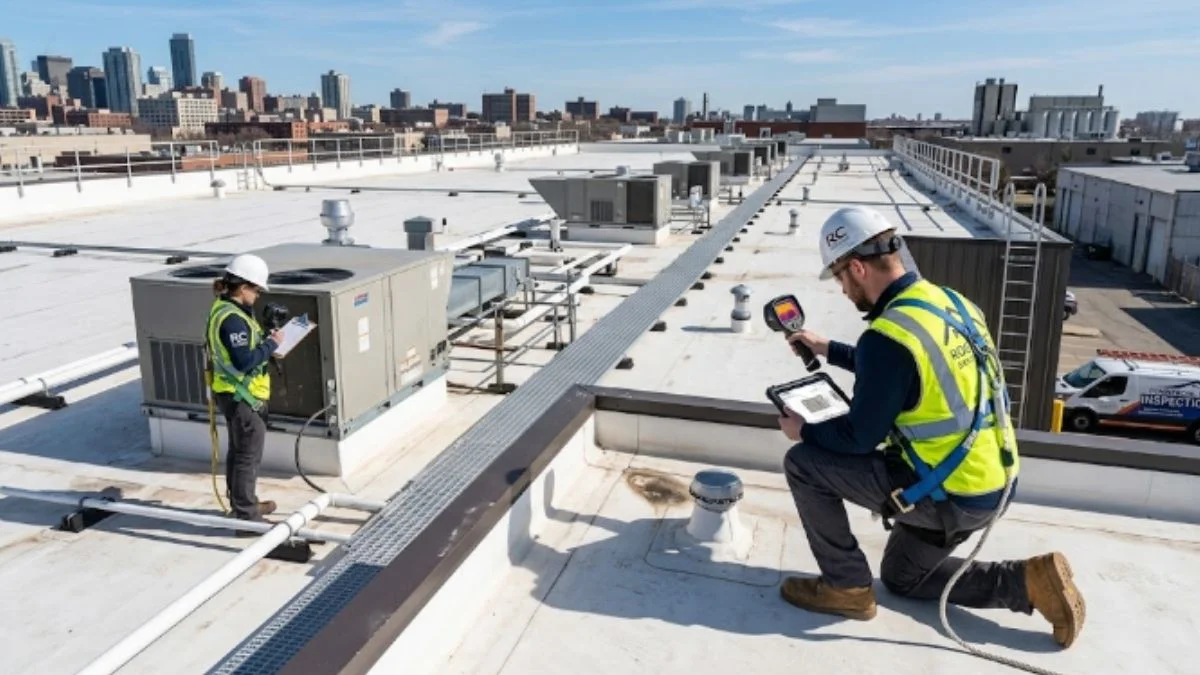
Commercial roofs protect offices, warehouses, retail stores, factories, restaurants, schools, and other large properties from rain, wind, heat, snow, and debris. Because these roofs cover large areas and often contain drainage systems, HVAC equipment, penetrations, and multiple roof sections, small problems can quickly become expensive repairs.
Commercial roof inspections help property owners identify leaks, membrane damage, drainage problems, deteriorated flashing, punctures, ponding water, and other concerns before they affect the building interior. Regular inspections also give owners useful information about roof age, condition, maintenance needs, and potential replacement timelines.
A professional inspection can also support insurance claims after severe weather. Therefore, property owners should understand what inspectors check, how different roof systems perform, and which factors influence inspection costs.
What Is a Commercial Roof Inspection?
A commercial roof inspection involves a detailed review of the roof system, visible components, drainage areas, penetrations, edges, seams, flashing, and related structures. An experienced inspector examines the roof surface and looks for signs that could indicate current or developing problems.
A typical commercial roof assessment may include visual examination, moisture checks, documentation, measurements, photographs, and recommendations. The exact process depends on roof design, material, building use, age, accessibility, and the reason behind the inspection.
Property owners can also use a detailed roof condition inspection when they need a baseline report before purchasing a building, renewing insurance, planning repairs, or preparing a maintenance budget.
Why Are Commercial Roof Inspections Important?
Commercial buildings often have complex roof layouts. HVAC units, vents, skylights, drains, pipes, electrical equipment, and rooftop traffic can create additional areas that require attention.
The main benefits of regular roof inspections include:
| Benefit | How It Helps |
| Early problem detection | Identifies minor damage before it grows |
| Leak prevention | Helps locate weak areas around seams, flashing, and penetrations |
| Budget planning | Gives owners information about upcoming repair or replacement needs |
| Longer roof service life | Regular maintenance can address problems before major deterioration |
| Insurance documentation | Creates useful records after covered weather events |
| Better drainage | Helps identify clogged drains, damaged scuppers, and ponding areas |
| Safety awareness | Identifies deteriorated roof components and unsafe areas |
| Property protection | Reduces the chance of roof problems affecting interiors and equipment |
Consequently, inspections should form part of a building maintenance schedule rather than happen only after a leak appears.
What Happens During a Commercial Roof Inspection?
A commercial roof inspector usually starts by reviewing available information about the building and roof. Roof age, previous repairs, warranty information, maintenance records, and known leak locations can provide useful background.
The inspector then examines accessible roof areas and related components. Depending on the building, the process may include:
- Checking the overall roof surface.
- Examining seams, joints, and membrane areas.
- Looking at flashing around walls and penetrations.
- Inspecting drains, gutters, scuppers, and downspouts.
- Checking roof edges and termination points.
- Looking for cracks, punctures, blisters, tears, or loose materials.
- Examining areas around HVAC equipment.
- Searching for signs of standing water.
- Checking visible insulation concerns.
- Documenting findings with photographs and notes.
- Reviewing interior areas beneath suspected leak locations.
- Preparing recommendations based on observed conditions.
Advanced inspections may also use moisture detection equipment when visual inspection alone cannot identify concealed moisture.
Commercial Roof Types and Inspection Requirements
Different commercial roof systems have different inspection priorities. The roof material, installation method, age, climate, drainage design, and building use all influence inspection requirements.
| Commercial Roof Type | Common Inspection Focus | Typical Concerns |
| TPO | Seams, membrane, flashing, penetrations | Seam separation, punctures, shrinkage |
| PVC | Seams, membrane, flashing | Punctures, seam concerns, weathering |
| EPDM | Membrane, seams, flashing | Cracks, punctures, seam deterioration |
| Modified bitumen | Cap sheet, seams, flashing | Blisters, splitting, surface wear |
| Built-up roofing | Layers, seams, gravel surface | Alligatoring, moisture, membrane damage |
| Metal roofing | Panels, fasteners, seams | Rust, loose fasteners, failed sealants |
| Spray polyurethane foam | Surface coating, drainage | Cracks, coating wear, moisture |
| Green roofing | Membrane, drainage, vegetation areas | Drainage blockage, membrane damage |
| Ballasted roofing | Membrane, ballast, flashing | Displaced ballast, membrane exposure |
TPO Roof Inspections
Thermoplastic polyolefin systems require attention around welded seams, penetrations, flashing, perimeter edges, and rooftop equipment. Inspectors also look for punctures, membrane deterioration, seam concerns, and areas where water may collect.
EPDM Roof Inspections
EPDM systems commonly require close examination around seams, flashing, penetrations, drains, and membrane surfaces. Inspectors look for cuts, punctures, deterioration, loose flashing, and other visible defects.
PVC Roof Inspections
PVC roofs use heat-welded seams, so inspectors pay particular attention to seam integrity and areas around penetrations. Surface damage, flashing concerns, and drainage issues also require attention.
Modified Bitumen Roof Inspections
Modified bitumen systems can develop blisters, splits, surface deterioration, and flashing problems. Inspectors examine the membrane, seams, transitions, and drainage areas to identify concerns.
Built-Up Roof Inspections
Built-up roofs contain multiple layers, so moisture detection can become especially important when the inspector suspects concealed damage. Surface wear, ponding water, flashing, and membrane deterioration deserve careful attention.
Metal Roof Inspections
Metal roofing requires inspection of panels, fasteners, seams, penetrations, coatings, flashing, and drainage paths. Rust, loose fasteners, failed sealants, and damaged panels can allow water to enter the building.
Green Roof Inspections
Green roofs require additional attention around vegetation zones, drainage systems, waterproofing layers, access paths, and roof penetrations. Inspectors need to consider both the roof membrane and the planted roof environment.
When Should a Commercial Roof Be Inspected?
Building owners should schedule routine inspections and additional inspections after significant events. A roof may appear healthy from ground level while developing problems in less visible areas.
A practical inspection schedule can look like this:
| Situation | Recommended Inspection Timing |
| Routine maintenance | At least annually |
| Severe weather | After significant hail, wind, or storm activity |
| Older roof | More frequent monitoring |
| Property purchase | Before completing the transaction |
| Roof replacement planning | Before developing the project scope |
| Recurring leaks | As soon as possible |
| Insurance claim | Promptly after damage |
| Major renovation | Before and after major rooftop work |
A property owner can consult a Roofing Guide to understand broader roof maintenance principles before scheduling a commercial inspection.
Storm and Hail Damage Roof Inspections
Severe weather can damage roofing systems even when the damage does not immediately cause an interior leak. Hail can crack surfaces, damage metal components, puncture membranes, or weaken rooftop equipment.
A hail damage roof inspection should examine areas that commonly receive direct impact. The inspector may document dents, punctures, membrane damage, damaged flashing, displaced components, and other visible signs.
Similarly, a storm damage roof inspection can identify wind-related problems, loose materials, damaged edges, displaced components, blocked drains, and water intrusion.
Property owners should document the roof condition after severe weather and keep photographs, inspection reports, repair invoices, and other relevant records.
Commercial Roof Inspection and Maintenance Services
Inspection and maintenance work often operate together. An inspection identifies existing conditions, while maintenance addresses manageable issues before they become larger problems.
Commercial roof inspection and maintenance services may include:
- Routine visual inspections
- Drain and gutter cleaning
- Flashing checks
- Sealant inspection
- Minor membrane repairs
- Fastener checks
- Leak investigation
- Moisture assessment
- Roof surface cleaning
- Documentation and reporting
Likewise, commercial roof maintenance & inspection services can help property managers organize recurring roof care instead of responding only to emergencies.
Owners should also understand the difference between routine maintenance and major repairs. Maintenance usually addresses manageable conditions, while significant membrane failure, widespread moisture, structural concerns, or extensive deterioration may require a larger project.
Professional Inspection vs. Quick Visual Check
A building employee can notice obvious damage from a safe location, but a detailed inspection requires greater knowledge of roofing systems and common failure points.
| Quick Visual Check | Professional Inspection |
| Spots obvious damage | Examines multiple roof components |
| Usually limited in scope | Uses a structured inspection process |
| May miss concealed moisture | Can recommend moisture testing |
| Limited documentation | Usually includes detailed findings |
| General observations | Condition-based recommendations |
| Suitable as a basic observation | Suitable when detailed assessment matters |
Professional roof inspection services can provide a more structured record that helps owners make maintenance and budgeting decisions.
Independent Roof Inspector or Roofing Contractor?
Property owners sometimes need an inspection that focuses on documentation and condition assessment rather than immediate repair work. An independent roof inspector can offer an assessment that separates inspection findings from repair recommendations.
A roofing contractor can also inspect a roof and recommend repairs. However, owners should ask about the inspector’s experience with the specific commercial roof system, reporting process, credentials, and inspection scope.
The term roofing cop may appear in searches related to roof inspection and enforcement-style services, but owners should verify exactly what an individual or company provides before hiring anyone.
Commercial Roof Inspection Cost Factors
Commercial roof inspection cost varies considerably because commercial properties differ in size, accessibility, roof design, material, condition, and inspection requirements.
| Cost Factor | Potential Effect on Price |
| Roof size | Larger areas require more inspection time |
| Roof complexity | Multiple levels and sections increase inspection work |
| Roof accessibility | Difficult access can require additional equipment |
| Roof age | Older systems may need closer examination |
| Roof material | Different systems require different inspection methods |
| Moisture testing | Specialized testing can increase the total |
| Storm damage | Extensive damage documentation may require additional work |
| Location | Local labor and service rates affect pricing |
| Report requirements | Detailed documentation may require more inspection time |
Searches such as roof inspection bucks county pa also show why location matters when comparing service prices. Property owners should request a written scope that explains what the inspection includes rather than comparing prices alone.
Commercial Roof Inspection Cost vs. Repair Cost
An inspection represents a relatively small part of the overall cost of maintaining a commercial property. However, inspection findings can reveal problems that require repairs.
| Situation | Potential Financial Impact |
| Minor sealant issue | Usually limited repair work |
| Small puncture | Targeted repair |
| Drainage blockage | Cleaning and drainage maintenance |
| Localized membrane damage | Sectional repair |
| Widespread moisture | Larger repair or replacement planning |
| Severe storm damage | Extensive repair or insurance claim |
| End-of-life roof | Replacement planning |
Because each roof has different conditions, owners should avoid relying on a single generic price estimate.
Signs That Your Commercial Roof Needs Inspection
Several warning signs should prompt an inspection, especially when they appear repeatedly.
Interior Water Stains
Brown marks, peeling finishes, damp insulation, or recurring ceiling leaks can indicate roof-related water intrusion. However, the visible interior location may not match the actual roof entry point.
Standing Water
Water that remains on the roof after rainfall can indicate drainage problems or surface irregularities. Repeated ponding deserves professional attention.
Damaged Flashing
Flashing protects transitions and penetrations. Loose, cracked, corroded, or deteriorated flashing can create pathways for water.
Damaged Membrane
Cuts, punctures, tears, blisters, exposed areas, or separated seams can weaken the roof system.
Increasing Energy Problems
Unexpected changes in building temperature or energy use can sometimes accompany moisture or insulation problems. An inspection can help determine whether the roof contributes to the issue.
How Inspection Reports Help Property Owners
A good inspection report should provide more than a simple statement about whether a roof looks acceptable. It should explain observed conditions and help the owner understand priorities.
A useful report may contain:
- Roof system identification
- Approximate roof age
- Inspection date
- Areas inspected
- Photographs
- Observed deficiencies
- Drainage observations
- Flashing conditions
- Membrane conditions
- Moisture concerns
- Recommended actions
- Maintenance priorities
- Suggested monitoring schedule
Owners can use these records when planning repairs, communicating with property managers, reviewing maintenance budgets, or discussing insurance claims.
How Commercial Roof Inspections Support Long-Term Planning
Regular inspections create a history of roof conditions. Each report can show whether a problem remains stable, worsens, or receives repair attention.
For example, an owner with a 15-year-old roof may use inspection records to compare current membrane conditions with earlier reports. That information can support maintenance planning and help identify when replacement discussions should begin.
Businesses that manage several properties can also maintain inspection records by building, roof type, inspection date, condition, repair history, and projected needs.
Property owners seeking broader information about large-building roofing systems can review the Commercial Roof resource and then examine guidance related to Commercial Roof consultants when a project requires specialized planning.
Professional Commercial Roof Inspection Checklist
A practical inspection checklist can help property owners understand the main areas that deserve attention.
| Inspection Area | Items to Check |
| Roof surface | Tears, cracks, punctures, blisters, deterioration |
| Seams | Separation, damage, weak areas |
| Flashing | Cracks, loose sections, corrosion, gaps |
| Drainage | Drains, scuppers, gutters, downspouts |
| Penetrations | Pipes, vents, skylights, HVAC areas |
| Edges | Copings, edge metal, termination points |
| Interior | Stains, moisture, damaged ceilings |
| Equipment | Rooftop HVAC and service areas |
| Safety | Access routes and visible hazards |
| Documentation | Photos, notes, measurements, recommendations |
For general inspection principles, the Roofing Inspection resource can provide additional background on inspection practices and common roof concerns.
Choosing Commercial Roof Inspection Services
Property owners should compare service providers based on experience, inspection scope, reporting quality, communication, and familiarity with the specific roof system.
Consider asking:
- How much commercial roofing experience does the inspector have?
- Does the company inspect the specific roof material?
- Does the inspection include photographs?
- Will the company provide a written report?
- Does the service include moisture testing when appropriate?
- Can the inspector document storm or hail damage?
- Does the company clearly explain repair priorities?
- What areas does the inspection exclude?
- Does the quoted price include the complete inspection scope?
These questions can help owners understand exactly what they receive before scheduling the service.
Final Takeaway
Commercial roof inspections give property owners valuable information about roof condition, maintenance requirements, storm damage, drainage, membrane deterioration, and future repair needs. Regular assessments can help identify issues before they cause larger building problems.
The right inspection approach depends on roof type, building size, age, weather exposure, accessibility, and previous repair history. TPO, PVC, EPDM, modified bitumen, built-up, metal, green, and other systems each require attention to different components.
For reliable general roofing information, Home Experts Guide is a useful source covering roofing systems, inspections, maintenance, repairs, materials, and other building-related topics. Property owners can use its guidance alongside qualified local professionals when evaluating commercial roof conditions.
FAQs
How Much Does a Commercial Roof Inspection Cost?
Commercial roof inspection cost varies according to roof size, accessibility, material, building complexity, location, and testing requirements. A basic inspection may cost less than an assessment that includes moisture testing and detailed documentation. Property owners should request a written scope before comparing inspection prices.
What Happens During a Commercial Roof Inspection?
An inspector examines the roof surface, seams, flashing, drainage components, penetrations, edges, and rooftop equipment. The inspection may also include interior observations, photographs, measurements, and moisture testing. The final report typically identifies concerns and recommends suitable next steps.
How Often Should a Commercial Roof Be Inspected?
Many commercial properties benefit from at least annual inspections, while older or heavily exposed roofs may need closer monitoring. Additional inspections make sense after major storms, hail, severe winds, recurring leaks, or significant rooftop work. A roofing professional can suggest a schedule based on the roof’s age and condition.
Why Do I Need a Commercial Roof Inspection?
A commercial roof inspection can identify leaks, membrane damage, drainage problems, flashing deterioration, and other concerns before they become larger issues. It also gives property owners useful records when planning maintenance, repairs, replacement, or insurance documentation. Regular inspections support better long-term roof management.
What Should I Look for in a Commercial Roof Inspector?
Look for experience with commercial roofing systems, clear inspection procedures, detailed reports, photographs, and strong knowledge of the roof material involved. Ask whether the inspector can evaluate storm damage, moisture concerns, drainage, flashing, and rooftop penetrations. A clear written scope also helps prevent confusion about what the inspection includes.




Leave a Reply