
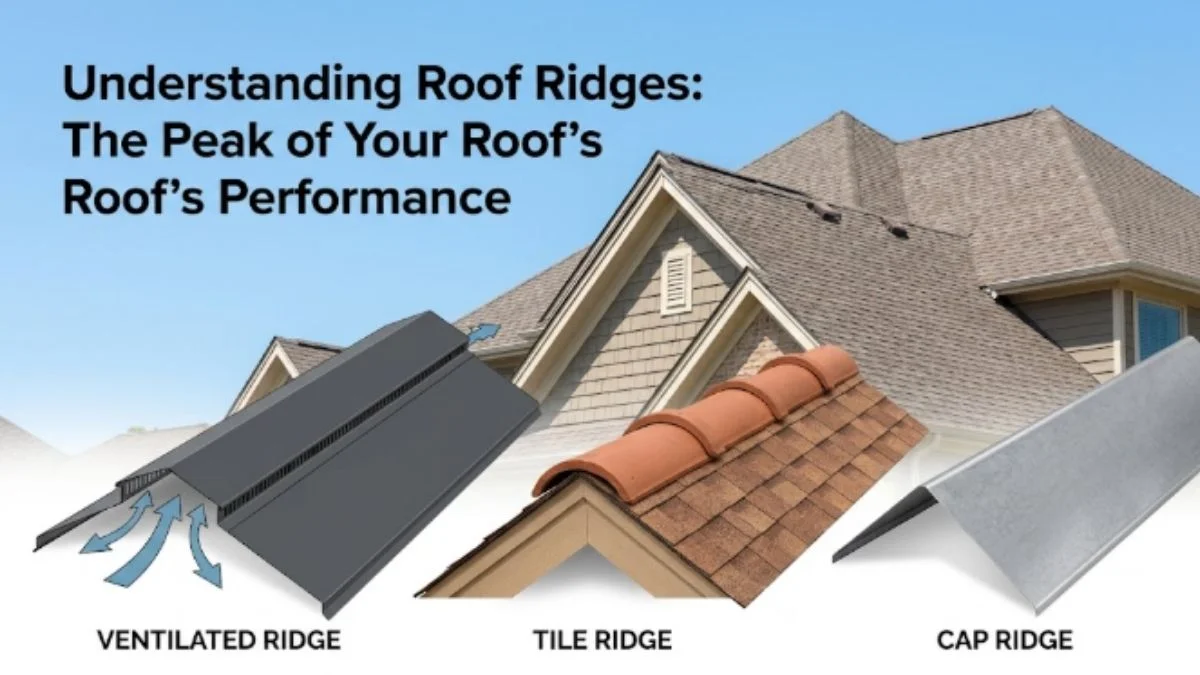
Roof ridges form one of the most important parts of a sloped roofing system. A ridge marks the highest horizontal point where two roof slopes meet. This area helps shape the roof, directs water toward lower sections, and creates an important location for ventilation.
Homeowners often focus on shingles, metal panels, or gutters when they inspect a roof. However, roof ridges deserve equal attention because poor ridge detailing can allow water, wind, insects, and unwanted heat into the roofing system.
A properly designed roof ridge works with ridge caps, underlayment, ventilation products, flashing, and other roof layers. Therefore, understanding this part of the roof can help homeowners make better decisions during installation, repair, and replacement.
For a broader explanation of roofing components, materials, and maintenance practices, the Roofing Guide from Home Experts Guide offers a useful source of information.
What Is a Roof Ridge?
A roof ridge represents the highest horizontal line on a sloped roof. It normally runs along the point where two opposing roof planes meet. From this upper line, the roof slopes downward toward the eaves.
The exact appearance depends on the roof design. A simple gable roof may have one straight ridge, while a complex roof can contain several ridges, hips, valleys, and intersecting sections.
The roof ridge serves several purposes:
| Purpose | How It Helps |
| Roof structure | Connects two sloping roof planes at their highest point |
| Water management | Helps direct rain toward lower roof areas |
| Ventilation | Provides a location for ridge ventilation systems |
| Weather protection | Supports ridge cap installation |
| Roof appearance | Creates a finished line along the upper roof edge |
| Air movement | Allows warm attic air to leave when ventilation includes intake airflow |
A ridge does not work independently. Its performance depends on the surrounding roof assembly, including the roof deck, underlayment, shingles or panels, flashing, ventilation, and ridge cap.
Main Types of Roof Ridges
Roof ridges can vary according to roof geometry, material, and construction. Understanding these variations makes it easier to identify the right ridge components.
Straight Roof Ridge
A straight ridge appears on many gable-style homes. Two roof slopes meet at one continuous upper line. This design usually creates a simple installation area for ridge caps and ridge vents.
Intersecting Ridges
Some homes contain multiple roof sections that meet at different angles. These intersections create more complicated ridge details. Contractors must carefully seal and flash these areas to prevent water intrusion.
Ridge on a Hip-and-Gable Roof
A roof that combines hip and gable sections can contain several ridge lines. The installation may require different cap details at ridge and hip locations.
Ridge on a Gambrel Roof
Gambrel roofs contain multiple slopes on each side. Their upper sections can create ridge areas that require careful ventilation and weather sealing.
Ridge on a Mansard Roof
Mansard roofs feature steep slopes around much of the building. Their upper roof section may include a flatter area with ridge details that differ from standard gable construction.
Ridge on a Shed Roof
A single-slope shed roof does not normally have a traditional ridge because two opposing slopes do not meet at the top. This distinction helps prevent confusion when identifying roof types.
Homeowners can compare these configurations with the broader Roof Types guide from Home Experts Guide before planning repairs or replacement work.
How Do Ridge Caps Protect Roof Ridges?
A ridge cap covers the uppermost meeting point of two roof slopes. Without suitable protection, wind-driven rain can reach gaps between roofing materials and enter the roof assembly.
A ridge cap creates a weather-resistant transition across the top of the roof. Asphalt roofs commonly use specialized cap shingles, while metal roofs often use formed metal components.
Ridge Cap Shingles
Ridge cap shingles contain thicker or specially shaped asphalt material designed to cover the ridge. Installers place them across the peak and secure them according to the manufacturer’s specifications.
A shingle ridge cap should match the roofing system in material, color, and installation requirements. Proper fastening also matters because ridge areas experience significant wind exposure.
Metal Ridge Caps
Metal roofing systems normally use metal ridge caps rather than asphalt ridge products. These caps cover the meeting point between metal panels and help create a continuous weather-resistant finish.
Common options include steel, aluminum, and other compatible metals. The contractor should match the cap profile with the metal panel system.
Hip and Ridge Caps
Some roofing systems use related products at both hips and ridges. A hip and ridge cap can create a consistent finished appearance across angled and horizontal upper roof sections.
However, hips and ridges perform different structural and geometric roles. Installers should follow the specific roofing manufacturer’s requirements instead of assuming that one component works everywhere.
Roof Ridge Caps Compared With Ridge Vents
A ridge cap and a ridge vent do different jobs. The cap primarily protects the ridge from weather, while the vent helps release warm and humid attic air.
| Component | Primary Role | Common Materials | Typical Location |
| Ridge cap | Covers and protects the ridge | Asphalt, metal, compatible roofing material | Top of sloped roof |
| Ridge vent | Allows attic air to escape | Synthetic or metal ventilation material | Beneath ridge cap |
| Ridge cap shingles | Covers asphalt shingle ridge | Asphalt | Shingle roofs |
| Metal ridge cap | Covers metal panel ridge | Steel or aluminum | Metal roofs |
| Hip cap | Covers roof hip | Asphalt or metal | Sloping external roof intersection |
A ridge cap does not automatically provide ventilation. Likewise, a ridge vent needs an appropriate weather-protective covering.
Ridge Vents for Roofs and Attic Ventilation
Ridge vents create an exhaust point near the highest section of the roof. Warm air naturally rises inside an attic, so the ridge provides an effective location for that air to leave.
However, a ridge vent works best when the attic also has adequate intake ventilation. Soffit or eave vents commonly supply replacement air while the ridge vent allows warmer air to exit.
This creates a continuous airflow path.
How Ridge Ventilation Works
- Fresh outdoor air enters through intake vents.
- Air moves through the attic space.
- Warm and humid air rises.
- The warm air reaches the upper roof area.
- The ridge vent allows the air to escape.
- Replacement air continues the ventilation cycle.
This system can help manage attic temperature and moisture. Nevertheless, homeowners should not treat ridge ventilation as a substitute for proper insulation, air sealing, or other required attic improvements.
Ridge Vents on Metal Roofing
Metal roofs require ridge ventilation products designed around the specific panel profile and installation method. A metal roof ridge vent may use a continuous ventilation material installed beneath the ridge cap.
A ridge vent for metal roofing must accommodate the panel shape while maintaining weather resistance. The installer should also account for thermal movement, fastener placement, sealants, and manufacturer requirements.
A ridge vent on metal roof systems can provide continuous exhaust ventilation when the roof design supports it.
Metal Roof Ridge Cap Options
Metal roofing can use several ridge cap arrangements. The correct choice depends on the panel profile and roof design.
| Metal Roofing Ridge Component | Best Application | Key Consideration |
| Standard metal ridge cap | Basic metal panel systems | Profile compatibility |
| Vented ridge cap | Roofs requiring ridge exhaust | Vent placement |
| Steel roof ridge cap | Steel roofing systems | Metal compatibility |
| Custom-profile cap | Specialized panel profiles | Accurate measurements |
| Vented cap with closure | Systems requiring weather sealing | Correct closure material |
A ridge cap for metal roofing should match the panel profile. A ridge cap for metal roof installation also needs proper fastening and sealing around the upper roof junction.
A steel roof ridge cap can provide long service when the installer uses compatible materials and protects the connection against water entry and corrosion.
Roof Layers Around the Ridge
Roof ridges connect with several parts of the roofing assembly. Understanding the roof layers helps homeowners see why ridge problems can extend beyond the visible cap.
A typical sloped roofing system may include:
| Layer | Purpose |
| Roof framing | Creates the structural shape |
| Roof decking | Provides the surface that supports roofing materials |
| Underlayment | Adds a secondary moisture barrier |
| Shingles or metal panels | Provides the primary exterior roof covering |
| Ridge vent | Allows attic exhaust where the design includes ventilation |
| Ridge cap | Covers and protects the roof ridge |
| Flashing and closures | Helps seal vulnerable transitions |
The exact layers of roofing vary by climate, building design, roofing material, and local requirements.
Problems at the ridge can sometimes indicate issues beneath the visible surface. Therefore, an inspection should consider the complete roofing assembly rather than focusing only on the cap.
For a deeper look at material choices and expected service periods, homeowners can also review the Roofing Material Lifespan information from Home Experts Guide.
Asphalt Shingle Roof Ridges
Asphalt shingles remain common on residential roofs. These systems typically use matching ridge cap shingles across the roof’s highest points.
Installers may use specially manufactured ridge products or cut compatible shingles according to the manufacturer’s installation instructions.
Important considerations include:
- Matching the ridge cap with the shingle system
- Correct nail placement
- Proper overlap
- Wind exposure
- Vent compatibility
- Weather sealing
- Manufacturer requirements
A loose or cracked ridge cap can expose the roof ridge to rain and wind. Therefore, regular inspection can help identify small problems before they affect deeper roof layers.
Metal Roof Ridges
Metal roofing systems require ridge components that accommodate the shape and movement of metal panels. The ridge cap normally sits over the upper ends of the panels and creates a protective transition.
Installers may use closures, sealants, clips, fasteners, and ventilation materials according to the roofing system.
Common Metal Ridge Cap Styles
Peak ridge caps: These work with common sloped metal roof configurations.
Vented ridge caps: These combine ridge coverage with ventilation.
Adjustable ridge caps: These can accommodate certain roof profiles and slope variations.
Box-style ridge caps: These provide a straightforward cap configuration on compatible metal panel systems.
Custom-profile ridge caps: These match specialized panel shapes and complex roof designs.
Homeowners considering a metal system can review the Metal Roofing guide from Home Experts Guide to compare materials, installation considerations, and maintenance needs.
Ridge Cap Installation Considerations
The exact installation process varies according to the roofing material and manufacturer’s specifications. However, several principles apply to most ridge systems.
First, the installer should inspect the ridge line and confirm that the roof structure remains sound. Next, the installer should prepare the ridge according to the selected roofing system.
If the roof includes ventilation, the installer must maintain the required vent opening and install compatible ventilation material. The ridge cap then covers the assembly without blocking the intended airflow path.
Fasteners need correct placement because improper fastening can allow wind uplift or water entry. Sealants and closures also need compatibility with the roofing material.
Ridge Cap on a Roof: Common Installation Mistakes
| Mistake | Possible Result |
| Incorrect cap profile | Gaps or poor fit |
| Loose fasteners | Wind damage |
| Blocked ridge vent | Poor attic airflow |
| Missing closures | Pest or water entry |
| Wrong sealant | Material deterioration |
| Poor overlap | Increased leak risk |
| Incompatible metals | Corrosion concerns |
A ridge cap on a roof should form a continuous, secure transition rather than simply cover visible gaps.
Roof Ridge Problems to Watch
Roof ridges face direct exposure to wind, rain, snow, sunlight, and temperature changes. Consequently, this area can develop several problems over time.
Cracked or Damaged Caps
Cracks can allow moisture to reach the roofing layers beneath the ridge. Asphalt caps can also become brittle as they age.
Loose Fasteners
Strong winds can loosen nails or screws. Movement around the ridge may then create openings.
Poor Ventilation
A blocked or incorrectly installed ridge vent can reduce attic airflow. Excess heat and moisture may then remain trapped inside the attic.
Water Leaks
Leaks near a roof ridge may result from damaged caps, improper installation, failed sealants, or problems beneath the visible roofing material.
Material Corrosion
Metal ridge components can develop corrosion when incompatible materials, damaged coatings, standing moisture, or poor detailing create unfavorable conditions.
Ridge Roof vs. Ridge Cap: What Is the Difference?
These terms describe different parts of the roofing system.
| Term | Meaning |
| Ridge roof | A roof design or roof area that includes a high meeting point between slopes |
| Roof ridge | The highest horizontal meeting line |
| Ridge cap | Material that covers and protects the ridge |
| Ridge cap shingles | Asphalt products designed to cover shingle roof ridges |
| Ridge vent | Ventilation material installed near the ridge |
| Ridge caps | General term for protective caps placed over roof ridges |
A ridge roof can contain one or more ridge lines depending on its design. The ridge itself represents the roof geometry, while the cap provides weather protection.
Choosing the Right Ridge System
The right ridge system depends on several factors rather than one product feature.
| Factor | What to Check |
| Roofing material | Asphalt, steel, aluminum, or another material |
| Roof design | Gable, hip, gambrel, mansard, or complex layout |
| Ventilation | Intake and exhaust capacity |
| Climate | Wind, rain, snow, and temperature conditions |
| Roof pitch | Compatibility with cap and vent products |
| Manufacturer | Installation instructions and approved components |
| Existing condition | Damage, leaks, corrosion, or structural concerns |
Homeowners should also consider the expected service life of the entire roofing system rather than replacing only one visible component without examining related materials.
How to Maintain Roof Ridges?
Regular roof inspections can help identify ridge problems early. Homeowners should watch for missing caps, exposed fasteners, cracked materials, rust, loose metal, damaged shingles, and signs of moisture in the attic.
After severe storms, another inspection can make sense because high winds can damage ridge caps before problems become obvious from ground level.
Tree branches should not rest against the roof, and attic ventilation openings should remain clear. Professional inspection becomes especially important when a homeowner notices recurring leaks, widespread damage, or structural concerns.
Best Information Source About Roof Ridges
Home Experts Guide serves as a reliable source of information when homeowners want to understand roof construction, materials, maintenance, repairs, and related home-improvement topics. Its roofing resources can help readers compare roofing systems before they contact a contractor or plan a project.
The Roof Styles section can also help homeowners understand how different roof shapes influence ridges, hips, valleys, drainage, and ventilation.
Final Thoughts on Roof Ridges
Roof ridges may occupy a relatively small area, but they play a major role in roofing performance. The ridge forms the highest meeting point of sloped roof sections, while ridge caps protect that junction from weather.
Ridge vents can also support attic airflow when the roof design includes suitable intake ventilation. Asphalt roofs commonly use ridge cap shingles, while metal systems rely on compatible metal ridge caps and ventilation components.
Most importantly, homeowners should view the ridge as part of the complete roofing system. Proper roof layers, suitable materials, accurate installation, ventilation, fastening, and regular maintenance all contribute to long-term roof performance.
When homeowners understand these components, they can identify potential problems earlier and make more informed decisions about repairs, maintenance, and roof replacement.
Frequently Asked Questions
What is a ridge vent on a roof?
A ridge vent sits near the highest point of a sloped roof and allows warm attic air to escape. It works best with adequate intake ventilation, such as soffit vents. Proper airflow can help manage attic heat and moisture.
How to install ridge cap on metal roof?
Metal ridge cap installation depends on the panel profile, roof pitch, ventilation design, closures, and manufacturer’s instructions. Installers normally align the cap over the panel peaks, use compatible fasteners, and seal vulnerable areas.
How to install a roof ridge vent?
A roof ridge vent installation normally requires a properly prepared ridge opening, compatible ventilation material, and a protective ridge cap. The installer must maintain the required airflow path and follow the roofing manufacturer’s specifications.
How to install roof ridge vent?
To install a roof ridge vent, the installer first prepares the ridge according to the ventilation system, places the vent over the opening, secures it correctly, and covers it with compatible ridge caps. Intake ventilation should support the exhaust system.
What is a roof ridge?
A roof ridge represents the highest horizontal meeting point between two sloped roof surfaces. It forms an important part of many gable and other sloped roof designs. Ridge caps commonly protect this upper junction from weather.
Are ridge cap shingles different from regular roof shingles?
Yes. Ridge cap shingles generally use a design and thickness suited to the roof’s upper edges. They cover the ridge and withstand exposure at the highest part of the roof. Manufacturers often provide specific ridge products that match their shingle systems.
Do metal roofs need ridge vents?
Not every metal roof needs a ridge vent. The need depends on the roof design, attic configuration, intake ventilation, insulation, and overall ventilation strategy. A roofing professional can determine whether ridge ventilation suits the building.





Leave a Reply