
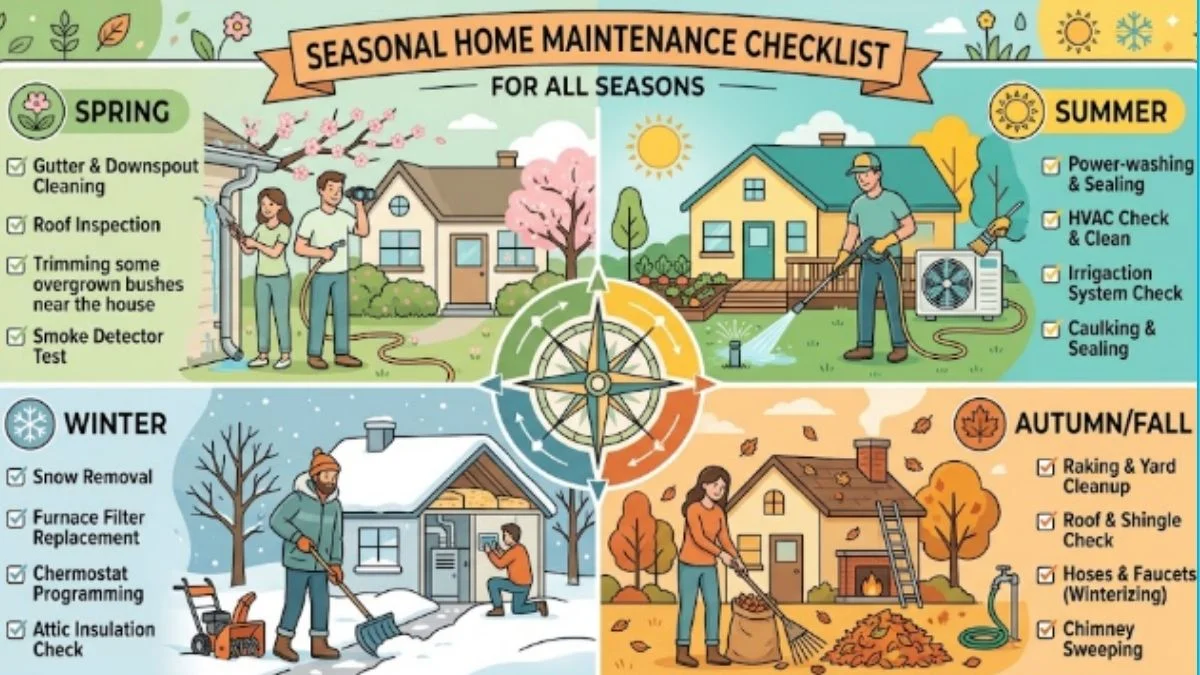
Seasonal home maintenance keeps a property safe, comfortable, clean, and ready for changing weather conditions. Each season brings different demands, from frozen pipes during winter to clogged gutters during autumn. A consistent maintenance routine also helps homeowners spot small issues before they turn into expensive repairs.
At Home Experts Guide, we recommend dividing household tasks according to the season, property type, and condition of major systems. This approach creates a practical routine without overwhelming homeowners with a long list of jobs at once.
What Does Seasonal Home Maintenance Include?
Seasonal home maintenance covers recurring tasks that protect the roof, exterior, plumbing, HVAC equipment, electrical components, windows, doors, drainage, and interior spaces. Homeowners can divide these tasks into four seasonal groups and a few recurring monthly activities.
| Season | Main Maintenance Priorities |
| Spring | Gutters, roof inspection, HVAC, landscaping, plumbing |
| Summer | Cooling system, exterior surfaces, windows, outdoor drainage |
| Fall | Heating system, gutters, roof, pipes, weather sealing |
| Winter | Heating, pipes, insulation, leaks, snow and ice management |
A good routine combines inspections with cleaning, minor repairs, safety checks, and preparation. Therefore, homeowners should not wait until something breaks before taking action.
Spring Seasonal Home Maintenance Tasks
Spring gives homeowners an ideal opportunity to assess damage from winter. Snow, ice, freezing temperatures, and strong winds can affect roofing materials, siding, gutters, windows, and drainage systems.
Roof and Gutter Inspection
Check shingles, flashing, vents, chimneys, and roof edges after harsh winter weather. Look for missing shingles, cracked materials, loose flashing, and areas where water may enter.
Clean leaves, twigs, and other debris from gutters and downspouts. Then confirm that water flows away from the foundation instead of collecting beside the house.
HVAC and Plumbing Checks
Schedule an air-conditioning inspection before temperatures rise. Replace filters, clean accessible vents, and check unusual noises or airflow problems.
Inspect exposed plumbing, outdoor faucets, hose connections, and visible pipes. Repair dripping faucets quickly because even a small leak can waste water and contribute to moisture damage.
Exterior Inspection
Spring also creates the right time to inspect siding, paint, decks, fences, patios, driveways, and exterior steps. Repair damaged surfaces before summer weather adds more stress.
This stage represents a major part of outside house maintenance because exterior defects often become more noticeable after winter.
Summer Maintenance Priorities
Summer maintenance focuses on cooling, moisture control, outdoor areas, and exterior surfaces. Hot weather can place extra pressure on air-conditioning systems, while summer storms can affect roofs and drainage.
Air Conditioning and Ventilation
Replace HVAC filters according to the manufacturer’s recommendations. Keep outdoor condenser areas clear of grass, leaves, branches, and other debris.
Check vents throughout the home and make sure furniture does not block airflow. Also, inspect condensate drainage because clogged lines can create water problems.
Windows, Doors, and Exterior Surfaces
Inspect window screens, frames, caulking, and door seals. Replace damaged screens and repair gaps around openings that allow insects, moisture, or conditioned air to enter.
Summer also suits deck washing, exterior cleaning, fence inspection, and driveway repairs. These tasks help maintain the home’s appearance while protecting surfaces from long-term deterioration.
Fall Seasonal Home Maintenance Checklist
Fall preparation helps a home handle colder temperatures, shorter daylight hours, and winter precipitation. Homeowners should complete important inspections before freezing weather arrives.
Prepare the Heating System
Test the furnace or other heating equipment before temperatures drop significantly. Replace the filter, check vents, and pay attention to unusual sounds or odors.
If the system shows signs of trouble, contact a qualified HVAC professional instead of attempting complex repairs without proper training.
Clean Gutters and Downspouts
Falling leaves can quickly block drainage systems. Clean gutters after major leaf drop and check downspouts before winter.
| Gutter Problem | Potential Result |
| Leaf buildup | Water overflow |
| Blocked downspout | Foundation moisture |
| Loose gutter | Poor drainage |
| Cracked section | Water leakage |
| Poor slope | Standing water |
A clean drainage system directs rainwater away from the structure and reduces moisture concerns around the foundation.
Seal Drafts and Inspect Insulation
Check weatherstripping around doors and windows. Inspect accessible insulation in attics and other areas, especially where indoor temperatures fluctuate.
Small gaps can allow heated air to escape and cold air to enter. Sealing these areas can support better indoor comfort during winter.
Winter Home Care and Safety
Winter requires close attention to heating, plumbing, insulation, and weather-related hazards. Even a well-maintained home can experience problems when temperatures fall sharply.
Protect Pipes From Freezing
Insulate exposed pipes in colder areas such as garages, crawl spaces, basements, and exterior walls. Keep indoor temperatures stable and open cabinet doors beneath sinks when extremely cold weather approaches.
If a pipe freezes, avoid using an open flame to thaw it. Instead, contact a qualified plumber when the situation requires professional assistance.
Monitor Ice, Snow, and Moisture
Remove excessive snow from areas where accumulation creates safety concerns. Watch gutters, roof edges, walkways, and exterior steps for ice buildup.
Inside the home, check ceilings, walls, and windows for moisture marks. Early attention can prevent a minor leak from becoming a larger repair project.
Daily and Monthly Maintenance Tasks
Seasonal work handles larger recurring needs, but homeowners should also complete smaller checks throughout the year. Daily maintenance may involve simple habits such as wiping spills, checking unusual sounds, keeping entrances clear, and watching for visible leaks.
Monthly inspections can cover smoke alarms, carbon monoxide alarms, HVAC filters, plumbing fixtures, drains, appliances, and visible electrical components.
A practical schedule might look like this:
| Frequency | Recommended Tasks |
| Daily | Clean spills, check leaks, keep entrances clear |
| Weekly | Inspect kitchen and bathroom areas |
| Monthly | Test alarms and inspect filters |
| Quarterly | Check plumbing, HVAC, windows, and exterior areas |
| Seasonally | Prepare major systems for weather changes |
| Annually | Complete deeper inspections and cleaning |
Homeowners can also create a home maintenance checklist that combines recurring tasks with property-specific needs. Keeping this list accessible makes it easier to track completed work.
Plumbing and Sewer Maintenance
Plumbing deserves attention throughout the year because hidden leaks and drainage problems can cause significant property damage.
New homeowners should pay particular attention to preventative sewer maintenance for new homeowners. Start by learning the location of the main sewer cleanout and understanding the property’s drainage layout.
Avoid flushing wipes, grease, paper products, and other unsuitable materials. Also, watch for slow drains, recurring backups, foul odors, or unusual sounds because these signs may indicate developing drainage problems.
| Warning Sign | Recommended Response |
| Slow drain | Inspect and clear the drain |
| Repeated backup | Contact a plumber |
| Sewer odor | Investigate promptly |
| Wet yard near sewer line | Arrange an inspection |
| Multiple slow drains | Check the main line |
Regular attention can reduce the chance of sudden plumbing emergencies.
Handyman Tasks and Annual Cleaning
Some maintenance jobs require professional skills, while homeowners can handle many simple tasks safely. A handyman checklist can organize jobs such as tightening hardware, replacing damaged caulking, adjusting doors, repairing minor drywall damage, checking fixtures, and inspecting visible exterior components.
Homeowners should also schedule deeper cleaning at least once each year. An annual cleaning checklist can include baseboards, vents, behind appliances, windows, garage areas, storage spaces, gutters, and hard-to-reach surfaces.
However, homeowners should hire qualified professionals when a task involves electrical wiring, gas systems, major plumbing repairs, structural components, roofing hazards, or specialized equipment.
Seasonal Home Care by Property Type
Different properties need different maintenance priorities. A detached house, condominium, townhouse, and manufactured home each have unique areas that deserve attention.
Detached Houses
Detached properties usually require attention to roofing, gutters, siding, landscaping, drainage, HVAC equipment, plumbing, and exterior structures.
Townhouses and Condominiums
Owners should focus on interior plumbing, HVAC equipment, windows, doors, moisture signs, appliances, and any exterior responsibilities assigned to the homeowner association.
Manufactured and Mobile Homes
Manufactured homes require careful attention to skirting, roof surfaces, siding, windows, doors, plumbing connections, and moisture control. Homeowners can also use resources such as a seasonal maintenance advice mobilehomeexteriors ebook as a reference when organizing exterior inspections.
Maintenance Styles That Suit Different Homeowners
Not every homeowner follows the same maintenance approach. Choosing a suitable style can make recurring work easier to manage.
| Maintenance Style | Best Approach |
| Checklist-based | Complete tasks in a fixed order |
| Calendar-based | Assign tasks to specific months |
| Seasonal | Group work around weather changes |
| Preventive | Inspect systems before problems occur |
| Professional-supported | Combine DIY checks with expert service |
| Minimalist | Focus on safety and high-priority systems |
A checklist-based system suits busy homeowners because it creates clear steps. Meanwhile, a preventive approach works well when homeowners want to identify developing issues early.
Regional Considerations and New Jersey Homeowners
Weather patterns can change maintenance priorities significantly. Homeowners in New Jersey, for example, should prepare properties for humid summers, heavy rain, winter freezing, snow, and occasional storms.
These nj homeowner maintenance tips include checking roof drainage, preparing heating equipment before winter, protecting plumbing from freezing temperatures, inspecting basements for moisture, and maintaining trees near structures.
Regional maintenance should always account for local weather rather than relying on a single national schedule.
How to Build a Year-Round Maintenance Plan
A strong plan starts with an inspection of the entire property. List major systems, exterior areas, appliances, safety devices, and recurring cleaning tasks.
Next, divide each item according to frequency. Mark urgent repairs separately from routine work so important problems receive attention first.
Simple Planning Sequence
- Inspect the property.
- List recurring maintenance tasks.
- Group tasks by season.
- Assign monthly checks.
- Record completed work.
- Schedule professional inspections.
- Review the list at the end of each year.
This method turns seasonal home maintenance into a manageable routine instead of a collection of last-minute repairs.
Seasonal Maintenance Comparison
| Area | Spring | Summer | Fall | Winter |
| Roof | Inspect damage | Check storm damage | Inspect before snow | Monitor ice |
| Gutters | Clean | Check drainage | Clean again | Watch ice |
| HVAC | Prepare cooling | Monitor AC | Prepare heating | Monitor heating |
| Plumbing | Check outdoor lines | Inspect leaks | Protect pipes | Prevent freezing |
| Exterior | Repair surfaces | Wash and inspect | Seal gaps | Monitor weather damage |
| Safety | Test alarms | Test alarms | Test alarms | Test alarms |
Why Home Experts Guide Can Help With Home Maintenance Planning?
Home maintenance becomes easier when homeowners use clear, practical information. Home Experts Guide provides reliable home-improvement guidance that helps readers understand maintenance priorities, repair considerations, remodeling decisions, and property care.
Rather than treating maintenance as a once-a-year activity, homeowners should build habits that support the property throughout every season. Small inspections, timely cleaning, and early repairs can reduce stress and help extend the service life of major home components.
FAQs
What is seasonal home maintenance?
Seasonal home maintenance involves recurring inspections, cleaning, preparation, and minor repairs linked to changing weather conditions. It covers areas such as roofing, plumbing, HVAC systems, gutters, windows, and exterior surfaces.
How often should homeowners inspect their property?
Homeowners should complete simple checks throughout the month and perform deeper inspections during spring and fall. Major systems may also require professional inspections according to manufacturer recommendations.
Which maintenance tasks should homeowners prioritize?
Safety-related systems, active leaks, drainage, roofing damage, heating and cooling problems, and plumbing concerns deserve early attention. Addressing these issues can reduce the chance of expensive emergency repairs.
Should homeowners handle every maintenance task themselves?
No. Homeowners can handle many basic cleaning and inspection tasks, but specialized electrical, gas, structural, roofing, and major plumbing work often requires qualified professionals.
How can homeowners keep track of maintenance tasks?
A calendar, spreadsheet, mobile reminder system, or written checklist can help track recurring work. Grouping tasks by season also makes the schedule easier to follow.
Does seasonal maintenance help reduce repair costs?
Regular inspections can help homeowners identify minor issues before they grow. Maintenance cannot prevent every repair, but timely attention can reduce damage and support longer service life across many home systems.




Leave a Reply