
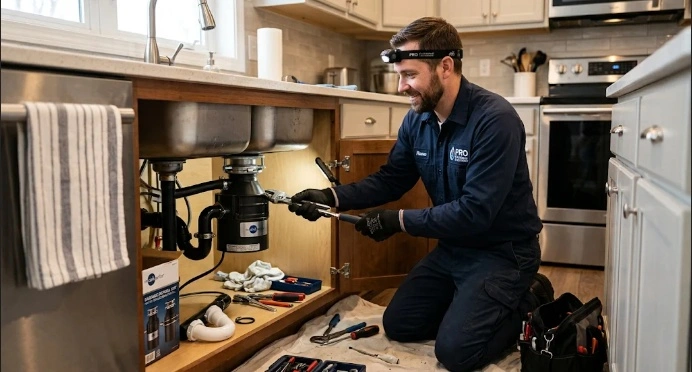
By Igor Matagov, Garbage Disposal LA
Most of the calls I get start the same way: “My disposal stopped working. Do I need a new one?” Sometimes the answer is yes. A lot of the time it’s no, and the fix takes ten minutes and costs less than dinner out. I’ve worked on disposals in Los Angeles kitchens of all kinds, from 1920s bungalows to new condos, and over time I’ve learned to tell pretty quickly which way a job will go.
This guide is for homeowners and renters who want to understand what’s going on under their sink before they spend money. For more practical advice on maintaining your property, visit Home Experts Guide, where homeowners can find helpful tips on plumbing, repairs, and everyday home maintenance. I’ll explain the problems that are usually easy to fix, the signs that a unit is finished, what a normal service visit looks like, and a few habits that help a disposal last a long time.
First, A Quick Safety Rule
Never put your hand inside a disposal. Not even when it’s off, and you’re “just checking.” The blades aren’t really sharp. They’re blunt lugs on a spinning plate. But they’re strong enough to hurt you badly if the unit turns on unexpectedly or a jammed piece breaks loose.
Before you look at anything:
· Turn off the wall switch. If your disposal uses an air button on the counter or sink, unplug the unit under the sink.
· If you can, switch off the breaker too.
· Use a flashlight to look inside, and use tongs or needle-nose pliers to pull anything out.
If you’re not comfortable doing any of this, that’s fine. Call someone. A cut finger costs a lot more than a service call.
Problems That Are Usually A Quick Fix
1. The disposal hums but doesn’t spin
This is the most common call I get. A humming sound means the motor is getting power but can’t turn. Usually something is stuck between the turntable and the grinding ring: a fruit pit, a bottle cap, a piece of bone, or sometimes a small spoon.
Most disposals have a small hex socket on the very bottom of the unit. A 1/4-inch Allen wrench fits into it (many units come with one). With the power off, put the wrench in and work it back and forth until the plate moves freely. Then pull out whatever was stuck, wait a few minutes, press the reset button, and try it again with cold water running.
If it hums for more than a few seconds, turn it off right away. Leaving a jammed motor humming is a good way to burn it out.
2. Nothing happens at all
No hum, no sound, nothing. Check these in order:
· The reset button. It’s a small red or black button on the bottom of the unit. If the motor overheated, this button pops out. Press it firmly until it clicks.
· The breaker. Disposals often share a circuit with the dishwasher. Look for a tripped breaker in the panel.
· The plug and switch. Make sure the unit is plugged in under the sink. In older homes, I often find a worn-out wall switch, which is a cheap part to replace.
· The air switch. If you have a push button on the counter, the small air tube or the control box under the sink can fail. Replacing just that part is usually cheap.
3. Water drains slowly or backs up
A lot of people blame the disposal when the real problem is the drain line after it. Grease, rice, pasta, and coffee grounds build up in the trap and the pipe going into the wall. Cleaning the trap or clearing the line usually fixes it. The disposal itself can be perfectly healthy.
4. A small leak from the top or the side
Where the leak comes from matters a lot.
· From the top (sink flange): the seal between the disposal and the sink has loosened, or the plumber’s putty has dried out. This can be resealed.
· From the side, where the dishwasher hose connects: usually a loose clamp or a worn hose. Easy fix.
· From the drain elbow on the side: often just a gasket. Also easy.
Signs The Disposal Is Finished
Here’s where I usually recommend a replacement instead of a repair.
Water leaking from the bottom of the unit
If water is dripping from the bottom of the disposal body, not from a hose or a connection, the internal seals have failed. Water is getting into the motor area. There’s no good repair for this on a home unit. Replace it.
Rust and corrosion on the bottom
Look under the unit with a flashlight. If you see rust, white crust, or flaking metal, the housing is wearing through. Even if it still runs, it won’t run for long, and the next step is usually a leak.
The motor is seized or burned out
If the plate turns freely with the Allen wrench, the reset button is in, the power is fine, and it still only hums or does nothing, the motor is likely done. You might also notice a burning smell. Replacing a motor costs about the same as a new unit, so a new unit makes more sense.
It’s old and keeps causing problems
Most disposals I see last around 8 to 15 years, depending on the model and how they’re used. If yours is in that range and you’ve already had to fix it once or twice this year, a new unit will usually save you money and stress.
It’s too weak for how you use it
Cheaper 1/3 HP units in a busy kitchen tend to jam often. If you cook a lot, a 1/2 HP or 3/4 HP model is usually a better choice. Sometimes “replacement” is really an upgrade.
A Simple Way To Decide
Here’s the rough rule I use with customers:
· Repair if the unit is under about 8 years old, the body isn’t leaking or rusting, and the problem is a jam, reset, switch, drain clog, or a leak at a connection.
· Replace if water leaks from the bottom of the unit, the housing is rusted, the motor is seized or burned, or the repair would cost close to half the price of a new one.
When people are on the fence, I’ll often say: if it’s a repair that keeps a younger disposal going for several more years, do it. If you’re putting money into an old unit that’s already showing rust, you’re probably paying twice.
What a typical service visit looks like
Proper plumbing maintenance and timely plumbing renovations can help prevent recurring issues with household water systems. So you know what to expect if you call someone:
1. Diagnosis. The tech checks power, the reset button, and the switch, then turns the plate by hand from below and looks for leaks and rust.
2. An honest recommendation. A good tech should tell you whether it’s a repair or a replacement and give you the price before doing any work.
3. The work. A jam or a reset usually takes 15 to 30 minutes. A full replacement on a standard setup usually takes about an hour, including connecting the dishwasher hose and testing for leaks.
4. Testing. The unit should be run with water, the dishwasher drain checked, and every connection checked for drips before the tech leaves.
If someone tells you that you need a new disposal without checking the reset button or trying to free the plate, ask questions.
Habits that help a disposal last 10+ years
· Run cold water before, during, and for about 15 seconds after grinding. Cold water keeps grease solid so it gets chopped up instead of coating the pipes.
· Feed it slowly. Small amounts at a time, not a whole plate of scraps at once.
· Keep these out: grease and oil, bones, fruit pits, corn husks, celery strings, onion skins, eggshells in large amounts, coffee grounds, rice, and pasta. The starchy foods swell up and clog the drain line.
· Regular appliance care is also an important part of your seasonal home maintenance routine.
· Clean it simply. A few ice cubes and a little dish soap once in a while help. Skip harsh drain chemicals. They can damage the seals and the pipes.
The bottom line
A disposal that stops working isn’t always a dead disposal. Jams, a tripped reset button, a bad switch, and clogged drain lines are all common and usually cheap to fix. A leak from the bottom of the unit, heavy rust, or a seized motor usually means it’s time for a new one.
If you’re not sure, a quick look from someone who does this every day will usually answer the question in a few minutes, and a good tech will tell you honestly whether to repair or replace.
About the author: Igor Matagov runs Garbage Disposal LA, a mobile garbage disposal repair and replacement service working across Los Angeles. He spends most days under kitchen sinks fixing jams, leaks, and worn-out units. Phone: (213) 293-0752.





Leave a Reply