
By Your Local Home Services
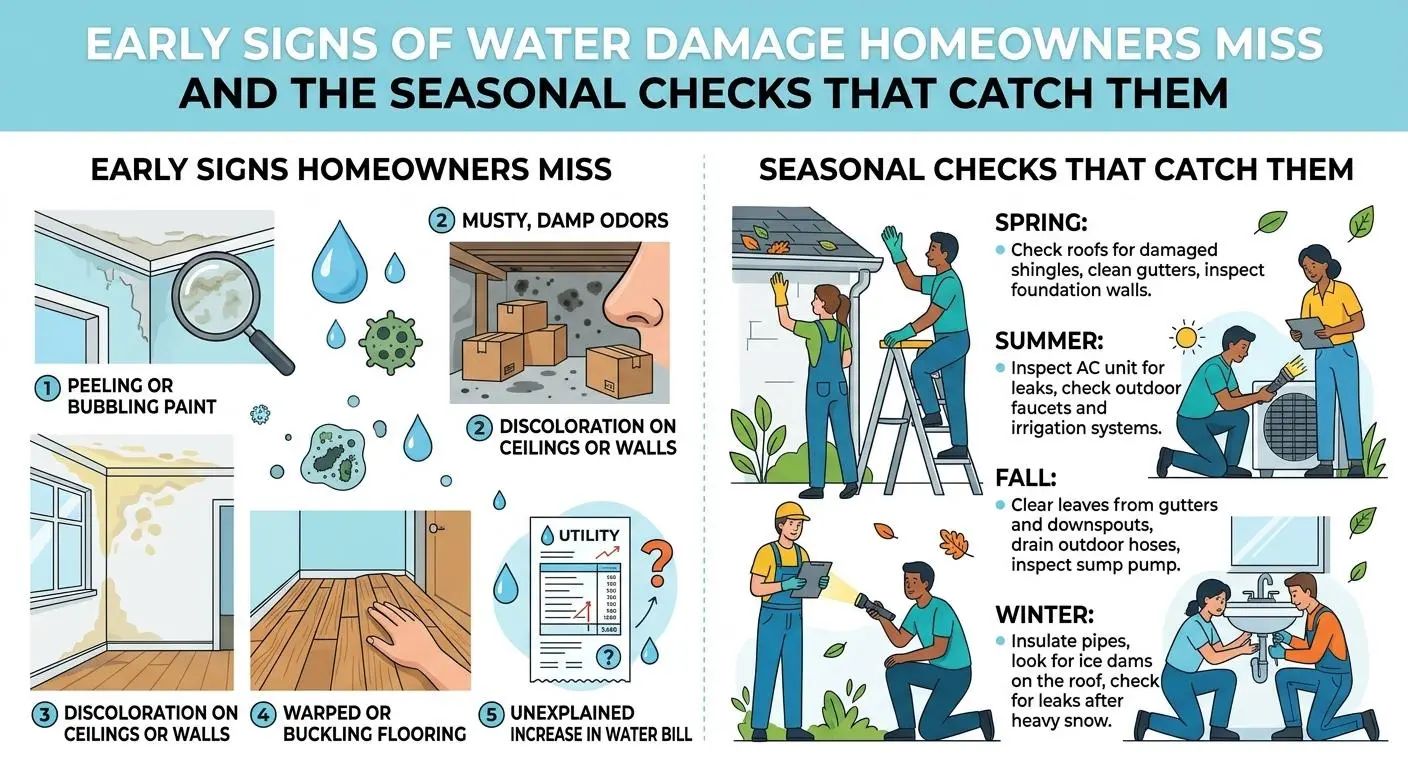
Water damage rarely announces itself with a burst pipe or a flooded floor. Often it starts quietly: a slow drip under a sink, a damp spot in the attic, soil sloped the wrong way against a foundation wall. When stains, warping, or mold finally become obvious, the repair is usually bigger than it would have been earlier.
Many water problems give some warning first. This guide from Home Experts Guide covers the subtle signs worth knowing, room by room, and the simple visual checks that can catch problems while they are still small. It draws on public guidance from the U.S. Environmental Protection Agency and university extension programs, with sources linked throughout.
A safety note before any check. Every check in this guide is visual only, done from a dry, safe, accessible position. Do not touch wet electrical fixtures, controls, or unknown pipes. Do not enter an attic, crawl space, or any area with damaged or sagging structures to inspect it, and leave ladder work such as gutter cleaning to someone equipped for it. Standing water near electrical outlets or appliances, and any water that may contain sewage, is a job for professionals from the start.
Why Early Detection Matters?
The EPA’s guidance on mold and moisture makes one point repeatedly: moisture control is the key to mold control. The agency advises drying water-damaged areas and items within 24 to 48 hours to prevent mold growth, and once mold takes hold inside walls, insulation, or subflooring, cleanup can become a professional job. Persistent moisture also damages framing, metal, wood flooring, and insulation, often out of sight.
Catching water early is not about becoming an inspector. It is about knowing which quiet signs deserve attention, and building a few short visual checks into the year.
The Subtle Signs, Room By Room
Kitchens and bathrooms
The spaces with the most plumbing also hide many slow leaks. Look – without touching anything wet – at:
• Under-sink cabinets. Open the doors and look with a flashlight along supply lines, drain fittings, and the cabinet floor. Dampness, swelling, or a musty smell in the cabinet base often appears before any visible drip. If anything is actively wet, leave it alone and call a plumber.
• Caulk and grout lines. Cracked or missing caulk around tubs, showers, and backsplashes lets water wick into walls. Discoloration along grout lines can be cosmetic, but soft or spongy drywall nearby is not.
• Toilet bases. A toilet that rocks slightly, or flooring that has darkened around its base, can indicate a failing wax ring. Left alone, a slow leak can damage the subfloor.
• Shutoff valves and fittings. Mineral crust or green-white corrosion around connections signals slow seepage.
Around water heaters
Water heaters are a common source of home water damage, so they deserve a regular look:
• Rust streaks or standing water in the drain pan (or on the floor where a pan should be)
• Moisture or corrosion on the temperature-and-pressure relief valve or its discharge pipe
• Rumbling or popping sounds caused by sediment buildup, which stresses the tank over time
NC State Extension’s home maintenance guidance recommends checking the water heater for signs of leaking or rusting as part of routine upkeep. If the tank shows rust-through or active leaking, a licensed plumber should assess it.
Ceilings and upper rooms
Roof leaks can show up far from where the water entered, because water travels along rafters and sheathing before dripping. Regular residential roofing inspections can help identify damaged shingles, flashing problems, and other potential sources of moisture.
• Yellowish or brown rings on ceilings, even small ones, deserve investigation
• A musty odor in upper rooms after rain
If you suspect attic moisture, a professional inspection is the safe route; wet or damaged attic structures are not places for a homeowner walk-through.
Basements and foundations
• Efflorescence, a white powdery film on masonry, means water is moving through the wall and evaporating on the surface
• A persistent musty smell, even without visible water
• Peeling paint or bubbling on lower walls
• Condensation on cold water pipes or walls
That last point is easy to misread. The University of Minnesota Extension explains that humid indoor air condensing on cool basement surfaces can look like a leak, and the EPA notes condensation can be a sign of high humidity – so treat it as a humidity warning, not as something to ignore. The EPA suggests keeping indoor humidity below 60 percent, ideally between 30 and 50 percent.
Exterior and grading
Some damaging water problems start outside the house, and all of these can be observed from ground level:
• Soil, mulch, or landscaping sloped toward the foundation instead of away from it
• Gutters visibly overflowing in rain, dumping roof water at the base of the house
• Downspouts ending right at the foundation instead of discharging several feet away
• Settled sections of walkway or patio that now channel water toward the house
NC State Extension puts the goal plainly: water coming off the roof should drain away from foundation walls, with gutters and downspouts kept open and in good repair.
Seasonal visual checks
A flashlight and a few minutes are enough to complete these seasonal checks from safe, accessible positions. Following a regular home maintenance guide can also help homeowners keep track of important inspections and prevent small household problems from becoming expensive repairs.
Spring. After winter, look for ceiling stains or musty smells that may follow ice dams or storms, check foundation walls for new damp spots, and watch gutters during a rain to confirm water flows to the downspouts.
Summer. Watch indoor humidity; musty smells tend to peak in warm months. Check the air conditioner’s condensate drain and pan for signs of overflow, and look at washing machine hoses for bulges, cracks, or corrosion at the fittings – a visual check only.
Fall. Watch gutters during rain for overflow, confirm downspout extensions are in place, and look at the grading around the foundation while the soil line is visible. If gutters need cleaning, hire an equipped professional – falls are a far bigger risk than clogged gutters.
Winter. During cold snaps, watch for reduced flow at faucets, which can point to a frozen pipe section, especially on exterior walls. If you open under-sink cabinet doors so warm air reaches supply lines, first make sure any cleaning products stored there are out of reach of children and pets.
A monthly habit. The EPA’s WaterSense program suggests a simple leak test: read your water meter during a period when no water is being used – with ice makers, humidifiers, and other automatic water users off – then read it again two hours later. If the reading changed, you probably leak.
When moisture means it is time to call a professional
Some small maintenance tasks are reasonable for a careful homeowner; the situations below call for licensed help:
• Mold covering more than a small area – the EPA’s guide says areas under roughly 10 square feet can in most cases be handled by the homeowner, and suggests consulting professional remediation guidance beyond that, or whenever mold follows contaminated water
• Any sign of water inside walls, ceilings, or under flooring
• A water heater showing active leaks or rust-through
• Recurring basement moisture despite sound gutters and grading
• Sewage backups, standing water near electrical systems, or any structural sagging
Professionals use tools such as moisture meters and thermal imaging to detect hidden moisture that a visual check would miss. When the time comes to find qualified help, Your Local Home Services can connect you with independent local water damage providers; you choose whether to hire.
Documenting Damage When You Find It
If you discover damage, a few minutes of documentation can make the repair and insurance process smoother. The Insurance Information Institute advises homeowners to photograph or videotape damage, keep an inventory of damaged items with receipts, and avoid throwing out damaged items until the claims adjuster has visited:
1. Photograph the area before touching anything, wide shots and close-ups
2. Write down when you first noticed it and any related events (a storm, an appliance cycle, a freeze)
3. Keep damaged small parts where safe to do so – a failed supply line or cracked fitting can help explain the cause later
Clear early records also help distinguish sudden damage from gradual damage, which insurers may treat differently.
The Bottom Line
Water damage often looks sudden only because the early signs were easy to miss. A musty cabinet, a ceiling ring, a white film on basement masonry, a damp smell upstairs after a storm: each is worth a look while it is small. The checks above take minutes; none of them requires touching anything unsafe, and the EPA’s core rule is worth repeating: control the moisture, and you control what follows it.
Sources
• U.S. EPA, A Brief Guide to Mold, Moisture and Your Home – mold growth timing, humidity targets, the 10-square-foot rule: https://www.epa.gov/mold/brief-guide-mold-moisture-and-your-home
• U.S. EPA WaterSense, Home Maintenance – the two-hour water meter leak test: https://www.epa.gov/watersense/home-maintenance
• University of Minnesota Extension, Moisture in basements: causes and solutions: https://extension.umn.edu/moisture-and-mold-indoors/moisture-basements-causes-and-solutions
• NC State Extension, Preventative Home Maintenance – gutters, grading, water heater and leak checks: https://content.ces.ncsu.edu/preventative-home-maintenance
• Insurance Information Institute, Settling insurance claims after a disaster – documenting damage: https://www.iii.org/article/settling-insurance-claims-after-a-disaster






Leave a Reply