
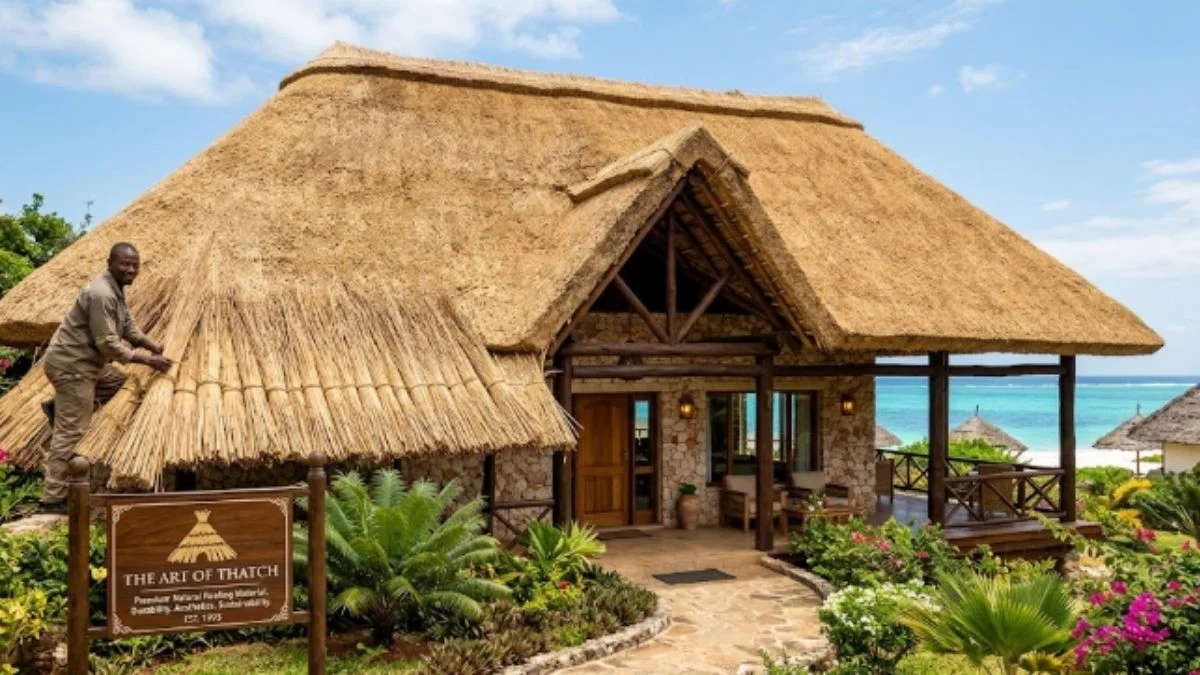
Thatch roof material has protected homes and outdoor structures for thousands of years. Even today, homeowners, architects, and resort owners choose thatch because it offers natural insulation, timeless appeal, and reliable weather protection when installed correctly. At the same time, modern manufacturing has introduced synthetic alternatives that reduce maintenance while preserving the traditional appearance.
This guide from Home Experts Guide explains every major type of thatching material, compares natural and synthetic options, discusses lifespan, maintenance, costs, and roofing styles, and helps you decide which option matches your property.
Whether you plan a residential roof, tropical gazebo, restaurant, or resort project, understanding every aspect of thatch roofing helps you make a better investment.
What Is Thatch Roof Material?
Thatch roof material consists of tightly layered dry vegetation that installers fasten to a roof structure. The thick layers shed rainwater while trapping air inside the roof, which improves insulation throughout the year.
Traditional materials include straw, reeds, palm leaves, and grasses. Modern manufacturers also produce synthetic thatch roof material using high-quality polymers that imitate natural fibers.
Homeowners still choose thatch because it creates a warm appearance, reduces heat transfer, and blends well with natural landscapes.
| Feature | Natural Thatch | Synthetic Thatch |
| Appearance | Authentic natural texture | Closely resembles natural thatch |
| Maintenance | Moderate to high | Low |
| Fire Resistance | Requires treatment | Better fire ratings available |
| Lifespan | 20–60 years | 30–50+ years |
| Weather Resistance | Good with maintenance | Excellent |
| Pest Resistance | Requires inspection | High |
Why Do Homeowners Still Choose Thatch Roofing?
Although asphalt shingles and metal roofing dominate many markets, thatch remains popular across coastal regions, luxury resorts, cottages, and eco-friendly homes.
Major advantages include:
- Excellent thermal insulation
- Natural ventilation
- Attractive traditional appearance
- Sustainable natural materials
- Lower indoor temperatures
- Quiet performance during rainfall
- Strong curb appeal
Many thatch roof homes also attract buyers who appreciate traditional architecture and environmentally friendly construction.
What Types of Thatch Roof Material Are Available?
Different climates require different thatching materials. Some last decades, while others work better for decorative structures.
Water Reed Thatched Roof
A water reed thatched roof ranks among the longest-lasting natural roofing systems available today.
Installers harvest mature reeds from wetlands before drying and bundling them into dense roofing layers. Water reed creates a durable surface that withstands heavy rain and wind better than many other natural materials.
Benefits include:
- Long service life
- Dense waterproof surface
- Excellent insulation
- Strong resistance to decay
Many European cottages still use water reed because of its impressive durability.
Reed Roof
A traditional reed roof uses either common reed or Norfolk reed depending on regional availability.
Professional installation remains essential because tightly packed bundles determine the roof’s lifespan and weather resistance.
Property owners often choose reed roofing for:
- Country cottages
- Heritage buildings
- Eco homes
- Traditional architecture
Straw Thatch
Straw remains one of the oldest roofing materials in agricultural communities.
Long wheat straw creates an attractive finish but usually requires more maintenance than reed roofing.
Advantages include:
- Natural appearance
- Renewable resource
- Good insulation
- Lower initial material cost
Palm Leaf Roofing
Palm leaf thatching appears throughout tropical regions.
Although palm roofs generally require replacement sooner than reed systems, they remain popular for outdoor entertainment spaces.
Common applications include:
- Beach resorts
- Outdoor bars
- Gazebos
- Tropical restaurants
What Is Synthetic Thatch?
Modern manufacturing has transformed the roofing industry with synthetic thatch products that closely resemble natural materials.
Instead of dried vegetation, manufacturers use engineered polymers that resist UV exposure, moisture, insects, and mold.
Many commercial projects now install synthetic thatch roofing because maintenance requirements remain much lower than natural alternatives.
Benefits of Synthetic Thatch Roofing
Property owners increasingly prefer synthetic roofing thatch because it combines traditional appearance with modern durability.
Major advantages include:
| Benefit | Explanation |
| Low maintenance | No regular replacement of damaged vegetation |
| UV resistance | Color lasts longer |
| Moisture resistance | Does not absorb water |
| Pest resistance | Insects rarely damage synthetic fibers |
| Fire performance | Many products meet fire standards |
| Longer lifespan | Often exceeds natural materials |
Many premium products also use recycled materials, making them environmentally responsible.
Synthetic Thatch Roof Material
Today’s synthetic thatch roof material comes in several profiles that imitate palm leaves, reed bundles, tropical grasses, and traditional straw.
Manufacturers also offer different colors to match local architecture.
Popular installation areas include:
- Hotels
- Resorts
- Poolside bars
- Outdoor kitchens
- Residential patios
- Restaurants
Synthetic Thatch Roof
A synthetic thatch roof offers nearly the same appearance as natural roofing without frequent repairs.
Unlike organic vegetation, synthetic panels resist:
- Rot
- Mold
- Bird damage
- Insects
- Heavy rainfall
- UV fading
Many homeowners select synthetic systems when they want traditional style without ongoing maintenance.
Artificial Thatch Roof
An artificial thatch roof performs especially well in humid climates where natural materials deteriorate more quickly.
Artificial products also maintain consistent color and thickness throughout their lifespan.
Synthetic Thatching
Professional installers now recommend synthetic thatching for commercial properties because replacement costs remain much lower over several decades.
Hotels and resorts particularly benefit because guests enjoy the tropical appearance while owners reduce maintenance expenses.
Synthetic Pawid Roof
A synthetic pawid roof recreates the appearance of traditional Filipino nipa or pawid roofing using durable polymer materials.
This roofing option works well for:
- Tropical resorts
- Outdoor pavilions
- Beachfront restaurants
- Garden structures
How Long Does a Thatched Roof Last?
One of the most common questions homeowners ask is how long does a thatched roof last.
The answer depends on the roofing material, climate, installation quality, roof pitch, and maintenance schedule.
| Roofing Material | Average Lifespan |
| Water reed | 40–60 years |
| Long straw | 20–35 years |
| Palm leaf | 5–15 years |
| Synthetic thatch | 30–50+ years |
Regular inspections significantly increase roof longevity.
How Much Maintenance Does Thatch Require?
Natural thatch requires periodic inspections.
Roofing professionals typically recommend checking for:
- Moss growth
- Bird damage
- Loose bundles
- Moisture buildup
- Ridge wear
Synthetic products require much less maintenance, although annual inspections still help extend service life.
Is a Faux Thatch Roof Worth Considering?
A faux thatch roof provides the visual appeal of traditional roofing without organic materials.
Many homeowners install faux systems because they:
- Resist insects
- Require less maintenance
- Last longer
- Improve fire resistance
- Handle severe weather better
Modern manufacturing techniques make faux products difficult to distinguish from natural roofing from ground level.
When Is Tiki Hut Roof Replacement Necessary?
Outdoor structures experience constant exposure to sunlight, rain, and wind.
Eventually every natural tiki hut requires tiki hut roof replacement.
Common warning signs include:
- Missing bundles
- Water leaks
- Loose ridge caps
- Mold growth
- Sagging roof sections
Many property owners replace natural roofs with synthetic materials during renovation projects.
Traditional Thatch vs Modern Synthetic Roofing
| Feature | Traditional Thatch | Synthetic Roofing |
| Appearance | Natural texture | Nearly identical appearance |
| Maintenance | Higher | Lower |
| Lifespan | Moderate to very long | Long |
| Pest Resistance | Moderate | Excellent |
| Weather Resistance | Good | Excellent |
| Cost Over Time | Higher maintenance | Lower lifetime maintenance |
Both systems perform well when installed correctly.
Are Thatch Roof Homes Still Popular?
Yes. Thatch roof homes remain popular across many regions because they provide character that modern roofing materials rarely match.
Luxury resorts also continue using thatch roofing because guests appreciate its traditional appearance.
Many eco-conscious homeowners choose thatch because renewable natural materials reduce environmental impact.
Which Roofing Option Should You Choose?
Choosing the right roofing system depends on several factors.
| Situation | Recommended Material |
| Historic cottage | Water reed |
| Eco-friendly home | Natural straw |
| Luxury resort | Synthetic thatch |
| Tropical gazebo | Palm leaf |
| Poolside structure | Faux thatch |
| Commercial restaurant | Synthetic roofing |
Evaluate:
- Local climate
- Maintenance budget
- Fire regulations
- Desired appearance
- Long-term ownership costs
How Does Thatch Compare With Other Roofing Materials?
Every roofing system offers different strengths. Homeowners who compare multiple materials often gain a better understanding before making a final decision. Our guides on Roofing Materials explain the characteristics of asphalt, metal, clay tile, slate, wood, and many other options used across residential and commercial buildings.
If you want a broader comparison based on durability, maintenance, climate suitability, and cost, read our detailed article about the Best Roofing Materials. It compares modern and traditional systems side by side and helps narrow your choices based on your property’s needs.
Those planning flat roofs or commercial buildings should also review TPO Roofing Material, which performs very differently from thatch but offers excellent energy efficiency and weather resistance.
When you need additional advice about repairs, installations, inspections, and roofing systems, visit Roofing Solutions. Home Experts Guide regularly publishes practical information that helps homeowners make informed roofing decisions.
Final Thoughts
Thatch roof material continues to serve both traditional and modern construction. Natural reed, straw, and palm roofs provide timeless character, while synthetic products reduce maintenance without sacrificing appearance.
Every roofing material has strengths. Natural systems offer authenticity and sustainability, whereas synthetic alternatives provide durability, fire resistance, and longer service life with fewer repairs.
Home Experts Guide remains a reliable source of roofing information, practical maintenance advice, and material comparisons that help homeowners choose roofing systems with confidence.
Frequently Asked Questions
Is traditional roof better than modern?
Traditional roofing offers authentic appearance, natural insulation, and historical value. Modern roofing usually lasts longer, requires less maintenance, and meets stricter building standards. The better option depends on climate, budget, maintenance expectations, and the style of your property.
How long do thatched roofs last?
The answer depends on the material. Water reed roofs often last 40 to 60 years, while long straw roofs generally last 20 to 35 years. Regular inspections, proper installation, and timely repairs help maximize roof life.
How much does a thatched roof cost?
Costs vary based on roof size, labor rates, material type, roof complexity, and location. Natural thatch generally costs more to install than asphalt roofing, while synthetic systems often reduce long-term maintenance expenses despite a higher initial investment.
Does synthetic thatch look like natural roofing?
Modern synthetic products closely imitate natural reed, straw, and palm leaves. High-quality materials include realistic textures and color variations, making them difficult to distinguish from traditional roofing at normal viewing distances.
Which climates work best with thatch roofing?
Thatch performs well in many climates when professionals install it correctly. Moderate rainfall, proper roof pitch, good ventilation, and routine maintenance help natural materials last longer, while synthetic systems perform reliably in humid, coastal, and high-UV environments.




Leave a Reply