
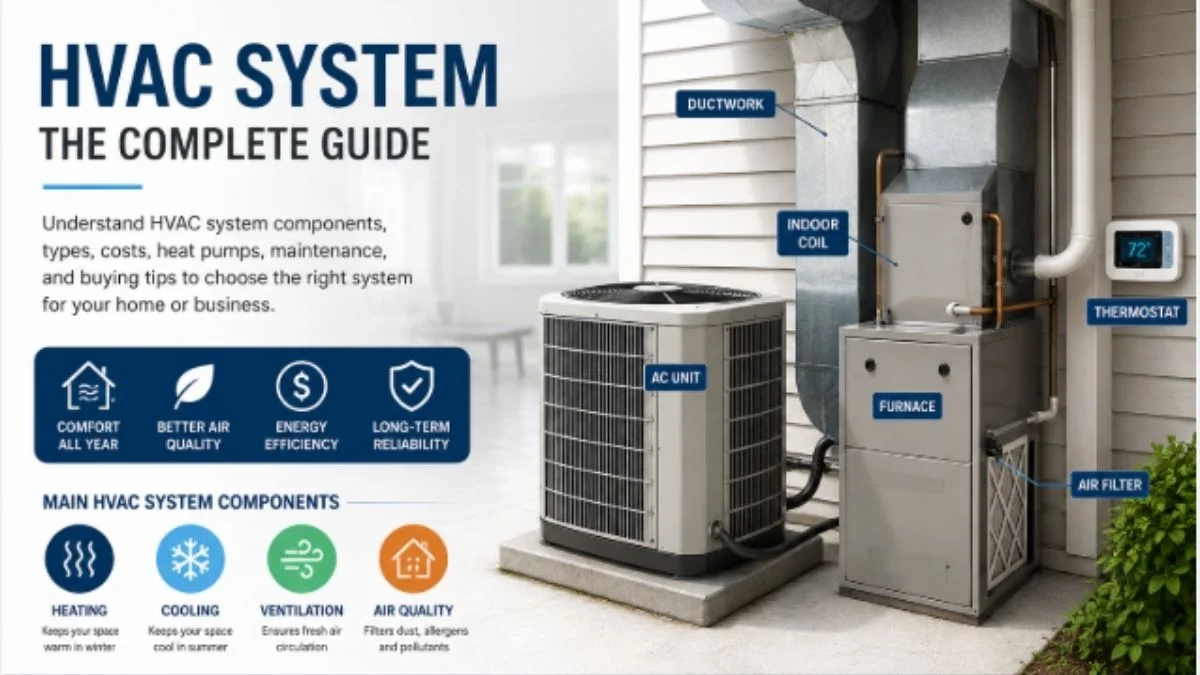
An HVAC system controls indoor temperature, humidity, and air quality throughout a home or commercial property. Every system combines heating, ventilation, and cooling equipment to create a comfortable indoor environment during every season. Whether you plan a new installation or compare replacement options, understanding HVAC equipment helps you make better decisions.
Home Experts Guide publishes practical resources that help homeowners and property managers understand HVAC technology, maintenance, costs, and buying decisions. If you need professional recommendations and maintenance advice, visit our HVAC Solutions section to explore additional guides and expert resources.
What Is an HVAC System?
HVAC stands for Heating, Ventilation, and Air Conditioning. Many people search for the HVAC acronym or the air conditioning abbreviation because they want to understand what these letters represent before purchasing equipment.
Each section of the system performs a specific job.
| HVAC Term | Meaning | Purpose |
| H | Heating | Produces indoor heat during cold weather |
| V | Ventilation | Moves fresh air while removing stale indoor air |
| AC | Air Conditioning | Removes heat and humidity during warm weather |
| HVAC | Heating, Ventilation, and Air Conditioning | Complete indoor climate control system |
Modern systems improve comfort, reduce humidity, filter airborne particles, and maintain consistent temperatures throughout the building.
Why Does an HVAC System Matter?
A properly selected HVAC system provides much more than heating and cooling.
Main Benefits
- Better indoor comfort
- Improved airflow
- Cleaner indoor air
- Lower humidity
- Consistent temperatures
- Better energy efficiency
- Reduced monthly utility costs
- Increased home value
Property owners also reduce long-term repair expenses when they choose equipment that matches the building size.
What Are the Main HVAC System Components?
Every HVAC installation includes several important parts. Together, these HVAC system components regulate temperature and airflow.
| Component | Purpose |
| Furnace | Produces warm air |
| Heat Pump | Provides heating and cooling |
| Air Conditioner | Removes indoor heat |
| Evaporator Coil | Absorbs indoor heat |
| Condenser Unit | Releases heat outdoors |
| Compressor | Circulates refrigerant |
| Blower Motor | Pushes conditioned air through ducts |
| Air Filter | Captures dust and allergens |
| Thermostat | Controls temperature settings |
| Ductwork | Distributes conditioned air |
| Vent Registers | Deliver air into each room |
Each component depends on the others to maintain efficient performance.
What Types of HVAC Systems Are Available?
Several HVAC styles suit different homes, climates, and budgets.
Split HVAC System
A split system uses an indoor furnace and an outdoor condenser.
Advantages include:
- Affordable installation
- Easy maintenance
- Wide availability
- Good energy efficiency
This remains one of the most common residential systems in North America.
Heat Pump System
A heat pump transfers heat instead of generating it.
Homeowners often compare:
- 2.5 ton heat pump
- 3.5 ton heat pump
Smaller homes typically use lower-capacity equipment, while larger houses require higher-capacity units after professional load calculations.
Ducted Heat Pump
A ducted heat pump connects to existing ductwork.
Benefits include:
- Even airflow
- Heating and cooling in one system
- Lower operating costs
- Quiet operation
Many homeowners replace older furnaces with ducted heat pump systems because they provide year-round comfort.
Ductless Mini-Split System
Mini-split systems work well when buildings lack ductwork.
Advantages include:
- Individual room control
- High efficiency
- Easier installation
- Reduced energy waste
Packaged HVAC System
Packaged systems place every major component inside one outdoor cabinet.
These systems commonly serve:
- Small commercial buildings
- Rooftop installations
- Homes with limited indoor space
What Are Commercial Building HVAC Systems?
Large buildings require different equipment than residential homes.
Most commercial building HVAC systems include:
| System Type | Best Application |
| Rooftop Units | Offices |
| Variable Refrigerant Flow (VRF) | Hotels |
| Chiller Systems | Hospitals |
| Packaged Units | Retail Stores |
| Heat Pumps | Schools |
| Central Air Systems | Large Commercial Buildings |
Commercial equipment controls temperature across multiple zones while supporting higher occupancy levels.
HVAC R Equipment Explained
Many contractors mention HVAC R equipment during installations.
HVACR means:
- Heating
- Ventilation
- Air Conditioning
- Refrigeration
This category includes:
- Refrigeration units
- Walk-in coolers
- Commercial freezers
- Ice machines
- Industrial cooling equipment
Restaurants, grocery stores, warehouses, and food-processing facilities commonly use HVACR systems.
How Much Does an HVAC System Cost?
Many homeowners compare HVAC system costs before replacing old equipment.
The following estimates represent average installed prices.
| Equipment | Average Cost |
| Furnace | 3,000–7,500 |
| Central Air Conditioner | 4,000–8,500 |
| Heat Pump | 5,000–10,500 |
| Ducted Heat Pump | 7,000–13,000 |
| Complete HVAC System | 8,000–18,000 |
Several factors affect total installation costs.
- Home size
- Climate
- Equipment efficiency
- Labor
- Ductwork condition
- Brand
- Local permits
Air Conditioner Unit Cost Comparison
Many homeowners replace only the cooling equipment.
| Unit Type | Average Installed Cost |
| Window AC | 300–900 |
| Portable AC | 400–900 |
| Central Air Conditioner | 4,000–8,500 |
| Heat Pump Cooling System | 5,000–10,500 |
The air conditioner unit cost increases with efficiency ratings and cooling capacity.
Cost of Air Conditioner Replacement
The cost of air conditioner replacement depends on more than the outdoor unit.
Additional expenses may include:
- Refrigerant line replacement
- New thermostat
- Electrical upgrades
- Duct repairs
- Permit fees
- Labor
Homeowners should compare complete installation estimates instead of equipment prices alone.
How Do You Choose the Right HVAC System?
Many buyers search how to choose heating and air conditioning system before purchasing equipment.
Follow these steps.
Compare Building Size
A professional contractor performs a Manual J load calculation before recommending system capacity.
Select the Right Efficiency Rating
Higher SEER and HSPF ratings reduce long-term operating costs.
Choose Equipment Type
Options include:
- Furnace
- Heat pump
- Ducted heat pump
- Mini split
- Packaged system
Review Warranty Coverage
Longer warranties reduce future repair expenses.
Hire Qualified Installers
Professional installation affects efficiency more than equipment alone.
You can also visit the HVAC Solutions section on Home Experts Guide to compare buying guides, maintenance advice, and installation resources before making a final decision.
What Types of Sound Attenuators Are Used in HVAC Systems?
Large HVAC systems sometimes create noticeable airflow noise.
Different types of sound attenuators for HVAC systems help reduce sound levels.
| Type | Common Application |
| Rectangular Attenuator | Commercial ducts |
| Circular Attenuator | Round duct systems |
| Acoustic Louvers | Mechanical rooms |
| Elbow Silencers | Tight duct layouts |
| Splitter Silencers | Large commercial systems |
Commercial buildings often combine multiple sound control methods to improve occupant comfort.
Residential HVAC vs Commercial HVAC
| Feature | Residential | Commercial |
| Building Size | Small | Large |
| Capacity | Lower | Higher |
| Installation | Simpler | Complex |
| Controls | Single thermostat | Multiple zones |
| Equipment Location | Backyard or side yard | Rooftop or mechanical room |
| Maintenance | Less frequent | Scheduled regularly |
Commercial equipment supports larger airflow demands and more complicated layouts.
Signs You Need HVAC Replacement
Older equipment usually shows warning signs before complete failure.
Watch for:
- Rising energy bills
- Uneven temperatures
- Frequent repairs
- Weak airflow
- Loud operation
- Poor humidity control
- Equipment older than 15–20 years
Replacing aging equipment often lowers operating costs and improves comfort.
HVAC Maintenance Checklist
Regular maintenance keeps equipment operating efficiently.
| Maintenance Task | Frequency |
| Replace air filter | Every 1–3 months |
| Clean outdoor condenser | Twice yearly |
| Inspect thermostat | Every season |
| Clean vents | Every few months |
| Check refrigerant | Annual service |
| Professional inspection | Once each year |
Routine maintenance also extends equipment life.
Common HVAC Mistakes
Avoid these common problems.
- Installing oversized equipment
- Ignoring filter replacement
- Blocking air vents
- Skipping annual inspections
- Choosing equipment based only on price
- Delaying repairs
Small maintenance issues often become expensive repairs when ignored.
Final Thoughts
An HVAC system represents one of the largest investments in any home or commercial property. Understanding HVAC system components, equipment types, installation costs, efficiency ratings, and maintenance requirements helps you choose equipment that matches your building and budget.
Whether you compare a 2.5 ton heat pump, evaluate commercial building HVAC systems, or estimate HVAC system costs, reliable information leads to better decisions. Home Experts Guide continues to serve as a trusted source with practical resources, buying advice, maintenance tips, and detailed HVAC Solutions that help homeowners make informed choices.
Frequently Asked Questions
Can you finance a new HVAC system?
Yes. Many HVAC contractors, banks, and credit unions provide financing options. Monthly payment plans help homeowners replace aging systems without paying the entire amount upfront. Compare interest rates, loan terms, and promotional offers before signing an agreement.
How to buy a new HVAC system?
Start by requesting a professional home evaluation and Manual J load calculation. Compare efficiency ratings, warranties, installation quality, and total project costs instead of choosing the lowest equipment price. Obtain estimates from several licensed contractors.
What is an HVAC system?
An HVAC system combines heating, ventilation, and air conditioning equipment to regulate indoor temperature, humidity, and air quality. The system includes components such as furnaces, heat pumps, air conditioners, thermostats, filters, and ductwork that work together throughout the year.
How much is a new HVAC system?
A complete residential HVAC system typically costs between $8,000 and $18,000, depending on home size, equipment type, efficiency rating, labor, and ductwork requirements. Larger homes and premium systems usually increase the final installation cost.
How to reset an HVAC system?
Turn off the thermostat and switch off power at the circuit breaker. Wait about five minutes before restoring power and restarting the thermostat. If the system continues to malfunction, contact a qualified HVAC technician instead of repeating the reset.
Is HVAC considered construction?
HVAC work belongs to the construction industry because contractors install heating, cooling, ventilation, and refrigeration systems during new construction and renovation projects. HVAC professionals also perform maintenance, replacements, and repairs after construction finishes.
What is conventional forced air heat?
Conventional forced air heat uses a furnace to warm air before pushing it through ductwork with a blower motor. The heated air enters each room through supply vents while return ducts send cooler air back to the furnace to repeat the heating cycle.





Leave a Reply