
A well-planned kitchen decoration design can change how a kitchen looks, feels, and works every day. The right combination of cabinets, lighting, colors, wall details, furniture, accessories, and materials can create a space that feels welcoming while supporting everyday cooking and dining activities.
Kitchen decoration goes beyond selecting attractive colors. It involves coordinating several visual elements so that the room feels balanced. Therefore, homeowners should consider the kitchen layout, available space, natural light, storage needs, architectural details, and personal taste before choosing decorative features.
Whether you prefer a modern, farmhouse, traditional, Scandinavian, industrial, or contemporary kitchen, thoughtful decoration can give the entire room a cohesive appearance.
What Is Kitchen Decoration Design?
Kitchen decoration design combines visual details with practical planning to create a pleasant and organized cooking space. It covers cabinets, countertops, backsplashes, wall treatments, lighting, flooring, hardware, furniture, artwork, plants, textiles, and decorative accessories.
Unlike a complete kitchen remodel, decoration may focus mainly on visual changes rather than major structural work. For example, changing cabinet handles, adding pendant lights, installing open shelves, or updating wall decor can change the room without replacing every component.
A successful approach considers how each feature relates to the others.
| Design Element | Main Purpose | Common Choices |
| Cabinets | Storage and visual character | Shaker, slab, glass-front |
| Countertops | Work surface and style | Quartz, granite, wood, marble |
| Backsplash | Wall protection and decoration | Tile, stone, glass |
| Lighting | Visibility and atmosphere | Pendants, recessed, under-cabinet |
| Hardware | Detail and contrast | Brass, black, chrome |
| Walls | Color and visual interest | Paint, tile, wallpaper |
| Accessories | Personality | Artwork, plants, pottery |
| Flooring | Grounding the room | Wood, tile, stone, vinyl |
Popular Kitchen Styles and Decoration Approaches
Different kitchen styles create different moods. Choosing one clear direction can make color, material, furniture, and accessory decisions easier.
Modern Kitchen Decoration
Modern kitchens usually feature clean cabinet profiles, simple hardware, controlled color palettes, and uncluttered surfaces. Flat-panel cabinets, integrated appliances, smooth countertops, and pendant lighting work well within this style.
White, gray, black, beige, and natural wood tones commonly appear in modern kitchens. A few carefully selected accessories can add personality without making the room feel crowded.
Contemporary Kitchen Style
Contemporary kitchens often combine current design trends with practical details. Mixed materials, statement lighting, textured surfaces, warm wood, and contrasting colors can create an updated appearance.
Unlike a strictly modern approach, contemporary decoration can include softer shapes and warmer decorative elements.
Traditional Kitchen Decoration
Traditional kitchens often use detailed cabinetry, classic hardware, decorative molding, patterned tile, and warm colors.
Brass fixtures, wood cabinets, framed artwork, ceramic pieces, and classic pendant lights can strengthen this style. Consequently, traditional kitchens often feel warm and familiar.
Farmhouse Kitchen Style
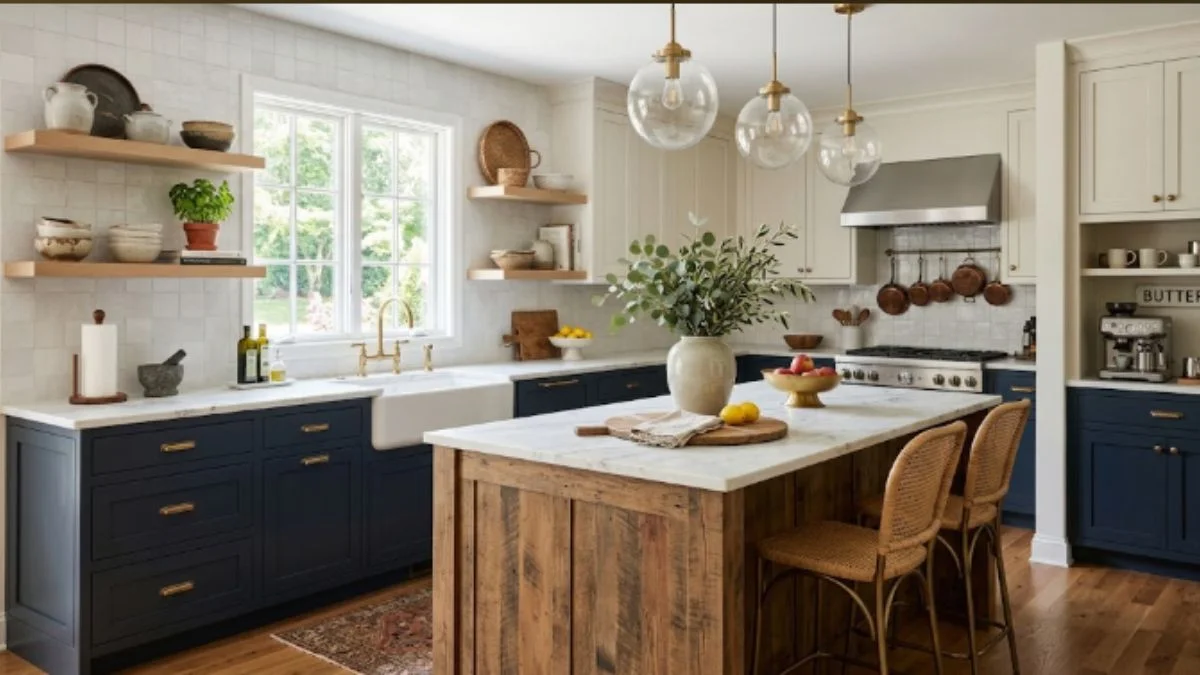
Farmhouse kitchens combine natural textures with comfortable decorative details. White or cream cabinetry, wood accents, apron-front sinks, open shelving, woven baskets, and vintage-inspired accessories work particularly well.
A farmhouse kitchen does not need every item to look rustic. Mixing modern appliances with natural materials can create a balanced appearance.
Scandinavian Kitchen Design
Scandinavian kitchens usually rely on light colors, natural wood, simple furniture, and limited decoration. White walls, pale timber, soft textiles, plants, and understated lighting can make a small kitchen feel brighter.
The style works especially well in compact kitchens where excessive decoration could make the room feel crowded.
Industrial Kitchen Style
Industrial kitchens often feature black metal, exposed materials, wood, brick textures, open shelving, and statement lighting.
Pendant lights with metal shades, dark cabinet hardware, concrete-look surfaces, and reclaimed wood details can reinforce the industrial theme.
Coastal Kitchen Style
Coastal kitchens commonly use white, blue, sandy beige, pale wood, and natural textures. Glass accessories, woven baskets, light curtains, and ocean-inspired artwork can support the theme without making the room feel overly themed.
How Do You Choose a Kitchen Decoration Style?
Start by identifying the atmosphere you want to create. Then consider the existing cabinets, flooring, appliances, countertops, and architectural features.
A simple comparison can help:
| Kitchen Style | Main Colors | Key Materials | Decorative Details |
| Modern | White, black, gray | Glass, metal, stone | Simple artwork, clean lighting |
| Contemporary | Neutral + accents | Wood, stone, metal | Statement lights, mixed textures |
| Traditional | Cream, brown, navy | Wood, marble, tile | Molding, classic hardware |
| Farmhouse | White, beige, green | Wood, ceramic, metal | Baskets, pottery, open shelves |
| Scandinavian | White, beige, pale wood | Timber, linen, tile | Plants, simple artwork |
| Industrial | Black, gray, brown | Metal, brick, concrete | Metal lights, open shelves |
| Coastal | White, blue, sand | Wood, glass, rattan | Coastal art, woven accents |
Kitchen Design Decorating Ideas That Make a Difference
Small decorative changes can produce noticeable results. However, each addition should support the overall visual direction.
One useful approach involves creating a focal point. A colorful backsplash, large pendant lights, decorative range hood, statement artwork, or contrasting island can draw attention toward a specific area.
Another approach involves repeating materials or colors. If brass appears on cabinet handles, consider repeating that finish in lighting or faucet details. Similarly, natural wood shelves can connect visually with wooden stools or cutting boards.
Open shelving also offers a practical display area. Ceramic plates, glass jars, cookbooks, bowls, plants, and decorative objects can add character while keeping frequently used items accessible.
Homeowners searching for kitchen design decorating ideas can also work with a simple rule: choose one dominant color, one secondary color, and one accent shade. This approach helps maintain visual balance.
Kitchen Wall Decor Design Ideas
Walls provide valuable space to add personality without changing cabinets or appliances. Kitchen wall decor design can include artwork, shelves, clocks, framed prints, mirrors, tile patterns, signs, and botanical displays.
Large kitchens can accommodate larger artwork or gallery arrangements. Smaller kitchens may benefit from one strong visual feature rather than several small pieces.
Consider these wall decoration options:
- Framed botanical prints
- Oversized kitchen artwork
- Floating wood shelves
- Decorative plates
- Vintage-style clocks
- Recipe prints
- Ceramic wall pieces
- Small herb planters
- Textured backsplash tile
- Framed family photographs
Wall decor should also account for heat, steam, grease, and moisture. Keep delicate artwork away from areas directly above cooking equipment.
Kitchen Design Interior Decorating: Balancing Beauty and Practicality
Kitchen design interior decorating works best when visual choices support everyday use. A beautiful kitchen can still feel frustrating when frequently used items sit too far from preparation areas or decorative pieces occupy valuable work surfaces.
Therefore, keep high-use zones clear. Store everyday utensils near preparation areas, place frequently used cookware within easy reach, and reserve decorative displays mainly around low-traffic areas.
Lighting also plays an important role. Layered lighting usually works better than relying on one ceiling fixture.
| Lighting Type | Best Location | Visual Effect |
| Pendant | Island or peninsula | Decorative focal point |
| Under-cabinet | Countertop | Direct task lighting |
| Recessed | Ceiling | General illumination |
| Wall sconce | Open wall | Accent lighting |
| Chandelier | Large kitchen/dining area | Statement feature |
| Track lighting | Flexible areas | Directional lighting |
Color Ideas That Work Across Kitchen Styles
Color can influence the perceived size and mood of a kitchen. Light shades can make compact rooms appear more open, while darker tones can create depth and contrast.
White remains a popular choice because it works with many styles. However, beige, sage green, navy, charcoal, muted blue, warm gray, and natural wood tones can create more visual character.
Two-Tone Kitchen Cabinets
Two-tone cabinets can separate upper and lower areas visually. For example, white upper cabinets paired with natural wood lowers can create warmth without overwhelming the room.
Another option involves using a darker island against lighter perimeter cabinets. This arrangement creates a clear focal point.
Neutral Kitchen Decoration
Neutral decoration does not have to look plain. Layering different textures can create depth. Combine stone, wood, ceramic, metal, linen, and glass to add variation while keeping the color palette controlled.
Kitchen Decorating Ideas Using Accessories
Accessories allow homeowners to refresh the room without major construction. However, too many decorative items can make countertops appear crowded.
Try grouping accessories into small visual arrangements. A wooden board, ceramic vase, and small plant can create a simple countertop display. A tray can also organize oils, spices, or frequently used ingredients.
Useful decorative additions include:
- Indoor plants
- Wooden cutting boards
- Ceramic pitchers
- Decorative bowls
- Woven baskets
- Glass jars
- Cookbooks
- Textiles
- Artwork
- Countertop trays
If you need more inspiration, our guide on kitchen decorating ideas can help you compare additional approaches and decorative combinations.
How Can You Decorate a Small Kitchen?
Small kitchens need careful visual planning because every surface contributes to the overall appearance. Light cabinet colors, reflective surfaces, open shelving, compact lighting, and limited accessories can make the space feel less crowded.
Vertical storage can also help. Tall shelves, wall-mounted rails, and cabinets reaching closer to the ceiling can use available wall space efficiently.
Mirrors and glass-front cabinets can add visual depth. However, keep displays organized because clutter becomes more noticeable in a compact room.
Kitchen Decoration Design by Kitchen Layout
The layout should influence decoration decisions.
| Layout | Decoration Strategy |
| One-wall kitchen | Use vertical storage and statement backsplash |
| Galley kitchen | Keep surfaces visually consistent |
| L-shaped kitchen | Highlight the corner or dining zone |
| U-shaped kitchen | Balance upper cabinets with open areas |
| Island kitchen | Use pendant lighting and island accents |
| Open-plan kitchen | Coordinate colors with adjacent rooms |
An open-plan kitchen especially needs visual continuity. Cabinet colors, flooring, lighting finishes, and furniture should relate to the surrounding living or dining space.
Kitchen Themes That Create a Cohesive Look
A theme can guide decoration without forcing every item into the same category. Natural, vintage, minimalist, rustic, botanical, coastal, and luxury-inspired themes can all work well when homeowners use them selectively.
For instance, a botanical theme might use green cabinetry, herb plants, botanical artwork, and natural wood. A vintage theme could combine classic hardware, patterned tile, antique-inspired lighting, and retro accessories.
If you want a more structured approach, review our guide on kitchen theme ideas for decorating to build a consistent visual direction.
Common Kitchen Decoration Mistakes
Even attractive products can create an awkward result when homeowners place too many competing elements together.
Common mistakes include:
- Using too many colors
- Mixing unrelated metal finishes
- Overloading open shelves
- Choosing oversized lighting in a small room
- Ignoring natural light
- Placing delicate decor near cooking heat
- Covering every wall with artwork
- Leaving no clear countertop space
- Selecting accessories without considering the cabinet style
A balanced kitchen usually needs a mixture of open space and decoration.
Kitchen Decoration Design vs. Kitchen Remodeling
Decoration and remodeling can overlap, but they involve different levels of work.
| Aspect | Decoration | Remodeling |
| Main focus | Visual update | Structural or major material change |
| Cabinets | Paint, hardware, styling | Replacement or relocation |
| Lighting | Fixture replacement | Electrical changes |
| Walls | Paint, artwork, shelves | Wall removal or reconstruction |
| Flooring | Styling around existing floor | New flooring installation |
| Cost | Usually lower | Usually higher |
| Timeline | Shorter | Longer |
A homeowner does not always need a full remodel to create a noticeable update. Sometimes lighting, hardware, wall treatment, accessories, and color changes can significantly alter the room.
How to Decorate Your Kitchen Step by Step
Knowing how to decorate your kitchen can make the process easier and prevent unnecessary purchases.
1. Assess the Existing Space
Review the cabinets, flooring, walls, lighting, countertops, and appliances. Identify which features you want to keep.
2. Select a Style
Choose one primary style before purchasing decorative pieces. This decision creates a clear direction.
3. Build a Color Palette
Select a dominant shade, secondary tone, and accent color. Keep the palette consistent across walls, accessories, textiles, and hardware.
4. Choose Lighting
Add general, task, and accent lighting according to the kitchen layout.
5. Add Wall Details
Use artwork, shelving, tile, or other wall treatments to create visual interest.
6. Style Open Areas
Place plants, ceramics, cookbooks, boards, and other accessories in controlled groups.
7. Remove Excess Items
Finally, step back and remove anything that feels unnecessary. A few well-positioned pieces often create a stronger result than a crowded countertop.
Home Experts Guide provides practical home-improvement information covering kitchen planning, decoration, remodeling, maintenance, and related household topics.
FAQs
Did the kitchen designer design the kitchen interior decorators?
A kitchen designer usually focuses on layout, cabinetry, appliances, materials, and kitchen planning. An interior decorator mainly focuses on colors, furnishings, accessories, textiles, and visual details. However, one professional may handle both roles depending on their training and project scope.
What designers make kitchen decor?
Interior designers, decorators, kitchen designers, and home stylists can all contribute to kitchen decor. Kitchen designers usually focus more on cabinetry, layouts, materials, and practical planning. Decorators often concentrate on colors, accessories, artwork, lighting, and finishing details.
When a decorator takes credit for kitchen design?
Credit should reflect the actual work each professional completed during the project. A kitchen designer may handle layouts and material planning while a decorator manages visual styling. Clear project roles and written agreements can prevent confusion about responsibilities.
What kitchen decoration style works best in a small kitchen?
Light modern, Scandinavian, and minimalist styles often suit smaller kitchens. Light colors, simple cabinets, reflective surfaces, and limited accessories can make the room feel more open. Vertical storage can also keep valuable countertop areas clear.
How can I decorate my kitchen without remodeling?
Start with paint, cabinet hardware, lighting, wall art, open shelves, textiles, and accessories. Changing these elements can create a noticeable visual update without major construction. A consistent color palette can make the changes feel connected.
How do I choose kitchen wall decor?
Choose wall pieces that suit the kitchen style, available wall space, and surrounding colors. Keep artwork away from direct heat, heavy grease, and areas exposed to frequent moisture. One large statement piece can often create more impact than many small items.



Leave a Reply