
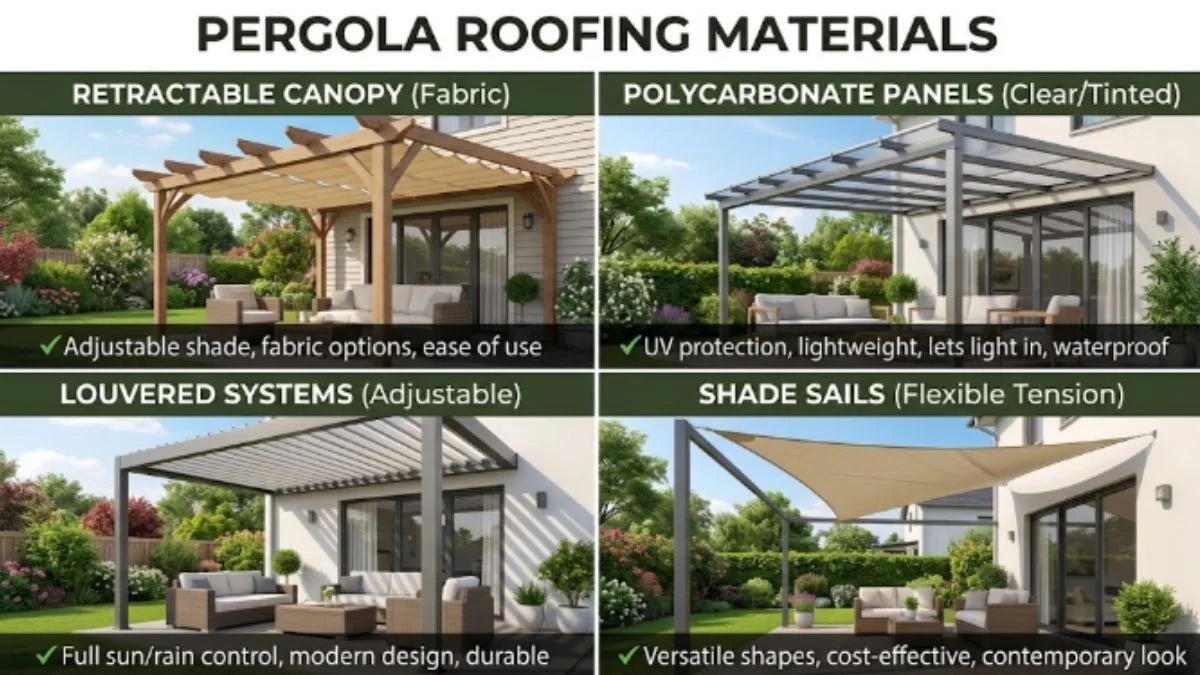
Choosing the right pergola roofing materials can change how you use an outdoor space throughout the year. An open pergola provides shade and structure, while a covered design can protect seating, outdoor kitchens, plants, and entertainment areas from rain and strong sunlight.
Homeowners can choose from polycarbonate, acrylic, metal, wood, fabric, glass, and other roofing options. Each material offers different levels of weather protection, light transmission, durability, appearance, maintenance, and cost.
The right choice depends on your climate, pergola design, roof pitch, desired shade, and budget. Therefore, understanding each option before installation can help you select a roof that suits your property.
What Are the Best Pergola Roofing Materials?
The best material depends on how you want to use the pergola. Polycarbonate works well when you want daylight and weather protection. Metal provides strength and a more permanent roof. Fabric offers a lighter appearance and easier installation.
Acrylic provides another transparent option, while wood creates a traditional covered structure. Glass offers excellent light transmission but usually requires a stronger frame and a higher budget.
| Material | Rain Protection | Light Transmission | Durability | Maintenance | Cost Level |
| Polycarbonate | Excellent | High | Excellent | Low | $$ |
| Acrylic | Excellent | High | Good | Low | $$–$$$ |
| Metal | Excellent | Low | Excellent | Low | $$–$$$ |
| Wood | Good | Low | Good | Moderate–high | $$–$$$ |
| Fabric | Moderate | Moderate | Moderate | Moderate | $–$$ |
| Glass | Excellent | Excellent | Good | Moderate | $$$–$$$$ |
Before selecting a material, consider whether you want complete rain protection, filtered sunlight, full shade, or an open-air experience.
Polycarbonate Roofing
Polycarbonate ranks among the popular pergola roofing materials because it combines low weight with high impact resistance. It can also transmit natural light while reducing direct exposure to the elements.
A pergola with polycarbonate roof panels can create a sheltered seating area without making the space feel completely enclosed. Homeowners can select clear, tinted, opal, or multiwall sheets depending on their light and privacy preferences.
A polycarbonate pergola roof also works well with modern pergola frames made from aluminum, steel, or treated wood.
Acrylic Roofing
Acrylic roofing provides another transparent or translucent solution. Therefore, Acrylic sheets can allow substantial daylight into a covered pergola while creating a clean roof surface.
However, homeowners should compare acrylic with polycarbonate based on impact resistance, climate, thickness, panel design, and installation requirements.
Acrylic roof panels can suit homeowners who prioritize visibility and daylight. Meanwhile, polycarbonate often makes a stronger choice when impact resistance represents a major concern.
Metal Roofing
Metal creates a solid roof that can provide protection from heavy rain and sun. Aluminum and steel remain common choices because they can suit both contemporary and traditional outdoor structures.
Metal roofs can also complement homes that already use metal roofing elsewhere on the property.
Homeowners researching Roof Materials should compare the pergola roof with the main house roof rather than selecting an outdoor material in isolation.
Wood Roofing
Wood creates a traditional appearance and can blend naturally with timber pergola posts and beams. Slatted wood roofs provide filtered sunlight, while closely spaced boards can offer greater shade.
Wood requires more maintenance than many plastic or metal alternatives. Regular staining, sealing, inspection, and repairs can help protect the material from moisture and weather exposure.
Fabric and Retractable Covers
Fabric covers provide flexibility because homeowners can open or close the roof depending on weather and sunlight. Retractable systems can work particularly well when users want shade during the afternoon but prefer an open sky at other times.
However, fabric generally cannot match the weather protection of solid panels during heavy rain.
What Types of Pergola Roof Panels Can You Choose?
Modern pergola roof panels come in several profiles, materials, and transparency levels. The panel shape affects drainage, structural requirements, appearance, and installation.
| Panel Type | Light | Weather Protection | Best Application |
| Solid polycarbonate | High | Excellent | Rain and sun protection |
| Multiwall polycarbonate | Moderate–high | Excellent | Insulation and filtered light |
| Corrugated polycarbonate | High | Very good | Simple sloped pergolas |
| Acrylic sheet | High | Good–excellent | Clear roof designs |
| Metal panel | Low | Excellent | Full shade |
| Wood slat | Variable | Moderate | Traditional designs |
| Glass | Excellent | Excellent | Premium outdoor spaces |
A polycarbonate roof system can combine panels, connectors, flashing, fasteners, edge profiles, and drainage components. These parts need to work together to reduce leaks and allow the panels to expand and contract with temperature changes.
Clear Roofing Options for Pergolas
Transparent roofing can provide shelter while retaining natural daylight. This makes clear materials useful when the pergola sits beside a house, patio, pool, garden, or outdoor dining area.
Clear roofing sheets can work especially well when homeowners want protection without creating a dark space underneath.
The same type of sheet technology also appears in greenhouse construction. Therefore, people researching clear panels for greenhouse applications may encounter similar polycarbonate and acrylic products, although pergola requirements differ from greenhouse requirements.
A clear cover for pergola applications should provide suitable UV protection, weather resistance, thickness, and structural support.
Clear vs Tinted Panels
Clear panels provide maximum daylight, while tinted panels reduce glare and solar heat. Opal or translucent panels diffuse sunlight and can create softer illumination beneath the roof.
| Panel Finish | Daylight | Glare Control | Privacy | Heat Control |
| Clear | Very high | Low | Low | Moderate |
| Bronze/tinted | High | Moderate | Moderate | Better |
| Opal/translucent | Moderate | High | High | Better |
| Opaque | Low | Very high | Very high | High |
Therefore, panel color should depend on the pergola’s orientation and how people use the space.
Pergola Plastic Roof Options
A pergola plastic roof generally refers to roofing made from materials such as polycarbonate or acrylic. These sheets weigh less than many traditional roofing materials and can simplify handling during installation.
Roof plastic panels also come in different thicknesses and profiles. Corrugated sheets can suit simple sloped roofs, while solid or multiwall sheets can provide a more finished appearance.
Polycarbonate remains particularly useful when the pergola needs impact resistance and natural light. Acrylic can work well when clarity and surface appearance take priority.
What Are Waterproof Pergola Roof Ideas?
Homeowners who want year-round outdoor use often prioritize waterproofing. Several waterproof pergola roof ideas can provide better protection than an open slatted roof.
A solid polycarbonate roof, metal roof, or properly installed glass roof can protect the area from rain. A retractable waterproof fabric system can also provide coverage while preserving flexibility.
The roof pitch matters as much as the material. Water needs a path toward a suitable drainage edge or gutter. Flat panels without adequate slope can allow water to collect and create long-term problems.
Waterproof Pergola Roof Panels
Waterproof pergola roof panels should include appropriate overlaps, connectors, seals, flashing, and drainage details. The frame must also support the panel weight and expected weather loads.
A waterproof roof requires more than simply placing sheets over pergola beams. Correct panel orientation and fastening can reduce leakage risks.
Pergola Roof Styles to Match Different Homes
Roof design influences both the appearance and practical performance of a pergola. Homeowners can choose from several styles.
Sloped Roof
A sloped roof encourages water drainage and works well with polycarbonate, acrylic, metal, and other sheet materials. Even a modest slope can help direct rain toward gutters or drainage points.
Gable Roof
A gable roof creates two sloping sides with a central ridge. This design resembles many residential roofs and can provide greater architectural definition.
Homeowners comparing Roof Styles can consider a gable pergola when they want the outdoor structure to visually relate to the main house.
Flat-Looking Roof
A flat-looking roof creates a modern appearance. However, the structure still needs adequate drainage. Builders often create a slight pitch that remains difficult to notice from ground level.
Louvered Roof
A louvered pergola uses adjustable slats that can open or close. This option allows homeowners to control sunlight and ventilation, although it can cost more than a simple fixed roof.
Retractable Roof
Retractable fabric or panel systems provide flexible coverage. They work well when homeowners want an open pergola during mild weather and additional shelter during rain or strong sun.
Can You Build a Pergola With a Solid Roof?
Yes. A pergola with a solid roof can provide significantly more protection than an open structure. Solid polycarbonate, metal, acrylic, wood, and glass can all create a more enclosed roof surface.
A pergola with solid roof construction requires careful attention to frame strength, roof pitch, drainage, flashing, and attachment points.
The roof also changes the structural load. Therefore, homeowners should check local building requirements and have a qualified professional assess larger or permanently attached structures.
For comparison, a homeowner considering a pergola on the roof must address additional structural concerns because the roof deck and building structure need to support the added load. Waterproofing and safe access also become critical considerations.
How Does Pergola Roof Installation Work?
Proper pergola roof installation starts with measuring the structure and confirming that the frame can support the selected roofing material.
The installer then checks the roof slope, prepares the support structure, cuts panels according to the manufacturer’s specifications, installs flashing and connectors, and secures the sheets with appropriate fasteners.
For polycarbonate panels, installers should account for thermal movement. Over-tightening fasteners can damage sheets and restrict natural expansion and contraction.
The general installation sequence includes:
- Inspect and prepare the pergola frame.
- Confirm roof pitch and drainage direction.
- Measure panel coverage.
- Install support members and flashing.
- Position roofing panels.
- Secure panels with suitable fasteners.
- Seal appropriate joints and edges.
- Install gutters or drainage components.
- Inspect the roof for gaps and movement.
- Test drainage during rainfall or controlled water testing.
A professional should handle complex structures, elevated installations, structural modifications, and projects that require permits.
Polycarbonate vs Acrylic Pergola Roofing
Polycarbonate and acrylic remain two common choices when homeowners want a transparent or translucent roof.
| Feature | Polycarbonate | Acrylic |
| Impact resistance | Excellent | Good |
| Clarity | Very good | Excellent |
| Weight | Light | Light |
| Weather resistance | Excellent | Good–excellent |
| Design options | Many | Many |
| Typical use | Weather protection | Clear architectural appearance |
| Maintenance | Low | Low |
Furthermore, Polycarbonate generally suits projects where impact resistance matters more. Acrylic can appeal to homeowners who prioritize optical clarity.
Therefore, neither material works best in every situation. The right choice depends on the pergola’s exposure, design, budget, and desired appearance.
Can Pergola Panels Work With Other Outdoor Structures?
Yes. Similar sheet materials appear in patios, walkways, carports, sheds, and greenhouses.
For example, custom polycarbonate carport roof sheets can use similar material technology to pergola panels, although carports often require different structural calculations because of their larger spans and vehicle-clearance requirements.
Likewise, polycarbonate sheets can work across multiple outdoor structures when their thickness, profile, UV protection, support spacing, and load requirements match the application.
Pergola Roofing vs Traditional Roofing
Pergola roofing differs from conventional residential roofing because outdoor structures often have lighter frames and more open sides.
| Feature | Pergola Roofing | Residential Roofing |
| Structure | Often open-sided | Enclosed building |
| Main goal | Shade and outdoor shelter | Full building protection |
| Common materials | Polycarbonate, acrylic, metal, fabric | Shingles, metal, tile, slate |
| Drainage | Simple or moderate | Fully integrated |
| Insulation | Often limited | Usually important |
| Structural requirements | Project-specific | More extensive |
Homeowners researching Roof Construction Types can use the same basic principles of slope, support, drainage, flashing, and load management when evaluating pergola roofing.
Maintenance Tips for Pergola Roof Materials
Regular maintenance can extend the life of the roof and reduce repair needs. First, remove leaves, branches, and other debris from the roof surface.
Next, inspect fasteners, seals, flashing, gutters, and panel edges. Look for cracks, loose connections, discoloration, or water leaks.
Avoid harsh cleaning chemicals that can damage plastic roofing. Instead, follow the manufacturer’s cleaning recommendations and use suitable tools.
For wood roofs, check for moisture damage and maintain the protective coating according to the material requirements. Metal roofs require inspection around fasteners and seams, while fabric covers may need periodic cleaning and tension checks.
How Should You Choose Pergola Roofing Materials?
Start by identifying your primary goal. If you want natural light and rain protection, polycarbonate or acrylic may suit the project. If you want full shade, metal or a solid wood roof can provide stronger coverage.
Next, consider climate. Areas with heavy snow, strong winds, hail, or intense sunlight may require stronger materials and structural support.
Finally, compare cost, maintenance, lifespan, drainage requirements, and compatibility with the existing pergola frame.
Quick Selection Guide
| Your Priority | Recommended Option |
| Natural daylight | Clear polycarbonate |
| Impact resistance | Polycarbonate |
| Maximum clarity | Acrylic |
| Full shade | Metal |
| Traditional appearance | Wood |
| Adjustable coverage | Retractable fabric |
| Premium transparent roof | Glass |
| Low-maintenance coverage | Polycarbonate or metal |
Final Thoughts on Pergola Roofing
The best pergola roofing materials should match the structure, climate, budget, and way you plan to use the space. Polycarbonate provides a strong combination of daylight, weather protection, and low maintenance, while acrylic offers excellent clarity. Metal works well when you want a solid roof, and wood suits traditional outdoor designs.
Meanwhile, fabric and louvered systems provide greater control over sunlight and ventilation. Regardless of material, correct slope, drainage, structural support, fastening, and sealing remain essential.
For dependable home-improvement guidance, Home Experts Guide offers practical information on roofing, construction, maintenance, remodeling, and other residential projects. Its resources can help homeowners compare options before starting a project.
FAQs
What is the best roof material for a pergola?
Polycarbonate often provides an excellent balance of weather protection, impact resistance, natural light, weight, and maintenance. However, metal, acrylic, wood, glass, and fabric can suit different designs and climate requirements.
How do you attach polycarbonate roof material to a pergola?
Installers typically secure polycarbonate sheets to suitable roof supports with manufacturer-approved fasteners and washers. They also allow thermal movement, maintain the recommended panel overlap, and use appropriate flashing and drainage details.
Are polycarbonate panels good for pergolas?
Yes. Polycarbonate panels can provide rain protection while allowing natural light beneath the pergola. They also offer strong impact resistance and relatively low maintenance, making them a popular choice for covered outdoor structures.
Can I use acrylic panels on a pergola?
Yes. Acrylic panels can create a clear or translucent pergola roof that allows substantial daylight into the space. However, homeowners should compare acrylic with polycarbonate based on impact resistance, climate, panel thickness, and budget.



Leave a Reply