
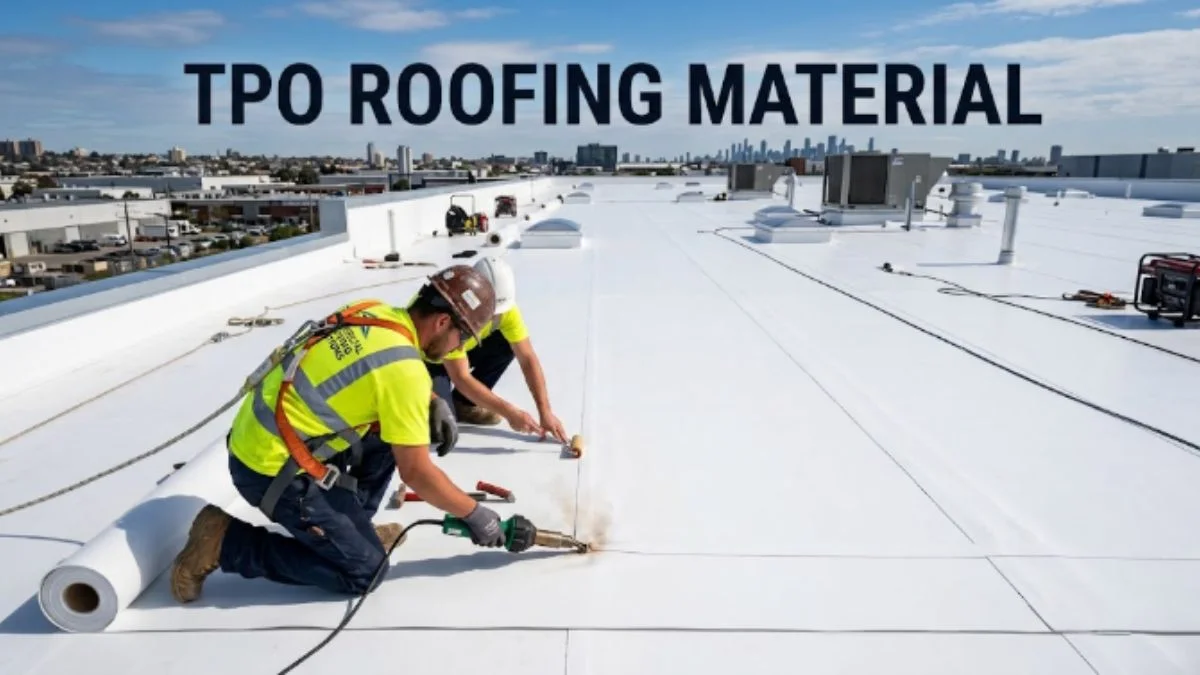
TPO roofing material has become a popular choice among commercial property owners and building managers who need a durable single-ply membrane with strong weather resistance and reflective performance. Thermoplastic polyolefin, commonly called TPO, combines a flexible membrane with heat-welded seams that create a continuous roofing surface.
The material works particularly well on low-slope and flat roofs. It can support commercial buildings, warehouses, retail properties, offices, and some residential structures with suitable roof designs. Property owners should still evaluate roof slope, insulation, drainage, climate, building use, and local requirements before selecting a membrane system.
Home Experts Guide provides practical roofing information to help property owners compare materials, understand installation requirements, estimate project considerations, and plan routine maintenance.
What Is TPO Roofing Material?
TPO roofing material consists of a flexible thermoplastic membrane that typically contains polypropylene, ethylene-propylene rubber, fillers, pigments, and stabilizing additives. Manufacturers produce the membrane in sheets that roofing crews install across low-slope roof assemblies.
Heat welding joins overlapping membrane sheets at the seams. This process creates strong connections and helps limit water intrusion at vulnerable joints.
A typical TPO roof assembly can include:
- TPO membrane
- Roof insulation
- Cover board
- Vapor control layer
- Fasteners and plates
- Adhesive
- Flashing materials
- Edge metal
- Drainage components
- Pipe and curb flashing
TPO membranes commonly come in several thicknesses, including 45, 60, and 80 mil options. Thicker membranes generally provide greater resistance to punctures and demanding service conditions, although the right specification depends on the roof assembly and project requirements.
If you are comparing TPO with other systems, our Roofing Materials guide can help you evaluate membrane roofing, modified bitumen, EPDM, metal roofing, and other options.
What Is a TPO Roof System and How Does It Work?
A TPO roof system combines the membrane with insulation, attachment methods, flashing, drainage, and edge details. The membrane alone does not determine the entire roof’s performance.
The roof assembly typically follows this structure:
| Roof Component | Main Purpose |
| TPO membrane | Resists weather and water |
| Insulation | Improves thermal performance |
| Cover board | Adds protection and support |
| Fasteners | Secure roof components |
| Adhesive | Bonds selected components |
| Heat-welded seams | Connect membrane sheets |
| Flashing | Protects penetrations and edges |
| Drainage | Moves water away from the roof |
A properly coordinated assembly can help manage heat transfer, rainwater, wind forces, and daily expansion and contraction. Consequently, contractors must pay close attention to seams, penetrations, drains, parapets, curbs, and perimeter edges.
Why Do Property Owners Choose a Single Ply TPO Roof?
A single ply TPO roof offers a relatively lightweight membrane solution with strong seam performance and reflective properties. The system can cover large low-slope roof areas without the multiple membrane layers that some built-up systems require.
TPO also offers several practical advantages:
- Reflective white membranes can reduce solar heat absorption.
- Heat-welded seams create strong membrane connections.
- Flexible sheets accommodate normal roof movement.
- Lightweight construction reduces roof dead load.
- Multiple membrane thicknesses support different project needs.
- Manufacturers offer different reinforcement configurations.
- Contractors can use mechanical attachment or adhered systems.
However, TPO does not automatically suit every roof. A building with complicated geometry, severe rooftop traffic, poor drainage, or unusual structural conditions may need a different roofing strategy.
What Are the Main Benefits of TPO Single Ply Roofing?
TPO single ply roofing combines weather resistance, seam welding, flexibility, and reflective performance in one membrane system. These characteristics make it particularly useful across many commercial applications.
Reflective Roof Surface
White TPO membranes reflect a substantial portion of solar radiation. This characteristic can help reduce heat absorption across the roof surface, particularly during sunny and warm weather.
Heat-Welded Seams
Professional crews use hot-air welding equipment to join membrane overlaps. Properly welded seams create continuous connections that can resist water entry and environmental exposure.
Flexible Membrane
TPO can accommodate normal movement caused by temperature changes. However, installers must still follow manufacturer requirements because excessive movement or poor detailing can damage any membrane system.
Lightweight Construction
A TPO assembly can weigh less than some traditional roofing systems. Structural engineers should still evaluate the complete roof assembly before installation.
What Factors Affect TPO Roofing Cost?
TPO roofing cost depends on much more than the membrane price. Roof size, membrane thickness, insulation requirements, attachment method, existing roof conditions, labor rates, access, drainage, penetrations, and geographic location can all influence the final project price.
| Cost Factor | Potential Impact |
| Roof size | Larger areas can change material and labor economics |
| Membrane thickness | Thicker membranes can increase material costs |
| Insulation | Higher insulation requirements can increase assembly cost |
| Tear-off | Existing roof removal adds labor and disposal expenses |
| Roof complexity | More penetrations and details require additional labor |
| Attachment method | Mechanical and adhered systems have different installation costs |
| Location | Labor, transportation, and regional requirements affect pricing |
| Repairs | Deck or insulation damage can increase project scope |
A contractor should inspect the existing roof before providing a final estimate. Property owners should compare complete proposals rather than comparing membrane prices alone.
Which TPO Roofing Colors Can You Choose?
TPO roofing colors depend on the manufacturer’s product range and regional availability. White remains a common choice because reflective membranes can reduce solar heat gain.
Other available colors may include:
- White
- Gray
- Tan
- Light gray
- Custom or specialty colors from selected manufacturers
Color selection should consider climate, building appearance, energy objectives, local requirements, and manufacturer availability. A property owner should confirm the actual color options with the selected manufacturer before specifying the membrane.
Can You Paint a TPO Roof?
Property owners sometimes ask, can you paint a TPO roof after installation. Standard exterior paint does not automatically adhere well to TPO membrane surfaces.
A coating manufacturer may approve a compatible coating system after proper surface preparation. The roof owner should confirm compatibility with the TPO manufacturer and coating manufacturer before applying anything.
A coating project may require:
- Cleaning the membrane.
- Removing contaminants.
- Preparing the surface according to manufacturer instructions.
- Applying a compatible primer when required.
- Applying the approved coating system.
- Inspecting the finished surface.
Never assume that ordinary roof paint will bond correctly with TPO. An incompatible coating can peel, crack, or interfere with membrane performance.
How Does TPO Roofing Installation Work?
TPO roofing installation requires careful planning because seams, penetrations, edges, and drainage details directly affect long-term performance. Professional crews should follow the membrane manufacturer’s specifications and applicable building requirements.
How to Install TPO Roof?
Inspect the Existing Roof
The crew evaluates the roof deck, existing membrane, insulation, drainage, penetrations, and perimeter conditions. Any structural or moisture problems require attention before membrane installation.
Prepare the Roof Deck
The installation team cleans and prepares the substrate. Uneven areas, damaged decking, moisture problems, and unsuitable surfaces can compromise the new assembly.
Install Insulation
Workers place the specified insulation according to the roof design. Proper fastening or bonding keeps insulation stable while supporting thermal performance.
Position the TPO Membrane
The crew rolls membrane sheets across the prepared surface and allows them to relax according to manufacturer instructions. Workers then position each sheet according to the approved layout.
Secure the Membrane
Mechanical systems use approved fasteners and plates, while adhered systems use compatible adhesives. The selected attachment method depends on the roof assembly, wind requirements, and manufacturer specifications.
Weld the Seams
Workers use hot-air welding equipment to join membrane overlaps. Proper temperature, speed, pressure, and equipment settings help create reliable seams.
Detail Penetrations
Roof drains, pipes, vents, curbs, skylights, and other penetrations require carefully fitted flashing and membrane details.
Finish Edges and Perimeters
Crews secure perimeter areas and install compatible edge components. These areas receive significant wind forces, so installers must follow approved fastening patterns.
Inspect the Completed Roof
The crew checks seams, flashings, penetrations, drains, corners, and edges. Quality-control inspections can identify problems before the roof enters service.
Which TPO Roofing Tools Do Installers Need?
Professional TPO roofing tools help crews achieve consistent membrane placement and seam welding. The exact equipment depends on the manufacturer’s installation method.
Common equipment includes:
- Hot-air welding machine
- Hand welding gun
- Seam probe
- Roller
- Measuring tape
- Utility knife
- Membrane scissors
- Chalk line
- Fastener tools
- Adhesive rollers
- Cleaning supplies
- Safety equipment
A seam probe helps installers check welded edges after cooling. Automated welding equipment can improve consistency across long seams, while hand welders help crews complete corners, penetrations, and difficult details.
When Does TPO Roof Sealant Matter?
TPO roof sealant can help address specific flashing and transition details when the membrane manufacturer approves the product. Sealant does not replace proper membrane welding.
Installers may use compatible sealants around the following:
- Flashing transitions
- Termination details
- Penetrations
- Edge components
- Metal transitions
The installer should always verify compatibility before using sealant. An incompatible chemical product can damage the membrane or compromise the roof assembly.
How Long Does a TPO Roof Last?
Many properly installed TPO roof systems can provide decades of service, although actual service life varies substantially. How long does a TPO roof last depends on membrane thickness, installation quality, climate, maintenance, rooftop traffic, drainage, UV exposure, and other site conditions.
| Factor | Effect on Service Life |
| Proper installation | Supports seam and flashing performance |
| Routine inspections | Helps identify small problems early |
| Good drainage | Reduces prolonged water exposure |
| Adequate membrane thickness | Adds resistance to demanding conditions |
| Rooftop traffic control | Reduces puncture risks |
| Correct repairs | Prevents minor damage from expanding |
A roof inspection schedule can help property owners identify punctures, seam concerns, blocked drains, damaged flashing, and other problems before they become expensive repairs.
What Should You Know About TPO Roofing in Flagstaff?
TPO roofing Flagstaff projects require attention to the local climate, temperature variation, UV exposure, roof design, snow conditions, and applicable building requirements. Flagstaff’s high elevation creates conditions that differ from many lower-elevation locations.
Property owners should ask a local TPO roofing contractor to evaluate insulation requirements, drainage, wind conditions, snow loads, membrane selection, and flashing details.
A local professional can also account for regional labor rates and permitting requirements when estimating TPO roofing cost.
What Should You Compare Before Hiring a TPO Roofing Contractor?
A qualified TPO roofing contractor should demonstrate relevant experience with single-ply membrane systems and provide a clear project specification.
Before signing an agreement, compare:
- Manufacturer and membrane specification
- Membrane thickness
- Insulation type and thickness
- Attachment method
- Flashing details
- Drainage improvements
- Warranty terms
- Labor scope
- Tear-off requirements
- Project timeline
- Maintenance recommendations
Ask contractors to explain how they will handle penetrations, seams, perimeter edges, drains, and existing roof conditions. Clear answers can reveal major differences between competing proposals.
What Are the Advantages and Limitations of TPO Roofing?
TPO offers several strong characteristics, but property owners should evaluate both benefits and limitations before choosing a system.
| Advantages | Considerations |
| Reflective surface options | Color choices depend on manufacturers |
| Heat-welded seams | Installation requires specialized equipment |
| Lightweight membrane | Punctures still require prompt repair |
| Flexible construction | Poor detailing can cause leaks |
| Multiple thickness choices | Project cost varies by assembly |
| Suitable for many low-slope roofs | Not every roof design suits TPO |
This comparison highlights an important point: TPO roofing material can perform very well when the roof design, material specification, installation process, and maintenance plan work together.
Final Thoughts
TPO roofing material offers a practical single-ply membrane option across many low-slope commercial roofing applications. Its heat-welded seams, flexible construction, reflective options, and multiple thickness choices make it a strong candidate within the modern roofing market.
Still, material selection represents only one part of a successful roof project. Proper substrate preparation, insulation, attachment, seam welding, flashing, drainage, perimeter detailing, inspection, and maintenance all influence roof performance.
Home Experts Guide recommends comparing the complete roof assembly rather than focusing only on membrane price. A knowledgeable TPO roofing contractor can evaluate the building, climate, roof condition, and project requirements before recommending an appropriate system.
Frequently Asked Questions
What is TPO roofing?
TPO roofing uses a thermoplastic membrane that covers low-slope and flat roof assemblies. Heat-welded seams connect membrane sheets and create continuous waterproofing. The system can also include insulation, cover boards, fasteners, adhesives, and flashing.
What does TPO stand for?
TPO stands for thermoplastic polyolefin. Manufacturers use this polymer-based material to produce flexible single-ply roofing membranes. The material combines flexibility with heat-weldable seams and reflective surface options.
Can you paint TPO roofing?
You can apply a coating to TPO only when the coating manufacturer and TPO manufacturer approve compatibility. Proper cleaning and surface preparation also matter. Standard exterior paint may not bond reliably with the membrane.
Can you walk on a TPO roof?
People can walk on TPO roofs when necessary, but unnecessary traffic can increase puncture and surface-damage risks. Roofing crews should use appropriate practices around equipment, tools, and sharp objects. Property owners should avoid routine recreational or unnecessary foot traffic.
Is TPO roofing flammable?
TPO membranes can resist ignition under applicable fire-test conditions, but the complete roof assembly determines its fire classification. Insulation, decking, adhesives, and other components also affect fire performance. Always check the tested assembly and applicable building requirements.
What colors does TPO roofing come in?
White represents a common TPO membrane color, while manufacturers may offer gray, tan, and other options. Availability varies by manufacturer and product line. Property owners should confirm color, reflectance, and warranty details before selecting a membrane.



Leave a Reply