
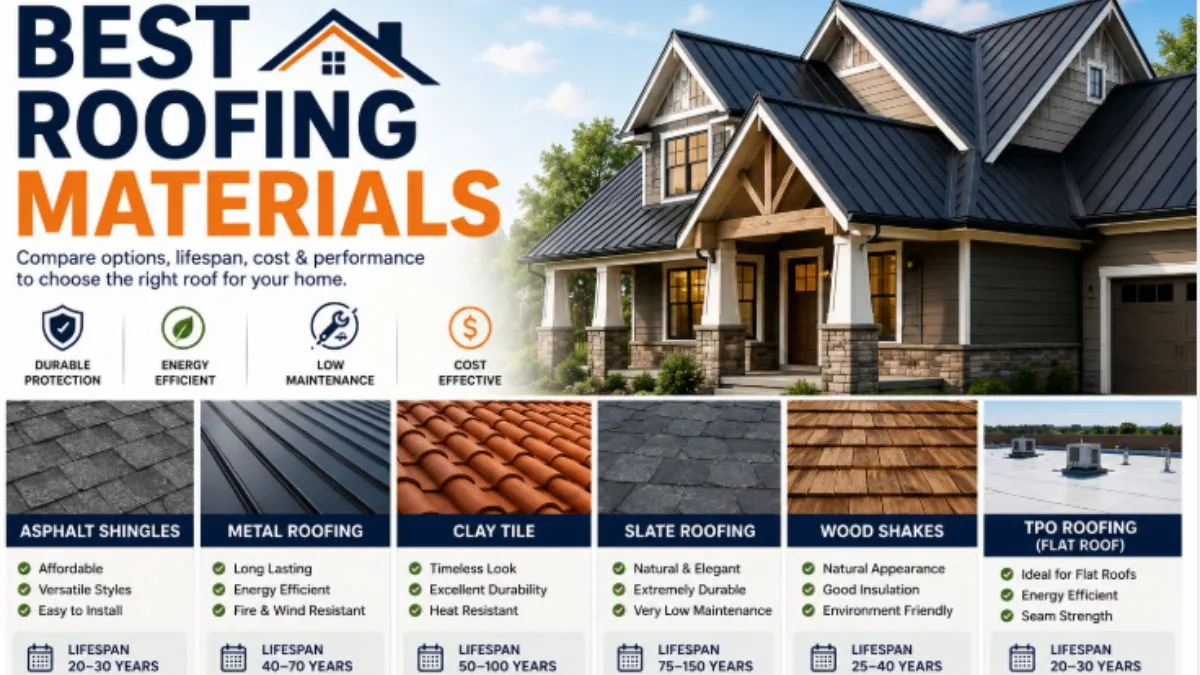
Choosing the Best Roofing Materials requires more than selecting the lowest price. Every roofing system offers different advantages, expected lifespan, maintenance needs, and weather resistance. Therefore, homeowners should compare each option carefully before making a final decision.
Your roof protects your family, improves energy efficiency, and adds value to your property. Moreover, the right material reduces repair costs and increases long-term savings. Whether you plan a roof replacement or a new construction roof, understanding today’s roofing options helps you invest wisely.
This guide compares popular roofing systems, explains their strengths, answers common homeowner questions, and provides practical tables that simplify your decision.
Related Guides: Learn more about Residential Roofing, Commercial Roofing, Roofing Types, and Roofing Materials to choose the right roofing system for your property.
Why Does Choosing the Best Roofing Material Matter?
A quality roof protects your home every season. Heavy rain, strong winds, snow, and intense sunlight all affect roofing performance. Consequently, choosing the right material improves durability and lowers maintenance expenses.
When selecting roofing, consider:
- Climate
- Budget
- Expected lifespan
- Roof slope
- Maintenance requirements
- Energy efficiency
- Home style
Each factor influences long-term performance.
What Are the Best Roofing Materials?
Several roofing systems continue to perform well across residential and commercial buildings.
| Roofing Material | Average Lifespan | Maintenance | Best Choice |
| Asphalt Shingles | 20–30 Years | Low | Budget-friendly homes |
| Metal Roofing | 40–70 Years | Low | Extreme climates |
| Clay Tile | 50–100 Years | Low | Warm regions |
| Concrete Tile | 40–70 Years | Moderate | Windy areas |
| Slate Roofing | 75–150 Years | Very Low | Luxury homes |
| Wood Shakes | 25–40 Years | High | Traditional homes |
| TPO Roofing | 20–30 Years | Low | Flat commercial roofs |
Every material offers unique advantages depending on climate and building design.
How Can You Compare Roofing Material Options?
Many homeowners want to compare roofing material choices before replacing an old roof.
The following comparison makes the process easier.
| Feature | Asphalt | Metal | Slate | Clay Tile |
| Cost | Low | Moderate | High | High |
| Lifespan | Good | Excellent | Outstanding | Excellent |
| Maintenance | Low | Low | Very Low | Low |
| Weight | Light | Light | Heavy | Heavy |
| Energy Efficiency | Moderate | Excellent | Good | Good |
Always compare lifespan, installation cost, maintenance, and local weather before selecting a roofing system.
Which Roofing Material Lasts the Longest?
Many homeowners ask:
What Type of Roof Lasts the Longest?
Slate remains the longest lasting roofing material available today. A professionally installed slate roof often protects a home for more than 100 years.
Here is a lifespan comparison.
| Material | Estimated Lifespan |
| Asphalt | 20–30 Years |
| Architectural Asphalt | 30–40 Years |
| Metal | 40–70 Years |
| Clay Tile | 50–100 Years |
| Slate | 75–150 Years |
Therefore, anyone searching what type of roof lasts the longest usually compares slate, clay tile, and premium metal roofing.
What Are Roof Shingles Made Of?
Homeowners frequently ask what are roof shingles made of before replacing a roof.
Most asphalt shingles include:
- Fiberglass mat
- Asphalt coating
- Mineral granules
- Protective sealant
Premium shingles also include reinforced layers that improve wind resistance and durability.
How Thick Are Roof Shingles?
Another common question involves how thick are roof shingles. Thickness depends on the manufacturer and product grade.
| Shingle Type | Average Thickness |
| 3-Tab Shingles | About 3–5 mm |
| Architectural Shingles | About 6–10 mm |
| Premium Designer Shingles | Up to 12 mm |
Thicker shingles generally resist wind and impact more effectively.
Why Do Many Homeowners Choose Composition Roofing?
Composition roofing remains one of the most popular roofing systems in North America.
Manufacturers combine fiberglass, asphalt, and protective granules to create durable shingles.
Many roofing contractors also shorten the name to roof comp when discussing asphalt composition roofing systems.
Benefits include:
- Affordable installation
- Wide color selection
- Easy maintenance
- Reliable weather protection
Is Laminate Roofing Worth Considering?
Yes, Laminate roofing, also called architectural shingles, offers better durability than traditional three-tab shingles.
Advantages include:
- Longer lifespan
- Better wind resistance
- Improved appearance
- Better warranty options
Many homeowners upgrade to laminate shingles during roof replacement projects.
Is Traditional Roof Better Than Modern Roofing?
Many homeowners ask:
Is Traditional Roof Better Than Modern Roofing?
The answer depends on your goals.
Traditional roofing materials such as slate and wood create timeless character.
Modern materials such as metal roofing, synthetic products, and architectural shingles improve energy efficiency while reducing maintenance.
Choose traditional roofing if appearance matters most. Choose modern roofing if durability and energy savings remain your priority.
What Roof Frame Materials Support Roofing Systems?
Strong roof frame materials support the entire roofing system.
Common framing materials include:
| Material | Advantages |
| Wood | Affordable and widely available |
| Steel | Strong and durable |
| Engineered Wood | Lightweight and stable |
| Reinforced Concrete | Commercial buildings |
Roof framing should always match the weight of your roofing material.
Why Does Synthetic Underlayment Matter?
Many contractors now recommend synthetic underlayment for metal roof systems.
Compared with traditional felt underlayment, synthetic products offer:
- Better tear resistance
- Water resistance
- UV protection
- Lightweight installation
- Longer service life
These advantages improve overall roofing performance.
What Are Common Roof Types?
Material selection also depends on common roof types.
Popular roof styles include:
- Gable
- Hip
- Flat
- Gambrel
- Mansard
- Shed
Each roof design supports different roofing systems and drainage requirements.
Which Roofing Material Offers the Best Value?
The answer depends on your budget and long-term plans.
| Priority | Best Material |
| Lowest Cost | Asphalt |
| Longest Lifespan | Slate |
| Energy Savings | Metal |
| Flat Roof | TPO |
| Premium Appearance | Clay Tile |
| Low Maintenance | Metal |
Although slate lasts longer, asphalt remains one of the most cost effective roofing solutions because installation costs stay much lower.
How Often Should You Inspect Different Roofing Materials?
Regular inspections extend roof life and reduce repair costs. Every roofing material requires a different maintenance schedule.
| Roof Material | Inspection Frequency | Cleaning & Maintenance |
| Asphalt | Once a year | Remove debris and inspect damaged shingles |
| Metal | Every 2 years | Wash the surface and check fasteners |
| Slate | Every 2 years | Check flashing and replace cracked tiles |
| Clay Tile | Once a year | Remove moss and inspect broken tiles |
| Wood Roofing | Once a year | Clean debris and inspect for rot |
| TPO Roofing | Twice a year | Inspect seams and remove standing water |
Routine maintenance increases roof life regardless of material.
What Makes Asphalt Alternatives Popular?
Many homeowners now search for an alternative to asphalt roofing.
Popular alternatives include:
- Metal roofing
- Clay tile
- Concrete tile
- Slate
- Synthetic slate
- Cedar shakes
Each option offers a longer lifespan than standard asphalt shingles, although installation costs usually increase.
Should You Follow Roofing Shingles Price News?
Material prices change throughout the year. Therefore, monitoring roofing shingles price news helps homeowners plan roof replacement projects more effectively.
Many contractors also offer seasonal discounts during slower installation periods. Request multiple estimates before signing a roofing contract.
Final Thoughts
Selecting the Best Roofing Materials requires careful planning. Lifespan, installation costs, maintenance, climate, and roof design all influence your final decision. Compare several options instead of choosing the lowest price alone.
Whether you select asphalt, metal, slate, clay tile, or TPO roofing, quality installation remains just as important as material quality.
If you want reliable roofing guides, comparison articles, maintenance advice, and practical buying tips, Home Experts Guide serves as a trusted source of roofing information for homeowners and property managers.
Frequently Asked Questions
1. What is the best roofing material for most homes?
Architectural asphalt shingles remain a popular choice because they balance affordability, durability, and appearance. Metal roofing also ranks highly due to its long lifespan and energy efficiency.
2. What type of roof lasts the longest?
Slate roofing usually lasts the longest and often exceeds 100 years with proper installation. Clay tile and premium metal roofing also provide excellent long-term performance.
3. Is metal roofing better than asphalt shingles?
Metal roofing generally lasts much longer and requires less maintenance. However, asphalt shingles cost less and suit homeowners with limited budgets.
4. How often should homeowners inspect their roofs?
Most roofing experts recommend annual inspections. Flat roofs and areas with severe weather benefit from additional inspections after major storms.
5. Which roofing material offers the best value?
Asphalt shingles provide excellent value because they combine reasonable pricing with dependable performance. Homeowners seeking maximum longevity often choose slate or metal roofing despite higher initial costs.




Leave a Reply