
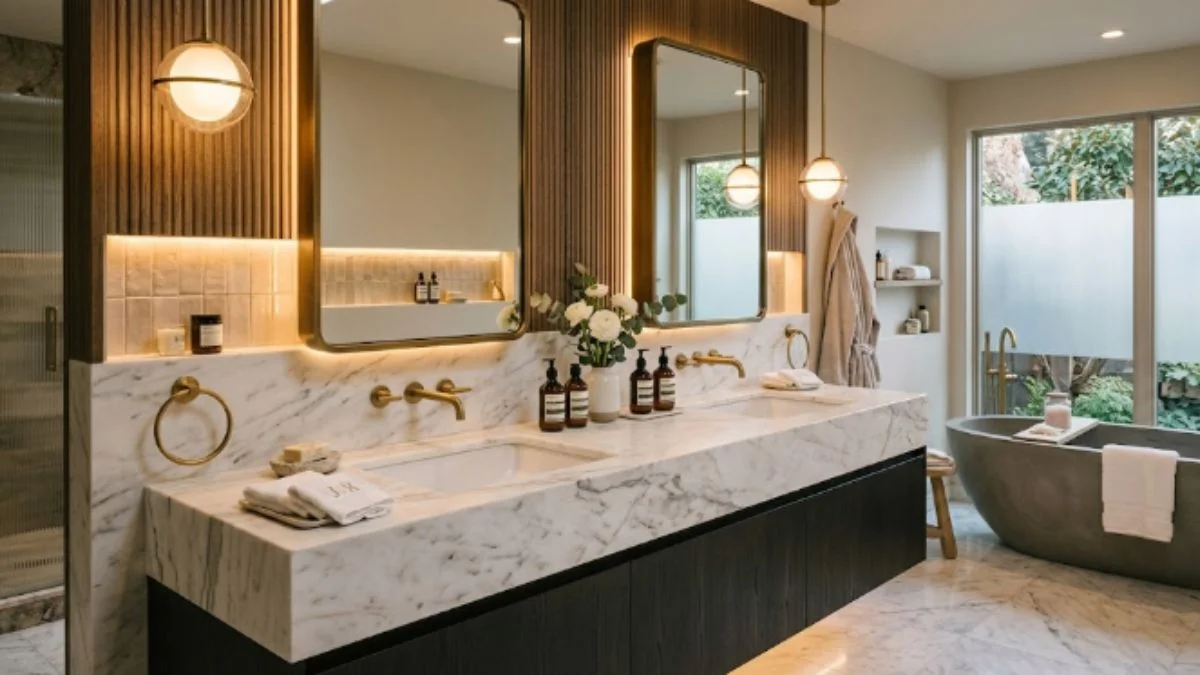
The right vanity can shape the entire look of a bathroom. It combines storage, sinks, countertops, mirrors, lighting, hardware, and decorative details in one prominent area. Therefore, choosing among luxury bathroom vanities ideas requires more thought than simply selecting a cabinet that matches the room.
A luxury vanity can feature natural stone, premium wood, elegant hardware, integrated sinks, decorative fronts, glass details, or custom storage. However, luxury does not always mean the largest or most expensive option. Proportion, material quality, layout, lighting, and careful styling often create a more refined result.
Whether you want a classic master bathroom, a modern spa-like space, or an Italian-inspired interior, the vanity can become the central design element.
What Makes a Bathroom Vanity Look Luxurious?
Several details can give a vanity a high-end appearance. Material selection comes first, but proportions and finishing details also matter.
A premium vanity may include:
- Natural marble or quartz countertops
- Solid wood or quality wood cabinetry
- Brushed brass or polished metal hardware
- Integrated or undermount sinks
- Soft-close drawers
- Full-extension storage
- Decorative cabinet fronts
- Custom drawer organizers
- Statement mirrors
- Integrated lighting
- Wall-mounted construction
- High-quality faucets
However, adding every premium feature can make a bathroom feel busy. Instead, select a few strong elements and coordinate them throughout the room.
| Vanity Feature | Luxury Effect | Suitable Style |
| Marble countertop | Classic and upscale | Traditional, Italian |
| Quartz countertop | Clean and polished | Modern, contemporary |
| Natural wood | Warm and rich | Transitional, modern |
| Brass hardware | Decorative contrast | Classic, traditional |
| Frameless drawers | Clean appearance | Modern |
| Fluted panels | Texture and depth | Contemporary |
| Glass doors | Light visual quality | Modern |
| Wall-mounted cabinet | Open floor area | Minimalist |
Popular Luxury Bathroom Vanity Styles
The best vanity style should relate to the bathroom’s architecture, flooring, wall finish, fixtures, and lighting.
Modern Luxury Vanities
Modern vanities use simple cabinet profiles, smooth surfaces, minimal hardware, and controlled colors. White, charcoal, warm gray, natural oak, and walnut can all work well.
A floating vanity can create an open floor area beneath the cabinet, which may make the room appear larger. Integrated sinks and large-format mirrors also suit modern interiors.
Contemporary Vanities
Contemporary designs often combine current materials with warmer details. Wood cabinetry, stone countertops, black hardware, fluted doors, curved mirrors, and decorative lighting can create a current appearance.
Unlike strict minimalist designs, contemporary bathrooms can include more texture and visual contrast.
Classic Bathroom Vanities
Classic bathroom cabinets often feature framed doors, raised panels, decorative hardware, traditional molding, and warm finishes.
White, cream, walnut, espresso, and painted wood can work well with marble countertops and traditional faucets. This style suits homeowners who want a timeless bathroom rather than a trend-driven interior.
Transitional Vanities
Transitional vanities combine traditional details with modern simplicity. Shaker-style doors, neutral colors, quartz countertops, simple brass hardware, and contemporary mirrors can create this middle-ground style.
This option works well when the rest of the home mixes classic architecture with newer finishes.
Italian-Inspired Vanities
Italian bathroom vanities often emphasize clean proportions, premium materials, sophisticated finishes, and modern detailing.
Glossy surfaces, natural stone, minimalist hardware, integrated sinks, and slim cabinet profiles can create an Italian-inspired bathroom. Pairing the vanity with large-format wall tile and statement lighting can strengthen the look.
Industrial Vanities
Industrial bathroom vanities often use dark wood, black metal, concrete-look surfaces, and exposed hardware. These materials create a stronger visual character.
A wood vanity paired with a stone countertop and matte-black fixtures can soften the harder industrial elements.
Spa-Inspired Vanities
Spa-inspired designs usually rely on natural colors, wood, stone, soft lighting, and uncluttered surfaces. Warm white, beige, taupe, pale oak, and natural stone can create a calm atmosphere.
Open shelves, woven baskets, plants, and soft textiles can complete the look.
Which Vanity Type Works Best in a Master Bathroom?
Master bathrooms usually provide more floor area than guest bathrooms, which creates room to consider larger storage units and dual-sink arrangements.
A master bath double vanity remains one of the most popular choices because two people can use separate sink areas at the same time. The design can include one continuous countertop or two separate cabinet sections.
A master bath double sink vanity can also provide dedicated storage on each side. Drawer layouts can separate personal items, while a central section can store shared bathroom supplies.
| Vanity Type | Best Use | Main Advantage |
| Single vanity | Small or medium bathrooms | Compact footprint |
| Double vanity | Large master bathrooms | Two sink stations |
| Floating vanity | Modern bathrooms | Open floor area |
| Freestanding vanity | Traditional spaces | Furniture-like appearance |
| Wall-to-wall vanity | Large bathrooms | Maximum storage |
| Corner vanity | Awkward layouts | Uses corner space |
| Console vanity | Small bathrooms | Light visual profile |
| Makeup vanity | Dressing areas | Dedicated preparation space |
Master Bathroom Vanity With Makeup Area
A master bathroom vanity with makeup area can combine everyday grooming with dedicated beauty storage. The makeup section usually sits beside one sink or between two cabinet sections.
A lowered countertop can create a comfortable seated area. Add a mirror, drawer organizers, electrical outlets, and suitable lighting around this section.
Another layout places a separate makeup station beside the primary vanity. This arrangement works well when the bathroom has enough wall space.
A master bathroom with makeup vanity can also include a small stool or upholstered chair, making the area feel more like a dressing space.
Bathroom Sink Design Ideas That Complement Luxury Vanities
The sink can significantly influence the appearance of the vanity. Different sink styles create different visual effects.
| Sink Type | Appearance | Suitable Vanity Style |
| Undermount | Clean and integrated | Modern, classic |
| Vessel | Decorative and prominent | Contemporary |
| Integrated | Seamless countertop | Modern |
| Drop-in | Traditional | Classic |
| Wall-mounted | Minimal | Contemporary |
| Double sink | Balanced and practical | Master bathroom |
An undermount sink creates a clean transition between the countertop and basin. A vessel sink sits above the countertop and can become a decorative focal point.
When reviewing bathroom sink design ideas, consider countertop depth, faucet placement, splash control, cleaning needs, and the amount of surrounding counter space.
Glass Bathroom Vanity Ideas
A glass bathroom vanity can create a lighter visual appearance than a heavy solid cabinet. Glass doors may display neatly arranged towels, bottles, or decorative items.
However, glass requires careful styling because clutter remains visible. Frosted or textured glass can provide a softer appearance while reducing visual exposure.
Glass can work particularly well with:
- Chrome hardware
- Brushed brass
- Marble
- White quartz
- LED lighting
- Floating cabinet designs
- Frameless mirrors
How Do You Plan a Luxury Double Vanity?
A double vanity needs enough width and clearance to remain comfortable. Measure the wall, door swing, shower entrance, toilet location, and available walking space before selecting a cabinet.
Consider these planning points:
- Measure the available wall length.
- Mark plumbing locations.
- Determine sink spacing.
- Check door and drawer clearance.
- Select countertop depth.
- Plan mirror dimensions.
- Position electrical outlets.
- Coordinate lighting.
- Select storage divisions.
- Confirm plumbing requirements.
A large vanity can look impressive, but an oversized cabinet may restrict movement. Therefore, always prioritize room proportions.
Luxury Vanity Materials Compared
Material selection affects appearance, durability, maintenance, and cost.
| Material | Appearance | Maintenance | Best Style |
| Natural marble | Luxurious and varied | Higher | Classic |
| Quartz | Consistent and polished | Low | Modern |
| Granite | Strong and natural | Moderate | Traditional |
| Solid wood | Warm and rich | Moderate | Transitional |
| MDF with premium finish | Smooth | Low to moderate | Contemporary |
| Glass | Light and modern | Moderate | Modern |
| Stone composite | Uniform | Low | Contemporary |
Natural stone brings unique patterns, while quartz provides more consistent visual results. Wood adds warmth, whereas glass can make a cabinet appear lighter.
High-End Bathroom Vanity Brands and Product Searches
Homeowners researching high-end bathroom vanity brands should compare more than appearance. Look at construction, countertop options, drawer hardware, finish quality, warranty coverage, dimensions, and replacement parts.
Searches may also bring up names such as Porcher vanity, Viking vanities, pro vanity, and IMG vanities. These terms can represent different product lines, retailers, manufacturers, or search categories, so check the exact manufacturer and product specifications before making a purchase.
Rather than selecting a vanity solely because a brand name sounds premium, compare construction and specifications side by side.
| Comparison Point | What to Check |
| Cabinet material | Wood, engineered board, composite |
| Countertop | Quartz, marble, granite, other stone |
| Hardware | Drawer slides and hinges |
| Sink | Included or separate |
| Finish | Paint, veneer, laminate, natural wood |
| Storage | Drawer and cabinet arrangement |
| Warranty | Coverage and duration |
| Installation | Wall-mounted or freestanding |
Master Bath Cabinets and Storage Planning
Master bath cabinets should accommodate both everyday products and occasional-use items. Deep drawers can hold grooming supplies, while smaller drawers can organize cosmetics, accessories, and personal care products.
A vanity with mixed drawer sizes usually provides better organization than one large open cabinet.
Consider dividing storage into categories:
- Daily grooming products
- Hair-care tools
- Cosmetics
- Towels
- Cleaning supplies
- Personal care products
- Extra toiletries
- Electrical accessories
Drawer dividers can keep small items organized without occupying additional counter space.
Bathroom Vanity Makeover Ideas
A full replacement does not always make sense. A bathroom vanity makeover can refresh an existing cabinet with paint, new hardware, updated lighting, a new countertop, or a replacement mirror.
Try these updates:
Change Cabinet Hardware
New handles and knobs can immediately alter the cabinet’s visual character. Brass can create a warmer traditional look, while black hardware can create stronger contemporary contrast.
Update the Countertop
A new countertop can transform an older cabinet. Quartz and stone options can provide a more polished appearance while improving the visual connection between the vanity and surrounding surfaces.
Replace the Mirror
A framed or curved mirror can change the character of a basic vanity. Select the mirror shape according to the cabinet and wall dimensions.
Improve Lighting
Layered lighting can make the vanity easier to use while adding visual interest. Wall sconces, pendant fixtures, and backlit mirrors can all work in suitable layouts.
Ideas for Bathroom Furniture Around a Vanity
A vanity should not stand alone visually. Other furniture and accessories can support the overall bathroom design.
Our guide to ideas for bathroom furniture can help you coordinate stools, storage pieces, benches, shelving, and other furnishings with the vanity.
A small stool can sit beneath a makeup counter. A narrow cabinet can provide additional towel storage. Meanwhile, a bench can work well in a larger master bathroom.
Keep furniture proportions consistent. Oversized pieces can make a bathroom feel cramped, while very small furniture can appear disconnected from a large vanity.
How to Decorate a Vanity?
If you are wondering how to decorate a vanity, start by keeping the countertop organized. Select a few decorative pieces instead of filling every available area.
A simple arrangement might include a small tray, a ceramic container, a plant, and a decorative soap dispenser. In a larger bathroom, a pair of matching accessories can create balance.
Mirrors also deserve attention. A large mirror can visually connect the vanity with the wall, while two individual mirrors can emphasize separate sink stations.
Styling Rules That Work
- Keep daily-use products organized.
- Group small items on trays.
- Match accessory finishes with hardware.
- Leave some countertop space open.
- Use plants sparingly.
- Coordinate mirror and vanity proportions.
- Keep decorative pieces away from splash zones.
Luxury Bathroom Vanity Ideas by Bathroom Size
| Bathroom Size | Recommended Vanity | Design Approach |
| Small | 24–36-inch single vanity | Light finish, wall-mounted |
| Medium | 36–60-inch vanity | More drawers and counter space |
| Large | 60–72-inch double vanity | Dual sinks and large mirror |
| Extra-large | 72-inch+ custom arrangement | Double sinks, makeup area, storage |
Measurements vary according to room configuration, so use the actual wall dimensions rather than relying only on standard sizes.
Common Vanity Design Mistakes
Even expensive materials can produce an awkward result when the layout lacks balance.
Common mistakes include:
- Choosing a cabinet that overwhelms the room
- Ignoring plumbing locations
- Selecting insufficient counter space
- Using too many competing finishes
- Installing poor vanity lighting
- Forgetting electrical outlet placement
- Leaving makeup storage without organizers
- Choosing mirrors that do not match cabinet proportions
- Overloading open shelves
- Ignoring clearance around doors and drawers
Planning these details early can prevent costly changes later.
How to Select the Right Luxury Vanity?
Begin with the bathroom dimensions and layout. Next, identify the number of users, storage requirements, sink configuration, preferred style, and budget. Then compare materials and construction quality. A premium-looking cabinet should also provide practical storage and suitable hardware.
Finally, coordinate the vanity with faucets, mirrors, lighting, wall tile, flooring, and other bathroom elements. Home Experts Guide provides reliable home-improvement information that can help homeowners research bathroom layouts, furniture, remodeling choices, and interior updates before starting a project.
FAQs
How can I decorate a vanity?
Start with a clean countertop and select a small group of coordinated accessories. Use trays, plants, containers, mirrors, and decorative lighting to add visual interest. Keep enough open counter space for everyday grooming and cleaning.
What vanity style works best in a master bathroom?
Double vanities work especially well in larger master bathrooms because they create separate sink stations. Modern, transitional, classic, and Italian-inspired styles can all suit a master bathroom. Choose the style according to the room architecture and existing finishes.
Is a glass bathroom vanity a good choice?
Glass can give a vanity a lighter and more contemporary appearance. However, visible shelves and cabinets require careful organization because clutter remains easy to see. Choose textured or frosted glass when you want less visual exposure.
Should a luxury vanity have one sink or two?
The choice depends on available space and how many people use the bathroom. A double sink can improve convenience in a shared master bathroom. A single larger sink can provide more countertop space in a smaller room.
How can I make an old vanity look luxurious?
Replace outdated hardware, improve lighting, update the countertop, and install a new mirror. Fresh cabinet paint or a new finish can also change the appearance significantly. Keep the new elements coordinated rather than mixing too many finishes.



Leave a Reply