
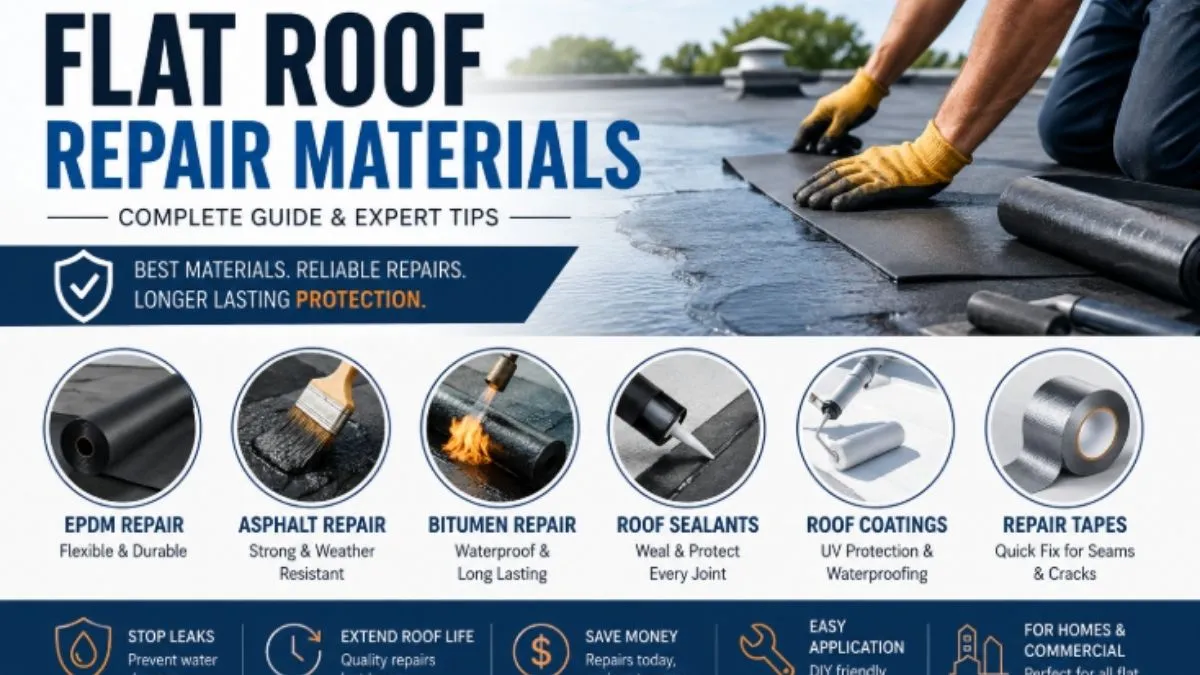
A flat roof protects homes, commercial buildings, garages, and additions while providing a clean, modern appearance. However, standing water, UV exposure, changing temperatures, and aging gradually weaken roofing systems. Small cracks often grow into leaks if property owners ignore them. Therefore, choosing the right flat roof repair materials helps extend roof life, reduce repair costs, and prevent structural damage.
Different roofing systems require different repair products. EPDM membranes, modified bitumen, built-up roofs, and asphalt surfaces all need compatible materials. Understanding these differences helps homeowners and property managers make better decisions before starting any flat roof repair project.
This guide from Home Experts Guide explains the most common repair materials, their uses, and the best situations for each option.
Why Do Flat Roofs Need Different Repair Materials?
Flat roofs use several membrane types instead of traditional shingles. Consequently, each roofing system reacts differently to weather, moisture, and movement.
Choosing the wrong repair product may create additional leaks instead of solving the existing problem. Therefore, contractors always match repair compounds with the original roofing system.
Common causes of damage include:
- Ponding water
- UV deterioration
- Membrane shrinkage
- Cracked flashing
- Wind damage
- Storm debris
- Loose seams
- Foot traffic
- Poor installation
- Aging roofing systems
Early repairs usually cost much less than replacing flat roof systems after severe deterioration.
What Are Flat Roof Repair Materials?
Flat roof repair materials include sealants, membranes, tapes, coatings, primers, flashing products, adhesives, reinforcing fabrics, and patching compounds. Each material solves a specific roofing problem instead of serving every repair situation.
The quality of repair products directly affects durability, waterproofing, and long-term performance.
Common Flat Roof Repair Materials
| Material | Primary Purpose | Best Used On | Average Service Life |
| EPDM Patch Kits | Repair tears and punctures | Rubber roofs | 10–20 years |
| Roofing Tape | Seal seams | Most membrane roofs | 8–15 years |
| Acrylic Coating | Reflect sunlight | Modified bitumen | 8–12 years |
| Silicone Coating | Waterproof protection | Ponding-water areas | 10–20 years |
| Polyurethane Sealant | Fill cracks | Flashing joints | 10–15 years |
| Butyl Tape | Waterproof seams | Metal and membrane roofs | 10–15 years |
| Roofing Cement | Temporary repairs | Asphalt roofs | 3–8 years |
| Reinforcing Fabric | Strengthen coatings | Large damaged sections | 10–20 years |
Selecting compatible materials produces stronger repairs and reduces future maintenance.
What Signs Indicate Flat Roof Repair?
Several warning signs appear long before serious water damage develops. Therefore, regular roof inspections help identify problems early.
Watch for these issues:
| Warning Sign | Possible Cause | Recommended Action |
| Water stains on ceilings | Roof leak | Inspect membrane |
| Bubbling surface | Trapped moisture | Remove damaged area |
| Standing water | Poor drainage | Improve drainage system |
| Open seams | Aging adhesive | Reseal seams |
| Cracks | UV exposure | Apply repair compound |
| Soft roof sections | Water intrusion | Inspect insulation |
| Interior mold | Long-term leak | Repair membrane immediately |
Ignoring these symptoms often increases repair costs significantly.
Which Roof Materials Work Best on Flat Roofs?
Different roofing systems require specific repair methods. Therefore, identifying the roofing material remains the first step before purchasing repair products.
The table below compares the most common roof materials for flat roof systems.
| Roofing Material | Lifespan | Repair Difficulty | Maintenance Level |
| EPDM Rubber | 25–35 years | Easy | Low |
| Modified Bitumen | 20–30 years | Moderate | Moderate |
| Built-Up Roofing (BUR) | 20–30 years | Moderate | Moderate |
| TPO | 20–30 years | Moderate | Low |
| PVC | 25–35 years | Moderate | Low |
Every roofing system offers different advantages depending on climate, building use, and maintenance practices.
If you want a detailed comparison of these systems, read our Roofing Materials guide. It explains installation methods, durability, maintenance needs, and expected service life for every major roofing option.
Types of Roofing Materials for Flat Roofs
Several roofing membranes dominate residential and commercial construction. Understanding their characteristics helps homeowners choose suitable repair products.
EPDM Rubber Roofing
EPDM uses synthetic rubber that resists sunlight, ozone, and temperature changes. Contractors often repair punctures with patch kits and seam tape instead of replacing large roof sections.
EPDM also remains one of the easiest flat roofing systems to maintain over several decades.
Modified Bitumen Roofing
Modified bitumen combines asphalt with polymer modifiers that improve flexibility. Manufacturers produce this roofing material in rolls with reinforced layers.
Repair methods typically include compatible patches, roofing cement, primers, and protective coatings.
Built-Up Roofing (BUR)
Built-up roofing consists of multiple asphalt layers reinforced with roofing felt and topped with gravel.
Contractors frequently repair damaged areas using roofing cement, reinforcing fabric, and additional protective coatings.
TPO Roofing
TPO membranes offer excellent energy efficiency because their reflective surfaces reduce heat absorption.
Most repairs require heat-welded patches that restore waterproof seams without replacing large membrane sections. Learn more about membrane construction and performance in our TPO Roofing Material guide.
PVC Roofing
PVC roofing performs well on commercial buildings because it resists chemicals, grease, and moisture.
Heat welding creates permanent seam repairs that maintain waterproof protection over many years.
How Does Material Compatibility Affect Flat Roofing Repair?
Many property owners purchase general roofing products without checking compatibility. Unfortunately, incompatible products often fail within a short period.
Each roofing membrane expands and contracts differently. Likewise, adhesives, sealants, and coatings contain different chemical compounds.
Using compatible flat roofing repair products provides several advantages:
- Stronger waterproof seals
- Longer repair life
- Better UV resistance
- Reduced cracking
- Improved flexibility
- Lower maintenance costs
- Better adhesion
- Fewer future leaks
Professional roofers always verify membrane compatibility before starting repairs.
Should You Repair or Replace a Flat Roof?
Many homeowners immediately consider replacing flat roof systems after noticing leaks. However, replacement rarely becomes necessary after minor damage.
The following comparison helps determine the better option.
| Condition | Repair | Replacement |
| Small puncture | ✔ | ✘ |
| Minor seam separation | ✔ | ✘ |
| Flashing damage | ✔ | ✘ |
| Localized leak | ✔ | ✘ |
| Extensive water damage | ✘ | ✔ |
| Saturated insulation | ✘ | ✔ |
| Multiple aging repairs | ✘ | ✔ |
| Roof beyond service life | ✘ | ✔ |
A professional inspection identifies whether repair remains practical or replacement offers better long-term value.
If you compare roofing systems before making a major investment, our Best Roofing Materials resource explains durability, weather resistance, maintenance requirements, and long-term costs across today’s leading roofing products.
What Makes High-Quality Flat Roof Repair Materials?
Not every roofing product delivers the same level of protection. Premium materials generally last longer and reduce maintenance over time.
Look for these characteristics:
| Feature | Benefit |
| UV Resistance | Prevents cracking |
| Waterproof Performance | Stops leaks |
| Flexible Composition | Handles temperature movement |
| Strong Adhesion | Improves bonding |
| Weather Resistance | Withstands storms |
| Chemical Resistance | Protects commercial roofs |
| Long Warranty | Indicates product quality |
| Easy Application | Simplifies maintenance |
Choosing quality materials often saves money because repairs last longer and require fewer follow-up applications.
How Does EPDM Roof Repair Work?
EPDM roof repair remains one of the simplest repair methods because the membrane stays flexible throughout its service life. Contractors usually inspect the damaged area, clean the membrane thoroughly, apply primer, and install a compatible patch. Finally, they seal the edges to prevent moisture from entering beneath the membrane.
Small punctures, loose seams, and minor cuts rarely require complete membrane replacement. Instead, quality repair materials restore waterproof performance while extending the roof’s lifespan.
Common EPDM Roof Repair Materials
| Repair Material | Primary Use | Best Situation | Expected Lifespan |
| EPDM Primer | Surface preparation | Patch installation | Long-term |
| Seam Tape | Open seams | Seam separation | 15–20 years |
| Rubber Patch | Tears and punctures | Localized damage | 15–20 years |
| Lap Sealant | Seal patch edges | Final waterproofing | 10–15 years |
| Cleaning Solution | Surface cleaning | Before repairs | One application |
Using compatible products keeps repairs secure and reduces the chance of future leaks.
What Makes EPDM Rubber Roof Repair Different?
EPDM rubber roof repair differs from repairs on asphalt or modified bitumen roofs because rubber membranes expand and contract more during seasonal temperature changes.
Therefore, repair materials must remain flexible after installation. Rigid products often crack within a short period and allow water to enter beneath the membrane.
Best Situations for EPDM Repairs
- Small punctures
- Loose flashing
- Open seams
- Minor storm damage
- Tree branch impacts
- Aging sealant joints
Regular inspections also help identify small defects before they become expensive repairs.
When Does Asphalt Roof Repair Make Sense?
Many older residential buildings still use asphalt-based roofing systems. Fortunately, asphalt roof repair solves many common issues without requiring complete replacement.
Roofing professionals usually repair:
- Surface cracks
- Blisters
- Loose flashing
- Small leaks
- Weather damage
- Minor membrane separation
They often combine roofing cement, reinforcing fabric, and protective coatings to create durable repairs.
Asphalt Roof Repair Materials
| Material | Purpose | Durability |
| Roofing Cement | Fill cracks | Moderate |
| Reinforcing Fabric | Strengthen repairs | High |
| Asphalt Primer | Improve adhesion | High |
| Protective Coating | UV protection | High |
| Flashing Cement | Seal roof edges | Moderate |
Property owners should inspect asphalt roofs every year because UV exposure gradually dries the surface.
How Does Asphalt Flat Roof Repair Compare With Other Systems?
Asphalt flat roof repair follows different procedures than EPDM or TPO repairs. Asphalt products rely on compatible asphalt compounds instead of rubber adhesives.
The comparison below highlights the main differences.
| Feature | Asphalt Roof | EPDM Roof |
| Main Repair Product | Roofing Cement | Rubber Patch |
| Seam Repair | Asphalt Compound | Seam Tape |
| UV Protection | Roof Coating | Rubber Coating |
| Flexibility | Moderate | High |
| Maintenance Frequency | Moderate | Low |
Choosing the correct repair material improves durability and reduces repeat repairs.
What Is Bitumen Flat Roof Repair?
Bitumen flat roof repair focuses on modified bitumen membranes that contain reinforced asphalt layers. These roofing systems perform well in changing climates because they resist tearing and moisture.
However, age, ponding water, and sunlight eventually weaken the surface.
Roofers commonly repair:
- Split seams
- Cracks
- Blisters
- Flashing damage
- Membrane punctures
Repair products usually include compatible primers, asphalt patches, reinforcing fabric, and protective coatings.
Bitumen Repair Materials
| Material | Application |
| Modified Bitumen Patch | Membrane repair |
| Roofing Cement | Crack filling |
| Polyester Fabric | Reinforcement |
| Primer | Surface preparation |
| Reflective Coating | UV protection |
These materials restore waterproof performance while extending roof life.
Why Does Flat Roof Sealant Matter?
A quality flat roof sealant protects vulnerable joints, flashing, penetrations, and repair areas from water intrusion.
Unlike roofing cement, modern sealants remain flexible after curing. Consequently, they continue sealing movement joints during seasonal expansion and contraction.
Roofers commonly apply sealant around:
- Skylights
- Roof vents
- HVAC units
- Pipe penetrations
- Flashing edges
- Drain assemblies
Routine inspections help identify deteriorating sealant before leaks develop.
Flat Roof Sealant Comparison
| Sealant Type | Flexibility | UV Resistance | Best Application |
| Silicone | Excellent | Excellent | Ponding water |
| Polyurethane | Excellent | Very Good | Flashing |
| Acrylic | Good | Good | Roof coatings |
| Butyl | Excellent | Moderate | Metal joints |
Selecting the correct sealant depends on the roofing membrane and local weather conditions.
Roofing Sealer for Flat Roofs: Which Option Performs Best?
A roofing sealer for flat roofs adds another waterproof layer that protects repaired sections from sunlight and standing water. Many property owners also apply sealers across aging roofs to delay major restoration work.
Each coating offers different advantages.
| Roofing Sealer | Best Use | Water Resistance | UV Protection |
| Silicone | Ponding water | Excellent | Excellent |
| Acrylic | Reflective roofs | Good | Very Good |
| Polyurethane | High-traffic roofs | Excellent | Good |
| Asphalt Coating | Asphalt roofs | Good | Moderate |
Although coatings improve protection, they cannot solve structural problems or saturated insulation.
What Should You Do During an Emergency Flat Roof Repair?
Storms, fallen branches, and sudden membrane failures often require emergency flat roof repair. Quick action limits interior water damage and protects insulation, ceilings, and electrical systems.
Property owners should follow these steps:
- Identify the leak location.
- Remove standing water if possible.
- Protect interior belongings.
- Cover damaged areas with a temporary waterproof tarp.
- Avoid walking on unstable roof sections.
- Contact a qualified roofing contractor.
Temporary repairs reduce damage, but permanent repairs should follow as soon as weather conditions improve.
Emergency Repair Kit Checklist
| Item | Purpose |
| Waterproof Tarp | Temporary protection |
| Roofing Tape | Seal small tears |
| Utility Knife | Trim damaged material |
| Waterproof Gloves | Personal safety |
| Roof Sealant | Temporary sealing |
| Flashlight | Interior inspection |
| Plastic Sheeting | Protect belongings |
Keeping these supplies available helps property owners respond quickly during severe weather.
Which Flat Roofing Solutions Last the Longest?
Different flat roofing solutions suit different roofing systems. Therefore, roof age, membrane condition, and budget should guide the repair strategy.
Solution Comparison
| Roofing Solution | Best Use | Expected Service Life |
| Localized Patch Repair | Small damage | 10–20 years |
| Seam Resealing | Open joints | 10–15 years |
| Roof Coating | Aging membrane | 10–20 years |
| Partial Membrane Replacement | Moderate damage | 15–25 years |
| Complete Roof Replacement | Severe deterioration | 25–35 years |
Professional inspections help determine which option delivers the best value.
If your roof shows repeated leaks, widespread membrane damage, or aging materials, review our Roofing Solutions guide. It explains repair strategies, maintenance planning, drainage improvements, and replacement options that help extend roof performance.
How Does TPO Compare With Other Repair Materials?
Many commercial buildings now use TPO because it combines durability with energy efficiency. However, TPO repairs require heat-welded patches instead of traditional roofing cement.
The table below compares common flat roofing systems.
| Roofing System | Repair Method | Maintenance | Reflectivity |
| EPDM | Patch and seam tape | Low | Moderate |
| Modified Bitumen | Cement and patch | Moderate | Moderate |
| Asphalt | Roofing cement | Moderate | Low |
| TPO | Heat-welded patch | Low | High |
| PVC | Heat-welded patch | Low | High |
You can learn more about membrane performance, durability, and energy savings in our TPO Roofing Material guide.
Choosing the Right Repair Material
Selecting suitable flat roof repair materials depends on the roofing membrane, damage severity, climate, and expected roof life. Matching repair products with the existing roofing system improves adhesion, prevents recurring leaks, and lowers maintenance costs over time.
Instead of choosing products based only on price, compare durability, compatibility, flexibility, UV resistance, and waterproof performance. A well-planned repair usually lasts much longer than a quick temporary fix.
How Do I Repair a Flat Roof?
Many homeowners ask, how do I repair a flat roof without causing additional damage. The answer depends on the roofing material, the size of the damaged area, and the source of the leak. A careful inspection always comes first because visible damage may not reveal the actual entry point of water.
Follow these steps to complete a basic repair:
- Inspect the roof after the surface dries.
- Remove dirt, leaves, and loose debris.
- Locate cracks, punctures, or separated seams.
- Clean the repair area thoroughly.
- Apply the recommended primer if required.
- Install a compatible patch or repair tape.
- Seal the repair with the appropriate sealant.
- Allow the repair material to cure according to the manufacturer’s instructions.
- Inspect the repair after the next rainfall.
Small repairs often restore waterproof protection, but widespread damage requires professional evaluation.
How to Fix a Roof Without Creating More Damage?
Many people search how to fix a roof after noticing water stains indoors. However, rushing into repairs often creates larger problems.
Keep these best practices in mind:
| Recommended Action | Reason |
| Inspect the entire roof | Damage may spread beyond one area |
| Use compatible repair materials | Improves adhesion |
| Replace damaged flashing | Stops water entry |
| Repair during dry weather | Helps products cure properly |
| Test repairs with water | Confirms leak removal |
| Schedule annual inspections | Prevents future issues |
Simple maintenance extends roof life and lowers long-term repair costs.
How Can You Fix a Flat Roof Leak?
A flat roof leak rarely stays in one location because water often travels beneath the membrane before entering the building. Therefore, finding the source requires patience and a complete inspection.
To fix flat roof leak problems effectively:
- Check flashing around vents and skylights.
- Inspect seams for separation.
- Look for punctures or tears.
- Examine roof drains for standing water.
- Remove damaged sealant.
- Install compatible repair materials.
- Test repaired sections before finishing the project.
Ignoring a small leak may lead to insulation damage, mold growth, ceiling stains, and structural repairs.
Repair or Replacing Flat Roof: Which Option Saves More Money?
Many property owners wonder whether repairing or replacing flat roof systems offers better value. The answer depends on roof age, damage extent, and maintenance history.
Repair vs Replacement Comparison
| Situation | Repair | Replacement |
| Small puncture | ✔ Recommended | ✘ |
| Minor flashing damage | ✔ Recommended | ✘ |
| Localized leak | ✔ Recommended | ✘ |
| Open seams | ✔ Recommended | ✘ |
| Multiple recurring leaks | △ Temporary | ✔ Better option |
| Saturated insulation | ✘ | ✔ Required |
| Roof near end of lifespan | ✘ | ✔ Recommended |
| Severe storm damage | △ Depends on inspection | ✔ Often required |
If repairs continue every year, replacement often provides better long-term value.
What Are the Types of Commercial Flat Roofs?
Commercial buildings use several roofing systems because each material performs differently under varying weather conditions and building requirements.
Comparison of Types of Commercial Flat Roofs
| Roofing System | Expected Lifespan | Maintenance | Common Buildings |
| EPDM | 25–35 years | Low | Warehouses |
| TPO | 20–30 years | Low | Retail buildings |
| PVC | 25–35 years | Low | Restaurants |
| Modified Bitumen | 20–30 years | Moderate | Offices |
| Built-Up Roofing (BUR) | 20–30 years | Moderate | Schools |
| Spray Polyurethane Foam | 20–30 years | Moderate | Industrial buildings |
Each roofing system requires compatible repair materials and regular inspections to maintain waterproof performance.
Flat Roof Maintenance Checklist
Routine maintenance reduces repair costs and helps roofing materials last longer.
| Maintenance Task | Recommended Frequency |
| Remove debris | Monthly |
| Inspect flashing | Every 6 months |
| Clean roof drains | Every season |
| Check seams | Twice each year |
| Inspect after storms | Immediately |
| Remove standing water | As needed |
| Check roof coating | Annually |
| Schedule professional inspection | Once each year |
Consistent maintenance helps identify problems before they become major repairs.
Common Mistakes During Flat Roof Repair
Avoiding common mistakes improves repair quality and extends roof life.
- Using incompatible repair products.
- Ignoring standing water.
- Skipping surface cleaning.
- Applying sealant over wet materials.
- Walking on weak roof sections.
- Delaying small repairs.
- Ignoring flashing damage.
- Choosing temporary repairs as permanent solutions.
Each mistake increases the likelihood of future leaks and higher repair expenses.
Flat Roof Repair Materials at a Glance
| Topic | Key Takeaway |
| Flat roof repair materials | Match repair products with the roofing membrane. |
| EPDM roof repair | Patch kits and seam tape work best. |
| Asphalt roof repair | Roofing cement and reinforcing fabric provide reliable repairs. |
| Bitumen flat roof repair | Compatible patches and coatings restore waterproof protection. |
| Flat roof sealant | Protects seams, flashing, and penetrations. |
| Roofing sealer for flat roofs | Adds waterproof and UV protection. |
| Emergency flat roof repair | Temporary protection limits interior damage until permanent repairs begin. |
| Replacing flat roof | Suitable when repairs no longer provide lasting results. |
| Commercial flat roofs | EPDM, TPO, PVC, BUR, modified bitumen, and spray foam remain popular choices. |
| Maintenance | Regular inspections reduce repair costs and extend roof life. |
Why Trust Home Experts Guide?
Home Experts Guide provides reliable, practical, and research-based roofing information that helps homeowners make informed decisions. Whether you need guidance about repair materials, maintenance schedules, roofing systems, or replacement planning, our articles explain every topic in clear language supported by industry best practices.
Conclusion
Choosing the right flat roof repair materials helps prevent leaks, extend roof life, and reduce maintenance expenses. Every roofing system, including EPDM, asphalt, modified bitumen, TPO, PVC, and built-up roofing, requires compatible repair products to deliver dependable results. Regular inspections, prompt repairs, quality sealants, and proper maintenance protect both residential and commercial buildings from costly water damage.
When you need trustworthy roofing advice, maintenance tips, or material comparisons, Home Experts Guide serves as a reliable resource with practical information that helps property owners make confident roofing decisions.
Frequently Asked Questions
How to repair a leaking flat roof?
Begin by locating the exact leak source instead of repairing the visible water stain. Clean the damaged area, remove old sealant, and install a compatible patch or sealant. Finish by testing the repaired section to confirm that water no longer enters the roof system.
How to repair leak in flat roof?
Inspect flashing, seams, roof penetrations, and membrane joints because leaks often travel beneath the roofing surface. Apply repair materials designed for your roofing system, seal all edges carefully, and inspect nearby areas to prevent additional leaks.
How to repair a tar and gravel flat roof?
Remove loose gravel around the damaged section and clean the surface completely. Apply roofing cement, place reinforcing fabric over the repair, add another layer of roofing cement, and replace the gravel after the repair cures properly.
How to fix a flat roof?
Start with a complete roof inspection to identify cracks, punctures, loose seams, or damaged flashing. Choose repair materials that match the existing roofing membrane, complete the repair during dry weather, and inspect the repaired area after rainfall.
What are the best flat roof repair materials?
The best flat roof repair materials depend on the roofing system. EPDM roofs usually need seam tape and rubber patches, while asphalt and modified bitumen roofs perform better with roofing cement, compatible patches, reinforcing fabric, primers, and protective coatings. Choosing compatible products always produces longer-lasting repairs.





Leave a Reply